

That pile of leftover materials in your garage? It’s about to become your new favorite creative outlet. Imagine transforming forgotten pieces into functional art that adds character to your space – without spending a dime on supplies. This isn’t just woodworking. It’s a movement.
You’ve probably noticed more makers embracing imperfect materials. There’s magic in seeing rough edges become sleek shelves or weathered planks morph into statement wall art. The best part? You don’t need fancy tools or years of experience. Every unique piece tells its own story – your job is to help it shine.
Why are crafters everywhere obsessed? First, it’s sustainable. Repurposing materials reduces waste while letting you practice skills guilt-free. Second, those odd shapes force creative problem-solving – making you a better artist with every project. And let’s not forget the thrill when visitors ask, “Where’d you get that?” and you grin, “I made it myself.”
We’ll walk through safety essentials, design hacks, and step-by-step plans for all skill levels. Whether you’re dreaming of rustic-chic home accents or modern organizational solutions, your scrap pile holds endless potential. Ready to turn “what’s that?” into “wow, that’s stunning”? Let’s begin.
Creative Benefits of Using Scrap Wood in Your DIY Projects
Turn overlooked remnants into stunning home accents with purpose. What starts as a pile of irregular shapes becomes a playground for innovation – where every knot and groove adds character you can’t buy at big-box stores. Let’s explore why creators nationwide are falling in love with this approach.
Cost Savings and Resourcefulness
Why drain your budget on pricey materials when you’ve got hidden gems waiting? Those leftover planks from last year’s renovation could become floating shelves for $8 in brackets instead of $75 retail. That’s the magic of resourcefulness – you’re not just saving cash, but building creative muscles.
Irregular sizes push you to think outside the lumberyard. Maybe those odd-width boards become a mosaic-style coffee table top. Or short pieces transform into rustic picture frames. With each challenge, your design skills grow sharper than a chisel blade.
Environmental Sustainability and Customization Opportunities
Every repurposed plank keeps 5 pounds of material from landfills – multiply that across multiple creations. But the real win? Your pieces become conversation starters. Mix maple offcuts with walnut scraps for a cutting board that’s truly one-of-a-kind.
Different wood tones and textures let you craft pieces that match your exact style. Stain some sections, leave others natural – suddenly that bookshelf becomes a custom art installation. Best part? No two creations will ever look identical, just like your creative journey.
Top Scrap Wood Projects DIY for Your Home
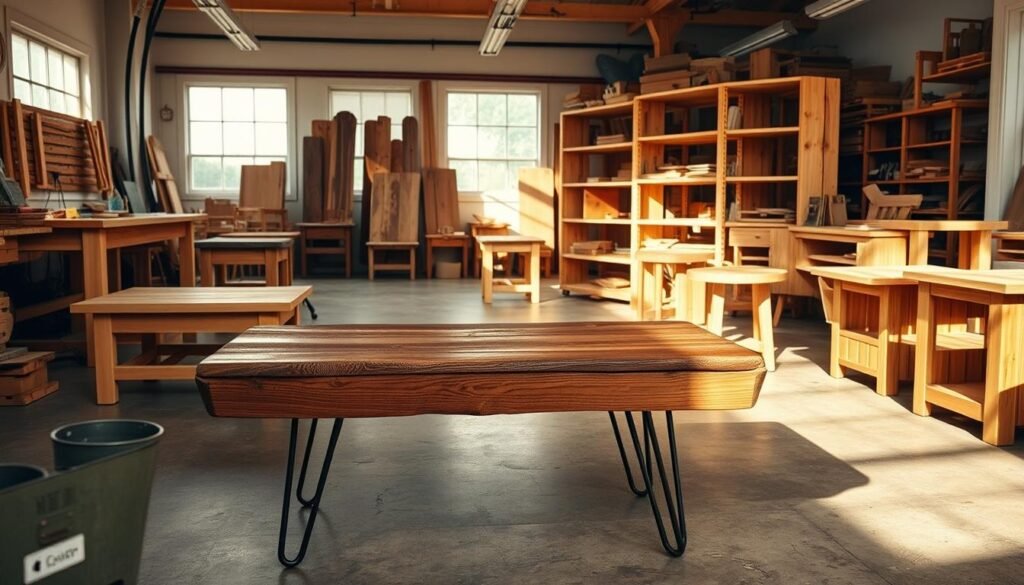
Your collection of extra pieces holds more potential than you might realize. Those mismatched planks and odd-sized boards can become statement pieces that blend function with artistry. Let’s explore how to turn what you’ve got into what you’ll love.
Unique Furniture and Home Decor Pieces
Picture an elegant plant stand elevating your favorite fern – crafted from remnants you nearly tossed. Those narrow boards? They’re about to become floating shelves that display cherished photos. The secret lies in seeing raw materials through fresh eyes.
Customization shines here. That awkward nook by your front door? Perfect for a slim storage bench with hidden compartments. Mix different stains and finishes to create contrast – suddenly your coffee table becomes a conversation piece guests can’t stop admiring.
Innovative Small Project Ideas for Beginners
Start simple with instant-gratification builds. A spice rack organizes your kitchen while showcasing natural grain patterns. Phone holders keep devices upright during video calls – practical yet polished.
These quick wins build skills for bigger endeavors. Try combining short pieces into geometric wall art or crafting a lap desk for remote work. Each creation solves problems while adding warmth no store-bought item can match.
| Project Type | Time Required | Tools Needed | Skill Level |
|---|---|---|---|
| Plant Stand | 1-2 hours | Saw, drill, sandpaper | Beginner |
| Spice Rack | 45 minutes | Wood glue, clamps | Novice |
| Wall Art | 2-3 hours | Miter box, finish nails | Intermediate |
Pro tip: Keep a notebook handy – inspiration often strikes when you least expect it. That curved offcut? It might become tomorrow’s signature candle holder.
Essential Tools, Tips, and Safety for Scrap Wood Projects
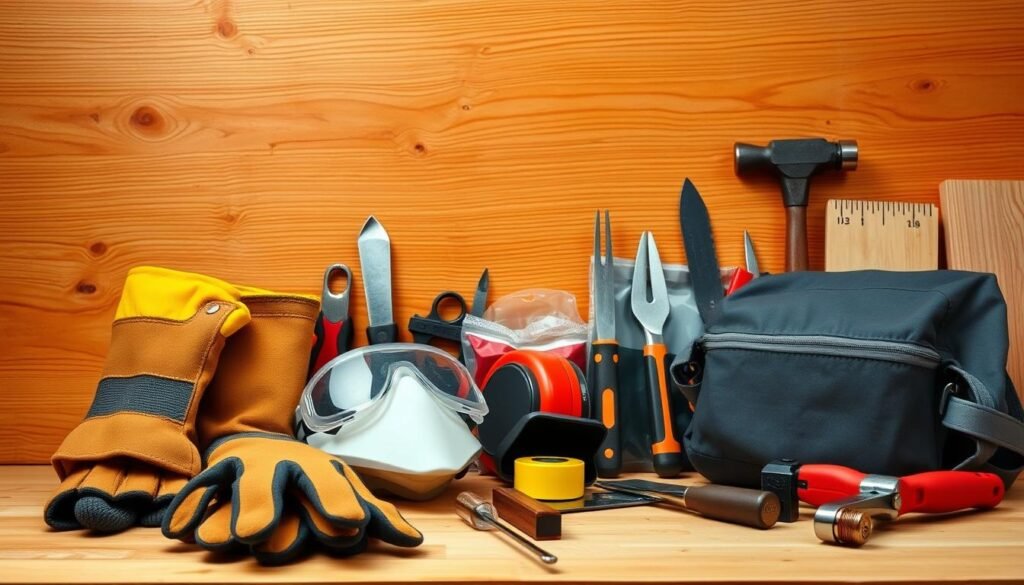
Transform leftover materials into masterpieces with the right setup and know-how. Whether you’re crafting functional furniture or decorative accents, success starts with smart preparation and respect for your materials.
Must-Have Tools and Equipment
Three items form your creative foundation: a precise cutting tool (circular saw or miter saw), a versatile power drill, and a pocket hole jig for seamless joints. Quality beats quantity – a well-maintained secondhand saw outperforms cheap new models. Pro tip: Pair these with clamps that hold irregular shapes securely during assembly.
Safety Precautions and Best Practices
Always wear impact-resistant glasses and a respirator – those tiny fragments and dust particles don’t play nice. Smaller pieces demand extra caution: use push sticks when cutting and secure workpieces with non-slip mats. Check materials for hidden nails or warping before starting.
- Test stains on hidden areas – older wood absorbs finishes unpredictably
- Let power tools do the work – forcing cuts leads to kickback
- Store sharp blades in protective cases to maintain edges
For detailed guidance, explore expert-approved plans that match your skill level. Remember: Patience transforms leftovers into treasures worth keeping.
Step-by-Step Scrap Wood Project Plans and Tutorials
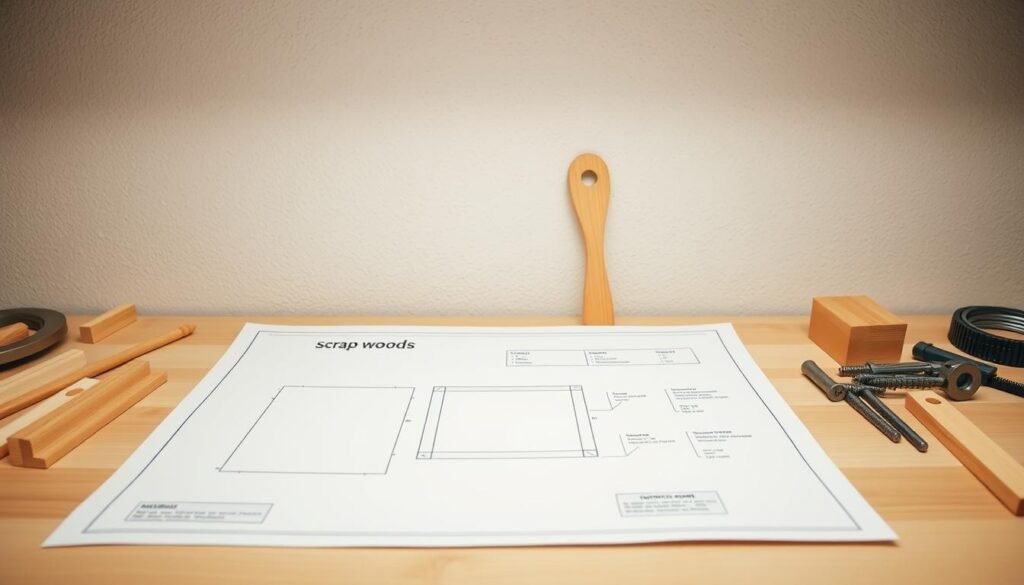
Those mismatched pieces in your workshop aren’t scraps – they’re solutions waiting for instructions. Curated blueprints turn creative challenges into satisfying achievements, whether you’re crafting functional essentials or showstopping decor. Let’s explore how structured guidance unlocks hidden potential in every odd-shaped remnant.
Skill-Building Starter Ideas
The cutting board stand delivers instant gratification. You’ll master measuring and assembly while creating kitchen organization magic. Crisscross spice racks? They’re brilliant for small pieces – slight size variations become design features, not flaws.
Master-Level Crafting Guides
Ready to level up? Advanced tutorials introduce techniques like compound angles and dovetail joints. Transform humble materials into heirloom-quality display cases or floating consoles. These plans include finish options that elevate raw edges into intentional textures.
Workshop-Ready Resources
Printable PDFs mean no squinting at phone screens mid-build. Mark up shop-approved paper with notes, then toss it in your toolbox guilt-free. Every template accounts for material quirks – warped boards become character-rich table legs with smart layout adjustments.
- Adapt measurements using the “measure twice, cut once” rule – with built-in wiggle room
- Learn why certain joints work better for uneven thicknesses
- Troubleshoot common issues like splitting or uneven staining
Pro tip: Start with the spice rack tutorial – it’s forgiving yet teaches precision. Bonus: no more digging through cabinets during dinner prep chaos. Your future self will thank you when every creation feels exactly like your vision.
Creative Home Decor Ideas Using Leftover Wood
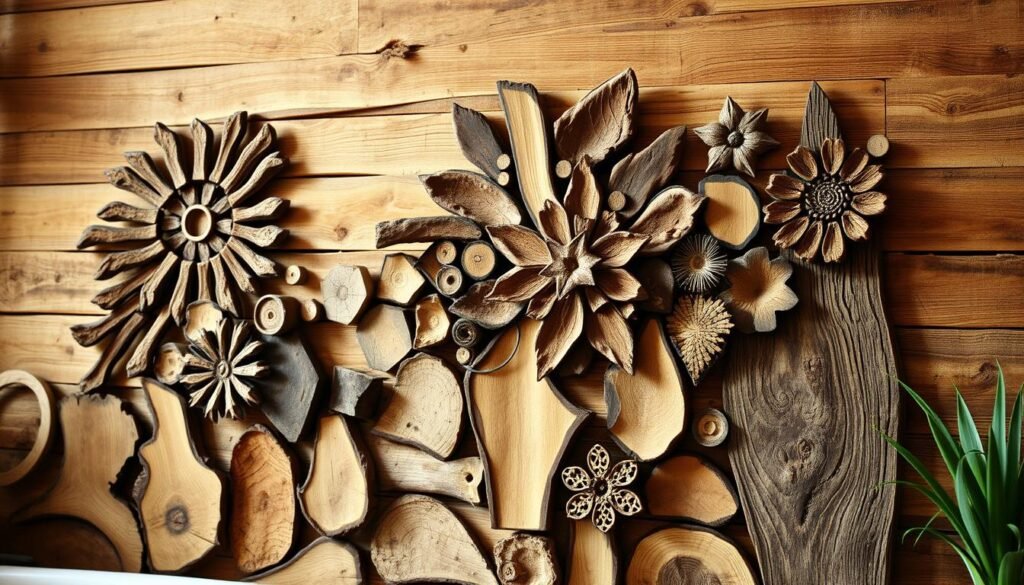
Your leftover planks hold hidden potential to transform blank walls into gallery spaces. With thoughtful arrangement and minimal tools, you’ll craft pieces that blend artistry with everyday functionality.
DIY Wall Art and Shelf Designs
Geometric patterns emerge when you play with contrasting wood tones. Stagger narrow strips vertically for a modern photo display stand – perfect for showcasing travel memories. Horizontal arrangements? They create floating ledges ideal for trailing plants or favorite novels.
Old plywood becomes striking 3D installations when cut into organic shapes. Paint some sections matte black while leaving others natural. The result? Depth that makes guests ask, “Where’d you find that?” before realizing it’s your handiwork.
Handmade Accessories and Unique Decor Pieces
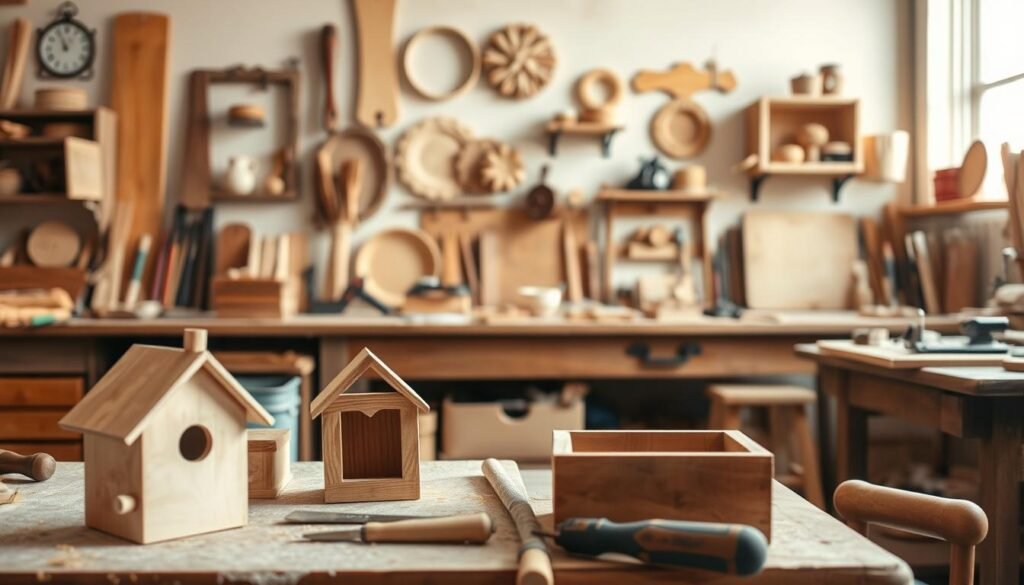
Those thin offcuts shine as minimalist jewelry organizers. Drill angled holes in a sanded board to hold necklaces tangle-free. For tabletops, glue small blocks into candle holder clusters – their uneven heights add rustic charm.
Transform chunky remnants into functional art. A notched board becomes a phone holder with character. Stack stained squares for a modern vase base that pairs with glass cylinders. Every piece solves storage needs while whispering stories of its past life.
Pingback: Fun & Functional Crafts Adults Actually Want to Keep
Pingback: Easy and Fun Upcycled Crafts for Eco-Conscious Adults