
Ever wondered how a blank wall could become your favorite corner? Imagine filling it with vibrant strokes that whisper your story. Artistic projects aren’t just about talent—they’re about turning your living space into a gallery of personal expression.
You don’t need years of training to create something meaningful. Whether it’s abstract swirls or nature-inspired designs, the process itself becomes a therapeutic escape from daily stress. Think of it as mindfulness with a brush—where every color choice reflects your mood.
What makes these projects special? They’re yours. Unlike store-bought decor, handmade pieces add character to rooms while showcasing your growth. Your kitchen nook could bloom with floral motifs, or your home office might thrive under geometric patterns.
We’ll walk through selecting materials that match your vision (hint: start simple!). From brush types to color palettes, you’ll learn how to build confidence—one stroke at a time. Ready to turn empty walls into conversation starters?
Introduction to Inspiring Canvas Painting
Have you ever considered your home as a canvas for creativity? Those blank surfaces aren’t just walls—they’re invitations to explore. Artistic expression thrives here, whether you’re sketching loose shapes or blending bold hues that mirror your energy.
Why do so many creative souls gravitate toward this medium? Canvas offers a sturdy stage for experimentation—unlike paper, it handles layers of acrylics or oils without warping. Plus, mistakes become happy accidents you can paint over. No prior experience needed, just curiosity and a willingness to play.
Let’s crush those “I’m not artistic” myths. Every pro started with shaky lines and uneven textures. Your first piece might feel messy, but that’s where growth happens. Think of it as journaling with pigments—each stroke captures a moment in your creative evolution.
“Art washes away the dust of daily life,” Picasso once said. Whether you’re seeking calm or a burst of excitement, brushes become tools for both mindfulness and discovery. Start small: a 12×12 inch canvas and three primary colors can spark endless combinations.
What’s stopping you? That voice saying “I don’t know how”? Silence it by dipping a brush into cerulean blue and making one imperfect mark. Before long, you’ll see patterns emerge—and a new passion taking root.
Embracing the Joy of Acrylic Painting
What if your next creative breakthrough comes from a tube of paint? Acrylics offer a vibrant playground where spontaneity meets practicality. Their quick-drying nature means you can layer colors within minutes—perfect for those who love instant results or need to fix “oops” moments.
Benefits for Beginners and Enthusiasts
New to brushes? Acrylics forgive mistakes like a patient teacher. Unlike oils, they clean up with water, and their affordability lets you experiment without guilt. Quick adjustments are possible—just paint over dried layers. Plus, they work on wood, fabric, or even old furniture.
Finding Your Own Style
Your artistic voice emerges through play. Try dripping techniques one week, textured palette knives the next. Notice which subjects make your heart race—maybe moody skies or abstract patterns. That’s your style whispering clues.
| Technique | Best For | Tools Needed |
|---|---|---|
| Dry Brushing | Texture & Depth | Stiff bristle brush |
| Wet-on-Wet | Soft Blends | Spray bottle |
| Splatter Effects | Dynamic Energy | Old toothbrush |
Remember: Every master once mixed muddied colors. Let curiosity guide you more than perfection. Those “failed” pieces? They’re stepping stones to work that truly sings.
Essential Materials for Your Acrylic Canvas Journey
What’s the secret sauce for turning blank canvases into vibrant stories? It starts with gathering the right tools—without emptying your wallet. Let’s cut through the noise and focus on what actually matters for your creative launchpad.
Your starter kit needs three non-negotiables: surfaces, pigments, and applicators. A pre-primed canvas (8×10 inches is ideal) offers forgiving texture for beginners. Student-grade acrylics deliver bold color at half the cost of professional tubes—perfect for testing techniques.
| Material | Why It Matters | Pro Tip |
|---|---|---|
| Flat & Round Brushes | Control thin lines vs. broad strokes | Start with sizes 4 & 8 |
| Plastic Palette | Mixes colors without absorption | Use parchment paper for easy cleanup |
| Matte Varnish | Protects finished work | Apply after 72 hours drying |
Skip fancy gadgets for now. A recycled jar works better than pricey brush cleaners. Paper towels? They’re your multitaskers—dabbing excess water, correcting drips, even creating texture.
Store supplies in a shoebox with dividers to keep brushes upright. This prevents bristle damage and lets you grab tools mid-inspiration. Remember: Your first pieces aren’t about mastery—they’re about discovering joy in the process.
Step-by-Step Guide to Starting Your Painting Project
Let’s unlock the secrets to starting your creative journey. Begin by laying down your background—think skies, distant hills, or soft gradients. This foundational layer sets the mood and depth of your work. Use diluted acrylics for transparent washes, then let each coat dry completely. Patience here pays off in crisp, professional results.
Next, build opacity through thin layers rather than thick globs. “Every layer is a lesson,” says artist Clara Mendez. Start with broad strokes using a flat brush, refining details as you progress. Made a wobbly line? Turn it into a vine or abstract texture—adaptation is your superpower.
Choose colors that spark joy, even if they’re unconventional. Your dining room doesn’t need another beige landscape. Mix teal with burnt orange or layer magenta under gold leaf. Adjust complexity based on your comfort: simplify shapes if realism feels daunting.
- Work in natural light to see true color relationships
- Keep a spray bottle nearby to reactivate dried paint
- Rotate your canvas periodically for fresh perspective
Finish with a matte varnish to unify the surface—but only if you love the result. Remember, your first piece isn’t meant for galleries. It’s a brave beginning that celebrates growth over perfection. Now, where will you hang your story?
Simple Techniques and Tips to Perfect Your Brushstrokes
What separates tentative strokes from confident marks? It’s not magic—it’s understanding how pigments and pressure interact. Your brush becomes an extension of your intent when you grasp foundational methods.
Clean tools make all the difference. Rinse brushes thoroughly when switching between shades—even similar ones. Residual pigment mixes into new colors, creating muddy tones that dull your work. Keep a jar of water and paper towels within reach.
Layering and Blending Methods
Build depth through thin, translucent coats. Let each layer dry completely before adding the next. This prevents colors from bleeding while creating rich, complex undertones. For sunsets, start with yellows, then gradually introduce oranges and pinks.
| Method | Purpose | Pro Tip |
|---|---|---|
| Glazing | Adds luminous depth | Mix 1 part paint to 3 parts medium |
| Scumbling | Creates texture | Use dry brush on dry layer |
| Feathering | Softens edges | Work quickly with light pressure |
Maintain bristle health by reshaping brushes after cleaning. Store them horizontally or upright—never bristle-down. A damaged tool won’t hold pigment properly, making crisp lines impossible.
“Technique is just a vehicle for expression,” notes artist Lila Chen. Experiment with pressure variations—heavy for bold statements, feather-light for whispers. Your unique style emerges in these choices.
Experimenting with Colors, Shapes, and Artistic Details
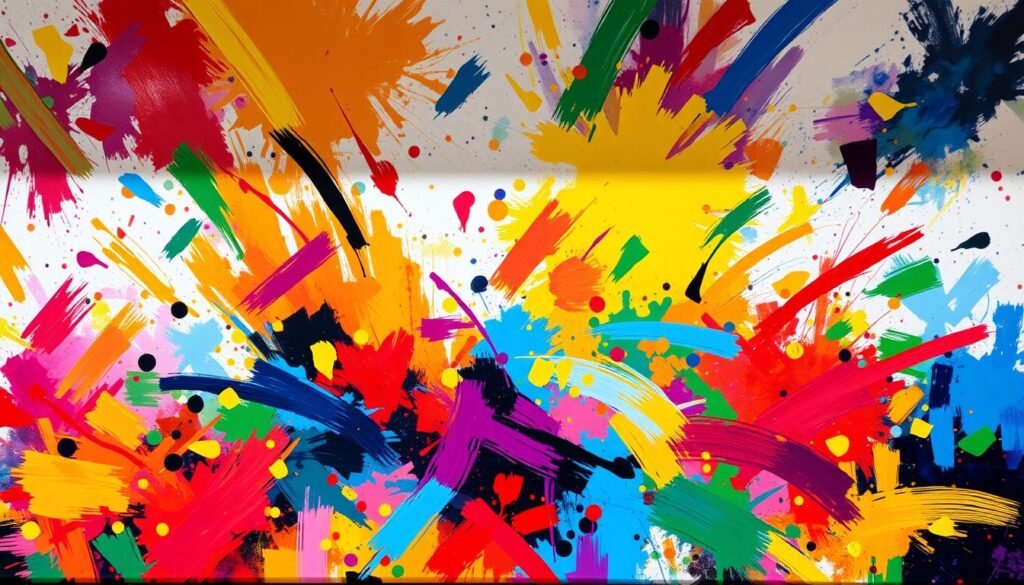
Why let reality dictate your palette when your emotions hold the brush? Swap blue skies for magenta horizons or give trees turquoise leaves. Your color choices become emotional shorthand—a crimson stroke might whisper passion, while lavender swirls suggest calm.
Shapes speak louder than words. Gentle curves create soothing rhythms in bedrooms, while jagged angles inject energy into workspaces. Try combining organic shapes with geometric ones—a circle nestled in triangles can balance chaos and order.
| Shape Type | Emotional Impact | Best Uses |
|---|---|---|
| Curved | Calmness | Bedroom accents |
| Angular | Energy | Office spaces |
| Spiral | Growth | Meditation areas |
Develop signature details through pattern play. Maybe you dot gold specks like constellations or scratch texture into wet paint with a comb. These marks become your artistic fingerprint—unique as a laugh.
Balance bold experiments with cohesion. Limit your palette to three main colors per piece, letting one dominate. “Chaos needs a container,” says mixed-media artist Elena Torres. A solid background often grounds wilder elements better than gradients.
Trust that initial spark—the idea that makes your pulse quicken. What feels risky today becomes tomorrow’s style. Your walls deserve more than decor; they crave your truth in technicolor.
Exploring Easy and Fun Abstract Painting Techniques
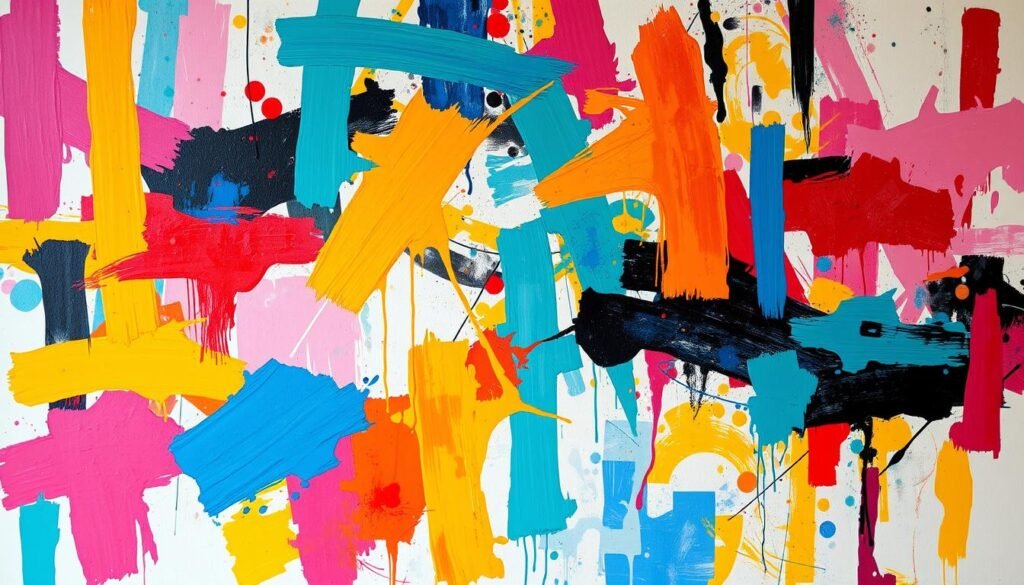
How can splashes of color become your ultimate creative freedom? Abstract art thrives on intuition—where rigid rules dissolve into joyful exploration. This approach lets you bypass overthinking and connect directly with emotional expression through movement and hue.
Begin by silencing your inner critic. Grab a wide brush and make sweeping gestures across the surface—no preliminary sketches needed. Layer contrasting shades like coral over slate gray, then scrape through wet pigment with a credit card. These unplanned interactions often yield the most captivating results.
Abstract Brushstrokes and Spontaneous Creativity
Your tools matter less than your mindset. Try flicking watered-down acrylics with a toothbrush for starry effects or dragging a dry bristle brush through thick paint. Each technique tells its own story:
| Technique | Emotional Impact | Tools |
|---|---|---|
| Gestural Strokes | Raw Energy | Palette knife |
| Color Blocking | Bold Contrast | Foam roller |
| Drip Technique | Playful Flow | Pipette |
Struggling to start? Visit our guide on easy abstract approaches for momentum-building exercises. Remember—perfection kills spontaneity. Let a “messy” piece dry overnight; you’ll often discover hidden harmony in morning light.
Build confidence through limited palettes. Choose three colors that evoke a specific mood—maybe sage green, terracotta, and cream for earthy calm. Mix them directly on the canvas rather than your palette to preserve organic blends.
Abstract work becomes meditation when you focus on process over product. Notice how your breathing syncs with brush rhythms. Those swirling maroons and teals? They’re not just pigments—they’re fragments of your inner world made visible.
Inspiring Painting Ideas on Canvas for a Vibrant Home
What if your walls could tell stories through color and texture? Handmade art transforms rooms into extensions of your personality—where every brushstroke whispers belonging. Unlike generic prints, original pieces spark conversations and reflect your evolving taste.
Match themes to room energy. Bedrooms thrive with misty forests or abstract florals in muted tones. Kitchens pop with citrus slices or herb gardens painted in zesty greens. For offices, geometric patterns in cobalt or gold fuel focus without overwhelming.
| Room | Theme Inspiration | Color Palette |
|---|---|---|
| Living Room | Bold abstracts | Terracotta, navy, cream |
| Entryway | Mini landscapes | Sage, slate, buttercream |
| Nursery | Whimsical animals | Pastel pinks, mint, lavender |
Size matters. A large statement piece anchors empty walls, while smaller canvases create gallery clusters. Balance vibrant hues with neutral furniture—let your art shine as the hero.
Discover curated canvas concepts that adapt to any skill level. Start simple: paint a single magnolia bloom or gradient sky. As confidence grows, layer intricate details like dewdrops or textured bark.
Your home deserves art that feels lived-in. Whether it’s a sunset silhouette or your cat’s portrait, these creations turn spaces into sanctuaries. Ready to make your mark?
Capturing Nature: Landscapes, Florals, and More
What if your brush could capture the whisper of ocean waves or the blush of a twilight sky? Nature’s beauty becomes tangible when translated through intentional lines and layered colors. Begin by observing shapes—rolling hills as soft curves, pine trees as jagged triangles—then simplify them into bold silhouettes.
Creating Dreamy Seascapes and Sunset Scenes
Sunset gradients thrive on wet-blending techniques. Load a flat brush with coral and lemon yellow, then sweep horizontally while the canvas is damp. Add indigo at the top, letting it bleed into warmer tones for that magic hour glow. Harbor towns come alive with tiny vertical strokes—think boat masts and cottage roofs.
| Element | Technique | Tools |
|---|---|---|
| Waves | Curved white lines over teal | Round brush #2 |
| Clouds | Dry brush scumbling | Fan brush |
| Reflections | Vertical dragging | Palette knife |
For flowery meadows, tap a small detail brush loaded with light pink and white. Vary pressure for bloom sizes—heavy dabs create peonies, light touches suggest baby’s breath. “Let the brush dance,” advises plein air artist Mara Jensen. “Imperfect petals feel more alive.”
- Mix analogous hues (lavender, periwinkle) for harmony
- Use cooler tones in distant mountains for depth
- Add final highlights with a rigger brush
Your scene should invite viewers to step into the frame. Whether it’s a stormy coast or sunlit field, each stroke becomes a love letter to Earth’s wonders. Now—what natural marvel will you immortalize next?
Infusing Life into Your Art with Animal and Nature Motifs
What makes a bear’s eyes sparkle with mischief or a turtle’s shell tell stories? Animal subjects breathe personality into your work—no zoology degree required. Start by sketching basic shapes with pencil: circles for a capybara’s body, triangles for frog legs. These guidelines become your roadmap, not rules.
Focus on one striking feature per creature—maybe the rubber duck’s cheerful beak or a frog’s jewel-toned skin. “Eyes are windows to their souls,” says wildlife artist Gina Torres. Use a small round brush to dot white reflections—this simple trick adds life in seconds.
| Animal | Key Feature | Brush Technique |
|---|---|---|
| Bear | Fur texture | Dry-bristle flicks |
| Turtle | Bubbles | Stippling with eraser |
| Capybara | Whiskers | Thin liner drags |
Mix realism with playfulness. Paint scales using crisscross strokes, then add whimsical polka dots. For fluffy fur, layer lighter shades over dark bases—the imperfections create depth. Remember: viewers connect with character, not anatomical precision.
Your canvas becomes a habitat where frogs leap through lily pads and ducks float in imagined ponds. Start with familiar animals, then invent hybrid creatures—why not a capybara with butterfly wings? This approach builds skills while keeping the process joyful.
Creative Tips for Funky Florals and Whimsical Butterflies
What if your brush could dance with petals and wings? Transforming basic shapes into vibrant art begins with playful experimentation. Your morning coffee doodles just leveled up—think polka-dotted tulips or butterflies with geometric wings.
Funky Florals: From Doodles to Detailed Designs
Start with loose circles for blooms and teardrops for leaves. Layer unexpected textures: try stippling with an old toothbrush for pollen specks or dragging a comb through wet paint for striped petals. Depth emerges when you mix matte and metallic finishes—imagine gold leaf veins on magenta peonies.
| Shape | Embellishment | Tool Hack |
|---|---|---|
| Sunflower | Crisscross centers | Fork tines |
| Daisy | Flicked edges | Fan brush |
| Poppy | Velvety texture | Sponge dab |
Break realism rules. Paint stems in cobalt blue or give roses checkerboard patterns. “Florals should feel true, not look photographic,” advises textile artist Amara Lee. Let your style shine through unexpected color pairings—mint greens with burnt orange never looked so chic.
Whimsical Butterflies: Symbols of Transformation
Sketch winged silhouettes first—swooping curves for swallowtails or angular lines for monarchs. Fill them with meaning: gradient wings fading from charcoal to gold symbolize personal growth. Add whimsy with tiny details like star-dusted antennae or micro landscapes on their bodies.
- Use iridescent mediums for ethereal wing shimmer
- Dot white highlights to create dimension
- Layer translucent glazes for stained-glass effects
Balance boldness with softness. Pair neon butterflies against muted backgrounds or let them emerge from abstract brushstrokes. These creatures aren’t just decor—they’re reminders that change can be breathtakingly beautiful.
Pushing Boundaries: Experimenting with Geometric and Patterned Art
Patterns surround us—from subway tiles to honeycomb structures. Your creative journey now merges math’s precision with art’s fluidity. Start by sketching organic wavy lines that intersect like rivers meeting. Fill each section with contrasting hues—this approach builds dynamic energy while keeping compositions cohesive.
Swap curves for ruler-straight lines next. Try overlapping triangles or hexagonal grids. The secret? Tape edges with painter’s tape for razor-sharp borders. Stick to three colors maximum—say charcoal, ochre, and blush pink. These limitations spark innovation rather than stifle it.
Balance rigid shapes with playful imperfections. Let one diamond bleed outside its lines or add hand-drawn dots to angular patterns. “Geometry breathes when human touch remains visible,” notes textile designer Amina Rowe. Use metallic markers to accent select areas—gold highlights elevate simple schemes instantly.
Discover more pattern hacks in our blog’s design series. Whether creating wall art or accent pieces, remember: structured shapes become gateways to bold self-expression. What rhythm will your next composition pulse with?