
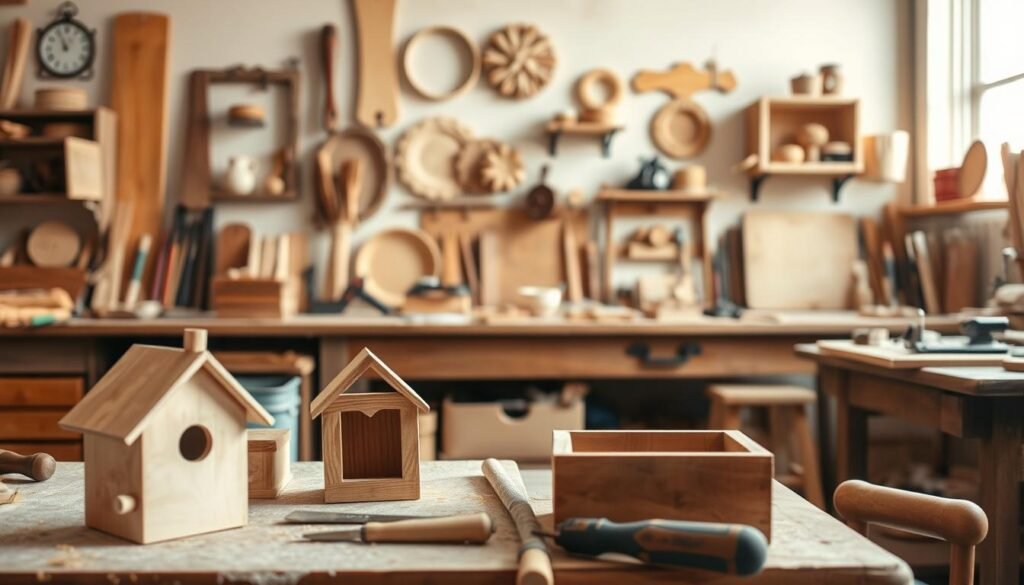
Have you ever imagined transforming your living area with handmade charm—without needing years of experience? Whether you’re drawn to rustic shelves or sleek storage solutions, creating functional decor brings a unique warmth to your environment. The best part? You don’t need a fancy workshop or expensive tools to begin.
Think of this as your creative playground. Start with straightforward builds like floating shelves or minimalist plant stands—designs that blend seamlessly into your existing decor. These beginner-friendly ideas teach core skills like measuring, sanding, and finishing while delivering visible results quickly.
You’ll discover how working with natural materials can turn blank walls into curated displays or cluttered corners into organized zones. Each piece you craft becomes a conversation starter—a testament to your growing confidence with tools. And don’t worry about perfection; slight imperfections add character.
By following this guide, you’ll learn to select materials wisely, master essential techniques, and tackle designs that evolve with your skills. Soon, you’ll glance around your home and think: “I built that.” Now that’s pride you can’t buy.
Overview of Easy Wood Projects for Beginners
Curating your home’s aesthetic becomes deeply personal when you shape it with your hands—even if you’re holding a saw for the first time. Over 25 starter-friendly designs exist specifically for novices, blending skill-building with instant gratification. Think floating shelves that organize while they dazzle, or minimalist plant stands that breathe life into empty corners.
What makes these creations ideal for early-stage makers? They focus on practical learning. You’ll master measuring tape math and sanding techniques while producing items you’d happily display. Storage boxes with hidden joinery? Wall-mounted key holders with rustic charm? Each piece serves a purpose while polishing your craft.
Local hardware stores stock everything needed—pine boards, plywood sheets, and basic finishes. Projects range from 90-minute builds (like picture frames) to weekend endeavors (think coffee tables). One crafter’s secret? “Imperfect angles add personality,” as one DIY enthusiast shared. The designs hide minor flaws, letting your work appear polished even when you’re still learning.
Whether you crave functional storage or decorative accents, these initial ventures build confidence through success. You’ll graduate from simple cuts to custom staining techniques—all while transforming raw materials into conversation-starting home features.
Benefits of DIY Woodworking Projects in Your Home
Transforming raw materials into functional art offers more than just savings—it’s soul therapy. When you build pieces yourself, every curve and corner reflects your vision. Custom sizing solves those frustrating gaps between walls or under windows that store-bought options never quite fill.
The process itself becomes a sanctuary. Sanding grain patterns or staining edges creates mindful pauses in our screen-dominated days—one maker calls it “meditation with sawdust.” You’ll notice how problem-solving at the workbench sharpens decision-making in other areas of life, too.
Handmade items radiate warmth that flat-pack furniture can’t replicate. A bookshelf holding your favorite novels feels different when you’ve joined each board. That’s the power of intentional creation: everyday objects become legacy home features.
Each completed project fuels courage for the next. Start with coasters, then try floating shelves—soon you’re designing heirloom-quality storage benches. The cycle builds skills and self-trust, proving you’re capable of more than you imagined.
Getting Started: Essential Tools and Safety Tips

Launching into woodworking feels daunting—until you realize how few tools truly matter. Take Kati, who crafted her first storage bench a decade ago using just a drill, pocket hole jig, and borrowed miter saw. Her story proves that smart choices early on let you create polished pieces without emptying your wallet.
Tools Every Beginner Needs
Your starter kit should balance versatility and affordability. Focus on these essentials:
| Tool Type | Key Uses | Budget-Friendly Options |
|---|---|---|
| Power Tools | Drilling, joining, cutting | Basic drill, Kreg jig, rented miter saw |
| Hand Tools | Measuring, marking, clamping | Tape measure, carpenter’s square, bar clamps |
| Finishing Supplies | Smoothing, bonding, protecting | 120-220 grit sandpaper, wood glue, water-based stain |
Hardware stores often cut lumber to size—a lifesaver when you’re mastering measurement basics. As Kati advises: “Focus on technique first. Fancy gadgets come later.”
Safety Precautions for Woodworking
Protecting yourself isn’t optional—it’s creative fuel. Always wear ANSI-approved safety glasses and N95 masks during dusty tasks. Keep your workspace clutter-free with bright lighting to avoid slips or misaligned cuts.
Remember these non-negotiables:
- Check tools for damage before each use
- Position blades away from your body when cutting
- Store finishes in well-ventilated areas
That “measure twice” rule? It’s about more than saving materials—it builds the patience needed for complex builds. Start small, breathe deep, and let each project teach you something new.
Step-by-Step: Building a Wooden Storage Rack
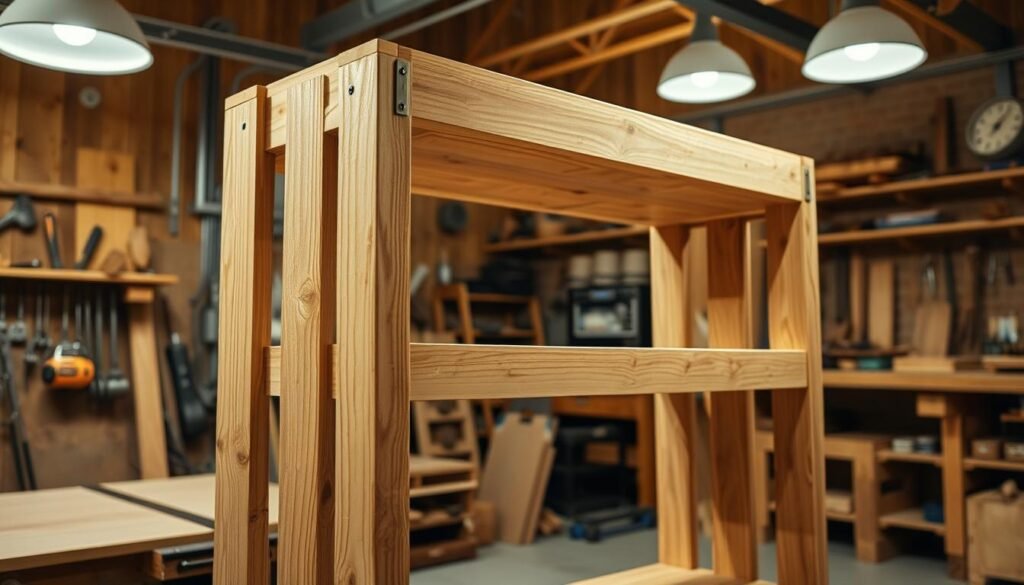
Every home needs smart storage solutions—but who says they can’t be beautiful? Crafting a custom rack teaches foundational techniques while solving real clutter problems. You’ll create something that fits your space exactly, whether it’s for muddy boots by the door or cookbooks near the stove.
Planning Your Project and Gathering Materials
Start by measuring your target area—height, width, and depth matter. Ask: “Will this hold heavy pots or lightweight scarves?” Thicker oak boards handle weight better, while pine works for painted designs. As one maker notes: “Plywood’s layered strength surprises people—it’s my secret for affordable builds.”
Construction Process and Finishing Touches
Cut vertical supports first, then horizontal shelves. Dados (grooves) keep shelves level without visible screws. Clamp pieces tightly before joining—this prevents wobble. Sand from 120 to 220 grit for silky edges, then apply stain with a foam brush for even coverage.
Your rack’s joinery method impacts both looks and durability. Pocket holes hide hardware under shelves, while exposed screws add industrial flair. Either way, you’ll master load balance and assembly sequencing. The final piece? A coat of matte polyurethane protects against scratches without glare.
Creative Ideas for Floating Shelves and Bookshelves
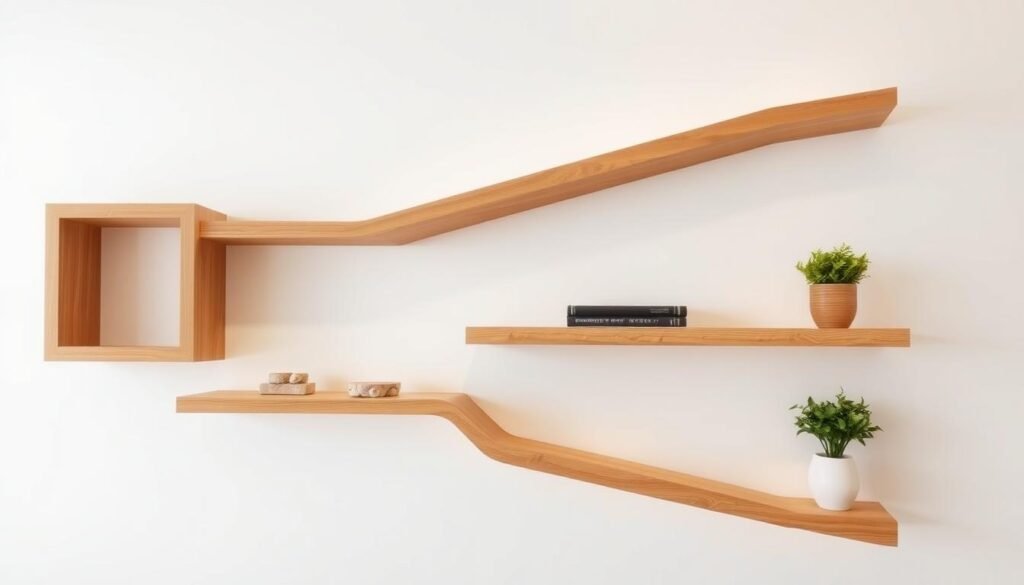
Shelves do more than hold objects—they shape how we experience a room. Floating designs blend storage with artistic flair, turning blank walls into curated displays. Whether you’re organizing cookbooks or showcasing ceramics, these structures become extensions of your personal style.
Design Inspirations for Modern Spaces
Think beyond straight lines. Asymmetrical arrangements or tiered levels add movement to minimalist interiors. One designer notes: “Angled shelves create dynamic negative space—perfect for highlighting sculptural decor.” Pair materials with your existing aesthetic—try bleached oak for coastal vibes or blackened steel brackets for industrial edge.
| Design Style | Material Pairing | Best Use |
|---|---|---|
| Organic Modern | Live-edge walnut + matte brackets | Plant displays, art books |
| Scandinavian | Painted birch + hidden hardware | Children’s toys, photo frames |
| Urban Loft | Reclaimed beams + iron pipes | Vinyl collections, barware |
Installation Techniques and Tips
Hidden brackets demand precision. Mark stud locations first—use a level to ensure perfect alignment. For heavy loads, toggle bolts provide up to 300 lbs of support. Pro tip: Install LED strips before securing shelves to hide wiring.
Consider shelf depth variations. Deeper lower shelves ground the design, while narrower upper tiers keep sightlines clean. This approach balances visual weight and maximizes space efficiency. Always test-load your creation before finalizing—those encyclopedias might need extra reinforcement!
Transforming Outdoor Spaces with DIY Wooden Garden Projects
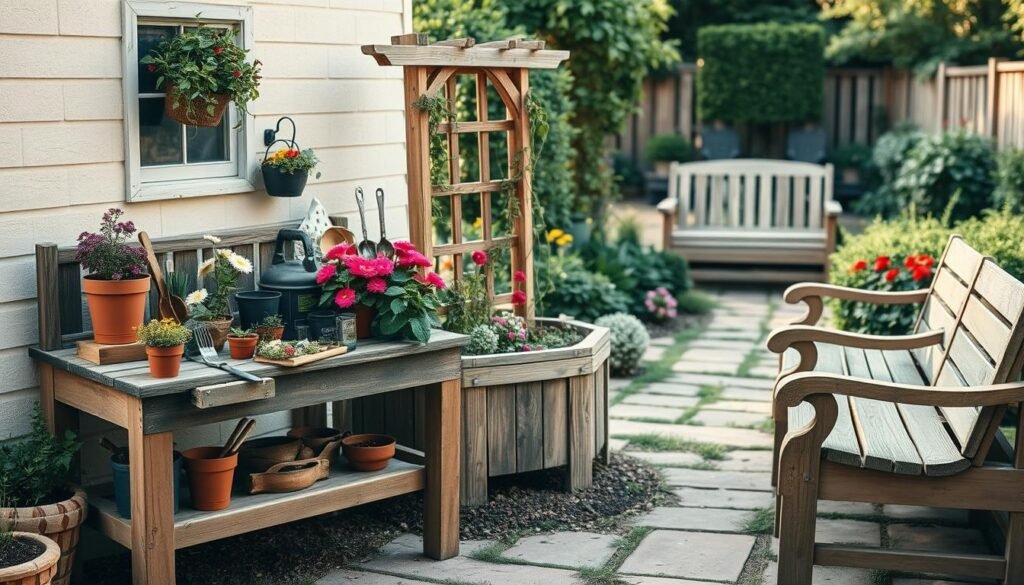
Your backyard holds untapped potential—a blank canvas waiting for your creative touch. Imagine stepping outside to tend herbs in custom-built planters or harvest tomatoes from structured beds that blend form and function. Outdoor builds let you merge practicality with natural beauty while expanding your maker skills beyond four walls.
Building Raised Garden Beds
Elevated planters solve common gardening headaches. They prevent soil compaction, keep weeds at bay, and let you control drainage with strategic gaps between boards. One urban gardener shared: “My kale thrives in cedar beds—no more kneeling in muddy soil!”
Start with rot-resistant materials like redwood or pressure-treated pine. These withstand rain and sun without warping. For small spaces, try tiered designs—deeper beds for root vegetables below, shallow tiers for herbs above. This vertical approach maximizes yield in compact areas.
Key considerations when planning:
- Sloped sites need leveling before assembly
- Line beds with landscape fabric to deter pests
- Space boards ¼” apart for natural wood movement
Modular designs grow with your ambitions. Connect multiple boxes into geometric patterns or add trellises for climbing plants. These adaptable structures teach joinery techniques that withstand outdoor elements—skills you’ll reuse when building benches or pergolas later.
Custom Woodworking for Your Kitchen and Living Room
Crafting for high-traffic areas blends utility with personal expression. Your kitchen and living spaces demand pieces that handle daily demands while reflecting your style—without shouting “DIY project.” This is where form meets function in the most delicious ways.
Functional Pieces for Everyday Use
Start where life happens most. A well-designed cutting board becomes your sous-chef—maple resists knife marks, while walnut adds richness to charcuterie spreads. Pro tip: End-grain construction minimizes splitting. For serving trays, curved handles prevent slips during hosting marathons.
| Project Type | Key Considerations | Material Tips |
|---|---|---|
| Cutting Boards | Food-safe finishes, wood hardness | Maple, walnut, cherry |
| Serving Trays | Handle ergonomics, weight balance | Plywood with oak veneer |
| Coffee Tables | Leg stability, surface durability | Reclaimed pine, steel hairpin legs |
Living room builds teach spatial awareness. A coffee table’s height should align with sofa cushions—18″ works for most. Try breadboard ends to prevent warping on wider tables. As designer Mara Teague notes: “Thicker isn’t always better. Proportion creates elegance.”
Finishes tell their own story. Use mineral oil for butcher blocks and water-based polyurethane for tabletops. These choices protect against garlic stains and wine rings while letting grain patterns shine. Your creations become silent partners in daily life—reliable, beautiful, and unmistakably yours.
Mastering easy wood projects: Tips for Beginners and Beyond
Growing your craft starts with embracing imperfection—each sanded edge and angled cut builds mastery over time. Beginners often discover their style through trial and error, transforming basic builds into signature pieces. The journey from first cuts to custom designs follows a natural rhythm: start simple, refine skills, then innovate.
Smart Strategies for Skill Development
Early-stage makers thrive with budget-friendly materials. Pine boards and plywood sheets offer forgiving surfaces for practicing joints and finishes. As one workshop instructor notes: “Your third cutting board will outshine your first—that’s progress, not perfection.”
| Project Type | Skills Practiced | Material Recommendations |
|---|---|---|
| Picture Frames | Miter cuts, glue-up techniques | Poplar, 1×2 boards |
| Wall Organizers | Drilling precision, finish application | Sanded plywood, acrylic paint |
| Plant Stands | Structural balance, staining | Construction-grade lumber |
Personalization separates generic items from cherished decor. Try chamfered edges on shelves or hand-rubbed wax finishes. These details require minimal tools but maximize visual impact.
Choose builds that challenge one new technique per project. A storage box with dovetail joints expands your skillset while reinforcing measurement fundamentals. Mistakes? They’re tuition for your education—every misplaced nail teaches spatial reasoning.
Assemble a toolkit gradually. Corner clamps ensure square assemblies, while a router adds decorative profiles later. With each completed piece, you’ll gain confidence to tackle more complex designs that match your evolving taste.
Exploring Versatile Woodworking Designs: From Boxes to Frames
The beauty of handmade decor lies in its flexibility—your creations adapt as your skills and spaces evolve. Start with foundational builds like boxes and frames, which teach precision while solving real organizational needs. These designs grow with you, offering endless ways to refine aesthetics and functionality.
Modern vs. Rustic Styles
Your personal style shines through material choices. Sleek maple boxes with hidden joinery suit minimalist spaces, while reclaimed barnwood frames add farmhouse charm. One maker’s trick? “Mix textures—try a smooth walnut photo frame paired with rough-hewn floating shelves for contrast.”
Adaptable Designs for Any Room
Versatility defines great craftsmanship. A plant box becomes a bathroom vanity organizer with waterproof paint. Picture frames double as menu boards when lined with chalkboard vinyl. For tight spaces, shallow wall-mounted shelves keep essentials within reach without crowding.
These projects prove that storage solutions can be both practical and poetic. Whether building a jewelry box with velvet lining or a display rack for vintage plates, your work becomes part of daily life’s rhythm—quietly useful, undeniably yours.