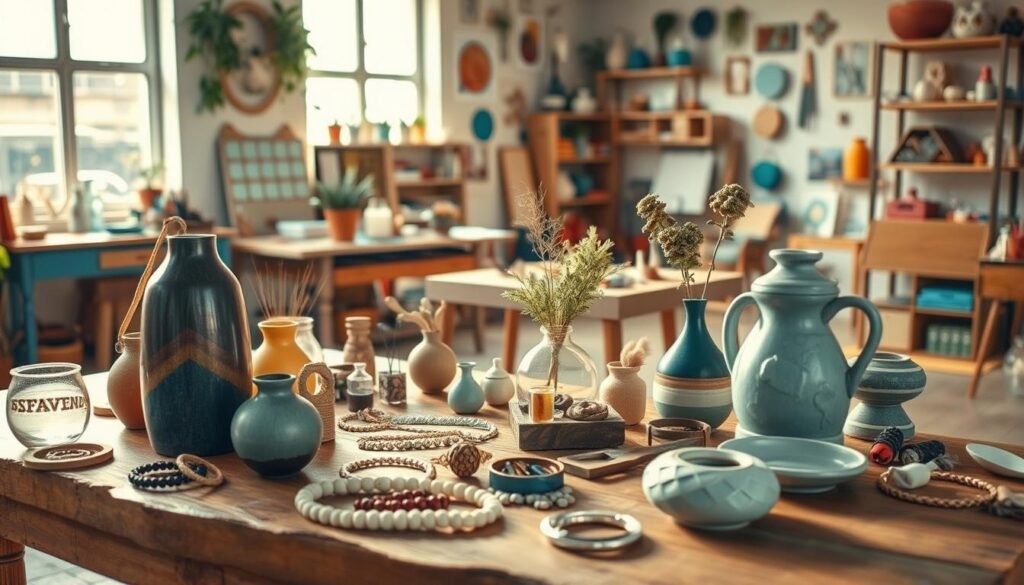
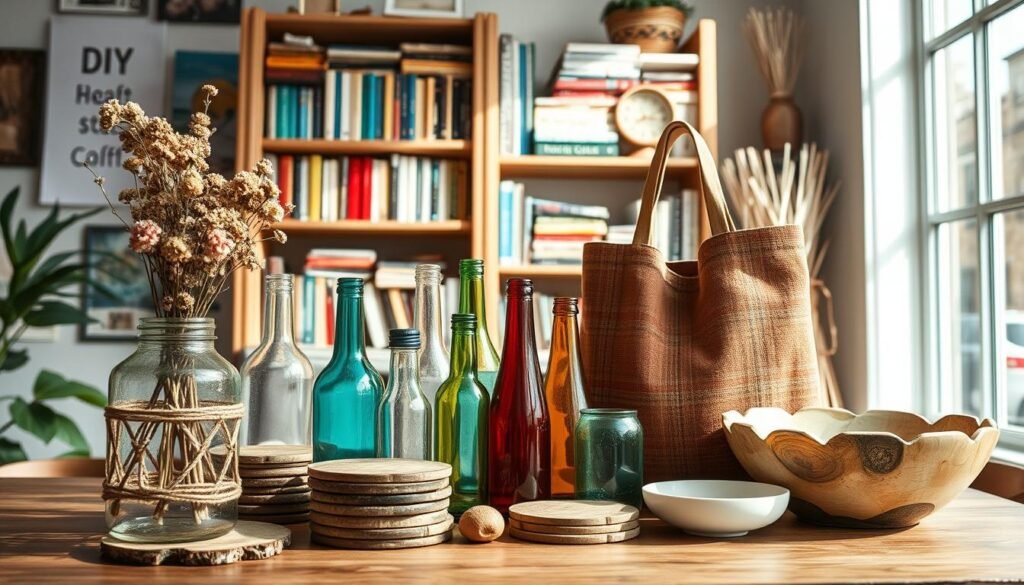
Imagine turning forgotten items into stunning decor while nurturing your creativity and the planet. That’s the magic of upcycled projects—they let you breathe new life into materials others overlook. Whether you’re repurposing glass jars into chic vases or transforming old sweaters into cozy pillow covers, these activities offer more than just a creative outlet.
Research shows creative work reduces stress and sharpens mental clarity—benefits every busy entrepreneur needs. But here’s what makes this even better: sustainable crafting aligns perfectly with values-driven living. You’ll create pieces that tell stories and minimize waste, all without overspending on supplies.
This guide isn’t just about glue guns and paintbrushes. It’s designed to help you merge artistry with purpose. We’ll start with simple starter projects (think 15-minute transformations) before diving into advanced techniques for seasoned makers. Along the way, you’ll discover how these skills can enhance your content creation or product lines—yes, even your side hustle deserves that handmade touch.
Ready to turn “trash” into treasure while boosting your well-being? Let’s explore how intentional making can refresh your space, calm your mind, and amplify your eco-friendly brand.
Welcome to Eco-Friendly Crafting
Your hands hold more power than you realize—they can reshape discarded objects into meaningful art while rewiring how you interact with the world. Sustainable crafting isn’t just about glue sticks and fabric scraps. It’s a mindful rebellion against fast consumerism that sharpens your creativity and soothes your mind.
Discover the Benefits of Sustainable Art
Studies reveal that tactile activities lower cortisol levels by 30%—your brain literally relaxes when shaping materials into something new. This process becomes a meditation. Old wine bottles become elegant vases. Scrap wood morphs into floating shelves. Each project trains you to see potential where others see waste.
You’ll notice subtle shifts beyond your workspace. The act of transforming items changes how you shop, decorate, and even problem-solve. Suddenly, that chipped mug isn’t trash—it’s a succulent planter waiting to happen.
How Upcycling Transforms Your Space
Your home becomes a gallery of stories. A denim curtain made from worn jeans sparks conversations. A bookshelf crafted from pallet wood radiates rustic charm. These pieces don’t just look good—they feel different because you invested intention into every stitch and brushstroke.
This approach also builds brand authenticity. Eco-conscious customers gravitate toward businesses that walk their sustainability talk. Handmade decor or packaging tells clients you value purpose as much as profit—a powerful way to stand out in crowded markets.
Why Crafting is Great for Eco-Conscious Adults
Ever wonder why knitting feels like therapy or painting becomes your stress sanctuary? Creating with purpose does more than reduce waste—it rewires how you experience daily life. Neuroscience shows hands-on activities trigger dopamine release, that sweet satisfaction spark we crave.
Mental Health and Creative Expression
When your hands shape materials, your brain lights up like a holiday display. Studies prove repetitive motions—like sanding wood or stitching fabric—activate alpha waves. These brain patterns calm racing thoughts better than scrolling through emails. That’s neuroscience working in your favor.
For busy adults juggling multiple roles, these moments matter. A 2022 Yale study found 45 minutes of creative work lowers stress hormones by 28%. Your hands become mindfulness tools. Scissors snip away tension. Paintbrushes sweep mental clutter. Each project carves space for clarity.
The best part? This creative flow lifts your mood long after you put down the glue gun. Finished pieces become confidence boosters—tangible proof you can transform scraps into beauty. That reclaimed picture frame isn’t just decor. It’s a reminder of your resilience.
Through sustainable making, you process emotions without words. Choosing eco-materials aligns actions with values. Every upcycled item whispers, “I care”—about mental wellness, planetary health, and living intentionally. Now that’s art with soul.
Fun Craft Ideas For Adults
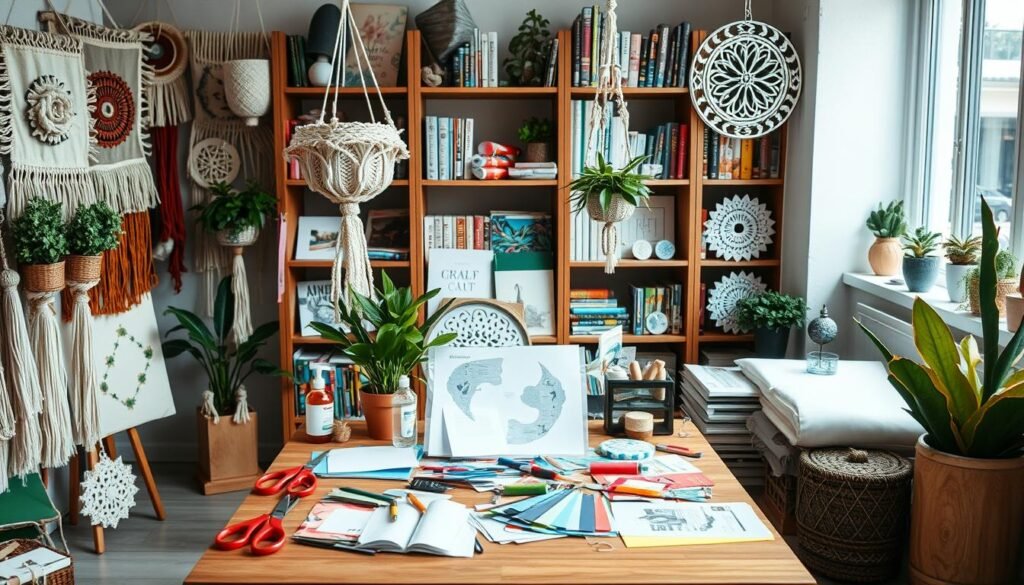
What if your next creative session could refresh your living space and spark joy for weeks? The world of sustainable making offers endless possibilities—think beaded jewelry from broken ceramics or candle holders shaped from salvaged wood. These aren’t just weekend distractions. They’re invitations to reimagine materials while building skills that align with your values.
Trending categories meet every maker’s style. Macrame plant hangers add boho flair to minimalist spaces. Upcycled denim tote bags merge fashion with function. Prefer quick wins? Try paper flowers from old magazines—they’re instant mood boosters. For detailed thinkers, woodworking transforms pallets into floating shelves that command attention.
Your personality shines through your choices. Bold creators might dive into resin coasters with pressed botanicals. Methodical types thrive in precise candle-pouring techniques. And here’s the bonus: that macrame wall hanging you designed could become a bestseller at local markets. Platforms like Etsy see 40% annual growth in eco-conscious decor shops.
Modern crafting tools make sustainability seamless. Water-based paints replace toxic alternatives. Digital templates ensure zero paper waste. This isn’t your grandma’s crochet circle—it’s artistry redesigned for climate-aware lifestyles. Your hands don’t just make beautiful things. They craft legacies of mindful consumption.
Upcycling Techniques and Eco-Friendly Materials
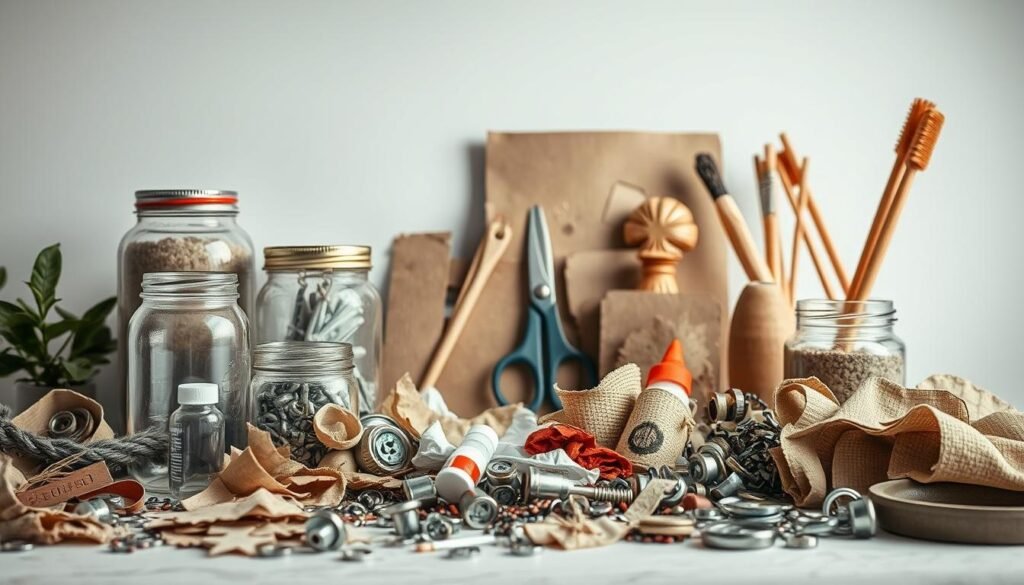
Your craft table becomes an eco-lab where yesterday’s trash transforms into tomorrow’s treasures. This isn’t just glue-and-go creativity—it’s strategic reuse that marries environmental care with smart design. Let’s explore how selecting the right materials and mastering fundamental methods can elevate your sustainable practice.
Choosing Sustainable Supplies
Start by reimagining what’s already around you. That chipped teacup? Perfect for succulent propagation. Those paint-splattered jeans? Raw material for statement coasters. Smart makers know thrift stores are goldmines—scan shelves for glass jars, fabric remnants, and hardware with good bones.
Build your toolkit gradually. A strong adhesive, sandpaper, and non-toxic sealants handle 80% of projects. For woodworking, borrow tools from local maker spaces before investing. This way, you minimize waste and expenses while testing new techniques.
Simple Upcycling Processes
Preparation separates slapped-together pieces from heirloom-quality work. Wash glass thoroughly to remove labels. Sand wood until it’s smooth as morning coffee. For fabric, pre-shrink materials to avoid warping later. These steps ensure your creations last beyond trends.
Develop your eye through daily practice. That cracked picture frame? Prime candidate for mosaic art. Warped baking sheets? Industrial-chic wall organizers. When sourcing supplies, partner with cafes for used jars or flooring companies for wood scraps—they often give materials free to eco-conscious creators.
Remember: sustainable making isn’t about perfection. It’s about progress. Each project sharpens your ability to see potential—and that’s a skill no store-bought supply can replicate.
DIY Upcycled Home Decor Projects
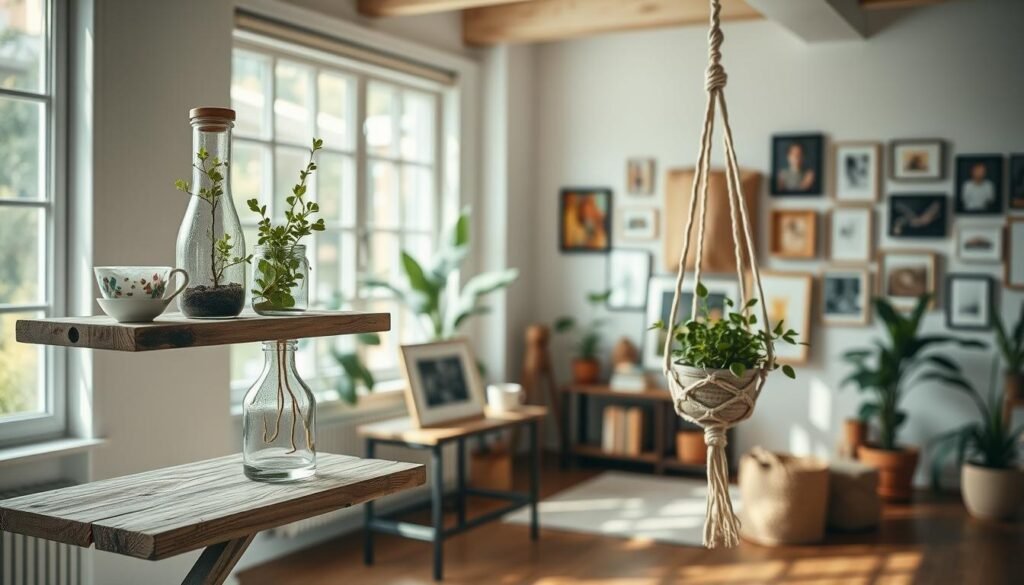
Your front door whispers stories before guests even step inside—why not make that introduction unforgettable? Transform overlooked household items into conversation-starting pieces that blend sustainability with sharp design sensibility. This isn’t just decorating—it’s curating character for your space.
Front Door Magic: Doormat Makeovers
That plain coir mat holds untapped potential. Outdoor acrylic paints turn it into a vibrant welcome—think geometric patterns or nature-inspired motifs. Use stencils for crisp lines, then add jute tassels for texture. Pro tip: seal with clear waterproof spray to protect your art from rain.
Wall Narratives: Unexpected Materials
Old window frames become functional art with mini bulldog clips hot-glued across the panes. Hang photos, notes, or dried flowers for a rotating gallery. Prefer texture? Mount reclaimed wood slices in staggered heights—their natural edges add organic warmth to modern spaces.
Placement matters. Cluster smaller pieces near seating areas to draw eyes inward. Anchor large walls with statement items like book-page wreaths or painted metal grids. Every choice reflects your story—proof that thoughtful decor needs neither perfection nor price tags.
Floral Crafts and Paper Art
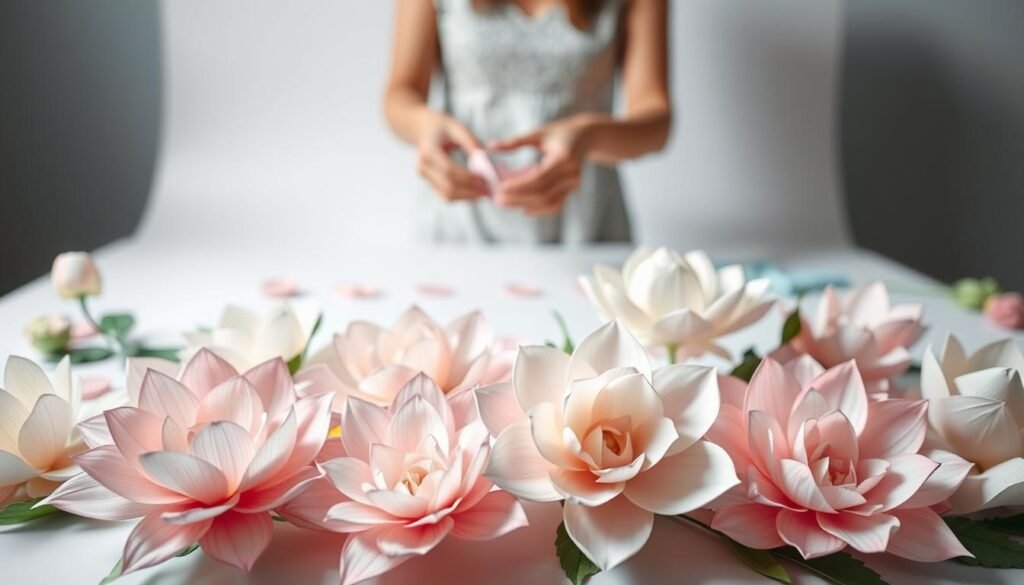
Paper holds untapped potential beyond notebooks and origami cranes. With simple folds and strategic cuts, you can design botanical masterpieces that rival fresh blooms. This art form combines sustainability with endless customization—perfect for personalizing spaces or elevating gift presentations.
Paper Flower Gift Toppers
Transform ordinary packages into keepsakes with handmade floral accents. Start by selecting textured paper—crêpe varieties mimic delicate petals beautifully. Cut petal shapes in graduating sizes, then layer them around a central stamen made from rolled cardstock. Secure layers with double-sided tape for invisible bonding.
Accordion Paper Flowers for a Blooming Look
Create dimensional daffodils or peonies using the accordion technique. Fold colored sheets vertically, then horizontally to form tight pleats. Fan out the folded paper and secure the center with floral wire. For realistic touches, curl petal edges with scissors and add watercolor gradients to mimic nature’s imperfections.
Color theory elevates your designs. Pair muted sage leaves with vibrant coral petals for modern contrast. Use metallic papers sparingly—they catch light like morning dew when placed near windows. These creations work equally well as table centerpieces or wall installations, proving eco-friendly art adapts to any aesthetic.
Advanced makers can build entire gardens from paper scraps. Vary bloom sizes by adjusting fold widths, and mix matte with translucent papers for depth. Your finished arrangements become conversation starters—lasting reminders that beauty often grows from simple materials.
Crafting with Acrylic Paint and Art Supplies
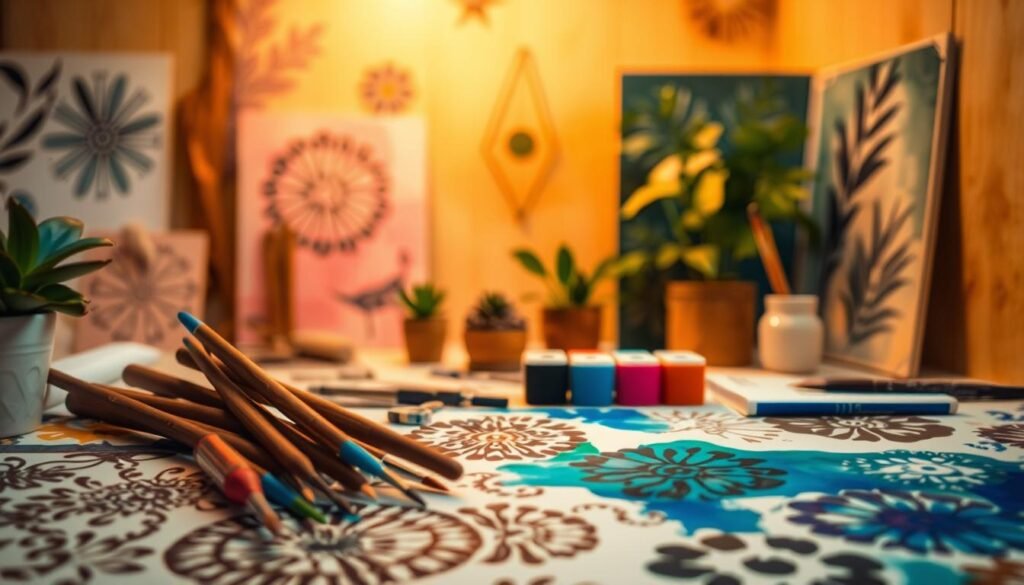
Transform ordinary materials into striking designs using tools you already own. Acrylic paint becomes your secret weapon here—its versatility lets you customize surfaces from fabric to glass with professional results. Whether refreshing a tired tote or adding personality to plain candles, these techniques blend practicality with artistic flair.
Stenciling Tote Bags with Crisp Patterns
Start with a solid canvas bag—the perfect blank slate. Secure your floral stencil using repositionable adhesive spray. Dab acrylic craft paint through the cutouts with a stippling brush for sharp edges. Let dry completely before heat-setting with an iron (no steam!).
Personalize further with alphabet stencils along the handles. Pro tip: mix metallic and matte paints on the same design for dimensional interest. These custom carriers become walking advertisements for your creative brand—functional art that sparks conversations.
Designing Floral Candles and Wall Accents
Prep unscented pillars by wiping with rubbing alcohol—this removes wax residue for better paint adhesion. Use thin brushes or paint markers to sketch delicate vines across the surface. Layer translucent washes over opaque details to mimic watercolor effects.
Extend your designs to wall plaques using the same techniques. Paint wooden discs with abstract botanicals, then cluster them as a gallery wall. The secret? Seal finished pieces with matte varnish to protect against fingerprints while maintaining a natural finish.
These projects prove sustainable style doesn’t require expensive supplies—just smart techniques and a dash of color theory. Your creations become testaments to mindful making, blending environmental care with commercial appeal.
Innovative Wood and Resin Designs
Woodworking meets modern design in projects that redefine sustainability. Whether crafting sleek furniture or personalized accents, these techniques prove eco-conscious creation doesn’t sacrifice style. Let’s explore how simple materials become statement pieces through intentional design.
Mid-Century Modern Side Tables on a Budget
Transform a thrifted cake pan into hidden storage with this clever hack. Build a wooden base using pine boards—sand until smooth as river stones. Attach the pan upside-down to create a secret compartment for remotes or journals. Paint legs in matte black for that iconic retro silhouette.
Total cost stays under $100—a fraction of designer replicas. The magic lies in strategic material swaps. Reclaimed wood adds character, while metallic spray paint elevates basic hardware. You’ll master essential skills like measuring angles and applying food-safe sealants.
| Feature | Store-Bought | DIY Version |
|---|---|---|
| Cost | $300+ | $85 |
| Materials | Particle board | Solid wood + metal |
| Customization | Limited colors | Full creative control |
Wood-Burned Coasters and Picture Frames
Unleash your inner artisan with a pyrography pen. Start with untreated wood coasters—maple works best for crisp lines. Trace botanical stencils or freehand geometric patterns. Seal with beeswax for heat resistance that lasts through countless coffee spills.
For picture frames, sand reclaimed barn wood until your fingers glide across the surface. Burn meaningful dates or quotes along the edges. Match stains to your existing decor—espresso tones for moody vibes, whitewash for coastal charm. These pieces become heritage items, blending function with sentimental value.
Pro tip: Source materials from demolition sites or furniture workshops. Many offer scrap wood free to eco-conscious makers. Your creations won’t just decorate spaces—they’ll whisper stories of resourcefulness with every glance.
Edgy Jewelry and Accessory Crafts
What if your jewelry box held stories of transformation? Accessory-making blends personal style with planetary care—one wire twist at a time. These projects prove small-scale creations carry big impact, turning forgotten materials into wearable art that sparks conversations.
Wire-Wrapped Pendants: Where Geology Meets Geometry
Select stones with character—raw quartz points or sea-glass fragments work beautifully. Use 20-gauge copper wire for structural integrity. Begin by creating a base loop, then weave strands around your centerpiece. Pro tip: half-round wire grips better than fully rounded varieties.
Master tension control through practice. Too tight? You risk cracking crystals. Too loose? The setting loses security. Finish with a brushed metal patina or clear lacquer to prevent tarnishing. These pendants become signature pieces—each as unique as your creative fingerprint.
Bumble Bee Bookmarks: Whimsy Meets Function
Leftover felt transforms into page-saving companions. Cut oval bodies from yellow scraps, then add black felt stripes. Embroider smiley faces using three-strand floss—it’s forgiving for beginners. Glue miniature wings from organza scraps for ethereal touches.
These aren’t just reading aids. They’re conversation starters that nestle between favorite novels or business manuals. Cluster them as gift toppers for book-loving friends—or test sales potential at local craft fairs. Simple designs often attract the most devoted fans.
Craft Projects for a Cozy Home
Your walls could become living journals with just a thrifted frame and some creativity. These projects blend functionality with personality—turning everyday items into pieces that elevate your space while keeping sustainability front-and-center.
Decorative Pinboards With Purpose
Transform old window frames into dynamic display hubs. Attach mini bulldog clips using a hot glue gun for hanging photos or seasonal artwork. This approach lets you rotate memories without damaging walls—ideal for renters or serial redecorators. For a vintage-inspired look, stain the wood with coffee grounds before sealing.
Discover clever ways to repurpose frames into functional art through this guide to innovative home displays. Pro tip: cluster smaller pinboards near desks to organize inspiration while adding visual texture.
Color-Charged Vase Transformations
Upgrade plain glassware using painter’s tape and spray paint. Create geometric patterns by masking sections before applying bold hues. Let dry completely before peeling—the crisp lines will make your blooms pop. For organic flair, wrap adhesive vinyl around jars in abstract shapes.
These vases do more than hold flowers. They become focal points that reflect your style—whether minimalist black-and-white or rainbow-bright. Place them on shelves or dining tables to inject energy into any room. Best part? You’re keeping glass out of landfills with every brushstroke.
Your home deserves pieces that spark joy and tell stories. With these projects, you’ll craft a space that feels authentically yours—one upcycled treasure at a time.