
Got leftover materials gathering dust? Those forgotten planks and offcuts hold untapped potential. Imagine turning them into functional art that breathes new life into your home—without emptying your wallet.
The trend of repurposing materials isn’t just practical—it’s a movement. More creators are embracing sustainable practices, finding joy in giving discarded items a second act. You don’t need fancy tools or expensive supplies to start. A little creativity transforms what’s overlooked into something extraordinary.
Why does this resonate? It’s about making sustainability stylish. Every piece you craft reduces waste while adding personality to your space. Beginners love the low stakes—mistakes become design features. Seasoned makers appreciate the challenge of working with irregular shapes and textures.
Think of it as a creative puzzle. That uneven board? A rustic shelf. Odd-sized chunks? A quirky wall organizer. The best part? That satisfying “I made this” feeling when someone admires your work. Ready to see ordinary scraps in a whole new way?
Embracing the Art of Scrap Wood Upcycling
Those forgotten pieces in your garage? They’re treasure waiting to happen. Upcycling transforms overlooked materials into statement pieces that tell stories—yours. Let’s explore why this practice resonates with creators seeking purpose and personality.
Exploring the Benefits of Repurposing Wood
Cost savings shine brightest here. Why buy new when existing materials offer hidden value? You’ll stretch budgets while reducing trips to hardware stores. It’s thrifty creativity at its finest.
Environmental wins matter too. Every salvaged board keeps landfills emptier and forests fuller. You become part of a circular economy—one where “waste” becomes tomorrow’s coffee table or wall art.
Customization and Creative Expression
Mixed textures become your signature. Imagine combining oak’s ruggedness with maple’s smoothness in one floating shelf. These imperfections? They’re design features waiting for your touch.
Beginners gain confidence through low-risk experiments. Sand that odd-shaped chunk into a bookend. Stain mismatched planks for contrast. Each project teaches new skills while reflecting your evolving style.
Seasoned crafters find fresh challenges here too. Limited materials spark inventive solutions—like turning warped boards into sculptural hooks. It’s problem-solving that fuels growth and pride in every finished piece.
diy scrap wood projects: Creative Ideas for Every Space
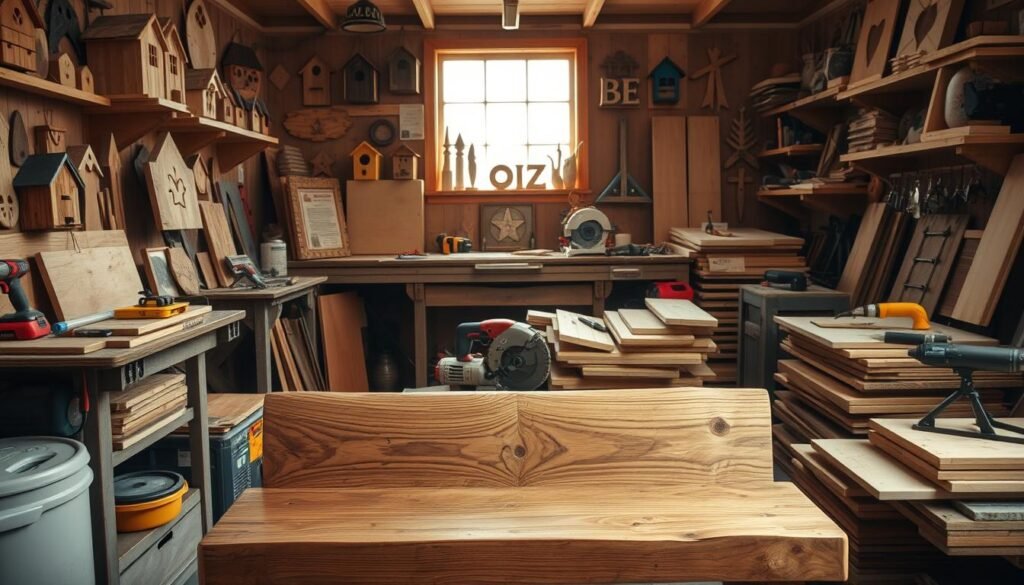
Discover how remnants can redefine your living spaces with style and purpose. Whether you’re enhancing your kitchen or crafting thoughtful gifts, leftover materials offer endless opportunities to merge practicality with artistic flair. Let’s explore projects that elevate both form and function.
Home Decor Inspirations Using Leftover Wood
Transform ordinary walls into gallery spaces with geometric art made from mismatched planks. Combine different stains for depth, or leave pieces raw for organic texture. A tiered plant stand becomes a living sculpture when paired with trailing ivy or succulents.
| Project Type | Materials Needed | Key Benefit |
|---|---|---|
| Wall Clock | Circular scrap, clock mechanism | Functional focal point |
| Candle Centerpiece | Small chunks, glass votives | Warm ambient lighting |
| Floating Shelves | Uneven boards, brackets | Display + storage combo |
Practical Projects for Organization and Gifts
Keep kitchen counters clutter-free with a vertical spice rack using criss-crossed slats. In workspaces, angled laptop stands improve posture while showcasing wood’s natural grain. For gifts, jewelry organizers with repurposed drawer pulls add sentimental value.
Consider these dual-purpose creations:
- Mail sorter with labeled compartments doubles as entryway art
- Rotating picture frame displays memories while saving shelf space
- Solar light posts illuminate pathways using offcut stakes
Sustainable and Budget-Friendly Wood Transformations
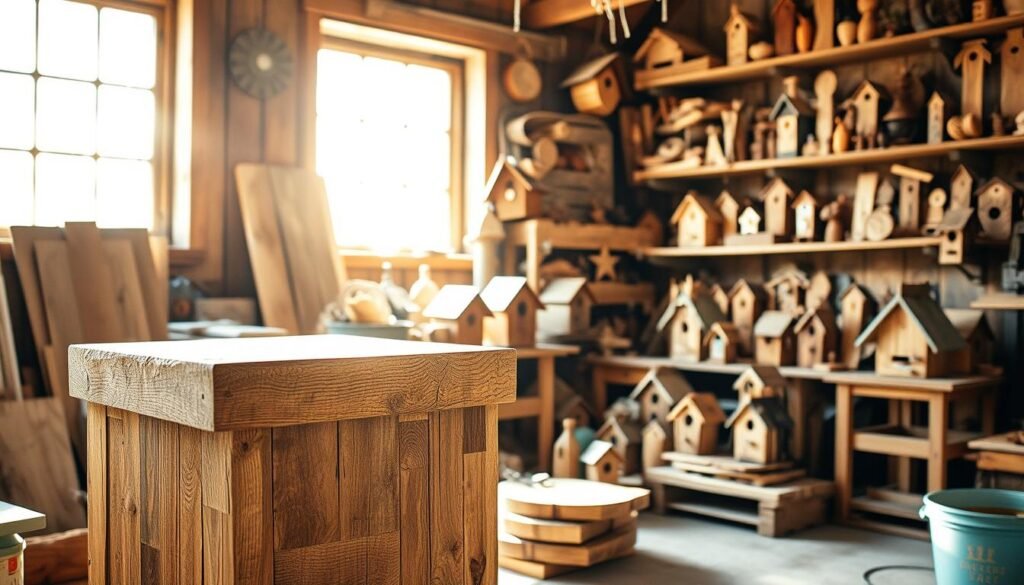
What if your creative space could fuel both your artistry and eco-conscious values? Those irregular planks and offcuts aren’t just materials—they’re opportunities to craft responsibly while keeping costs minimal. Let’s explore how sustainability and thriftiness intersect in meaningful ways.
Environmental Benefits of Using Scrap Wood
Every salvaged board tells an ecological story. When you repurpose materials, you divert them from landfills where they’d release methane—a greenhouse gas 25x more potent than CO₂. You’ll also reduce pressure on forests. Did you know? Reusing just 100 lbs of leftover wood saves approximately one tree from being harvested.
This practice supports circular economies. Instead of demanding new resources, you’re extending the life of existing ones. That weathered plank becomes a bookshelf. Those uneven slats transform into wall art. Each project quietly champions environmental stewardship.
Cost Savings and Resourcefulness in DIY
Why spend $50 on store-bought shelves when salvaged materials cost nothing? Crafting with existing supplies slashes budgets while sparking innovation. Limited pieces push you to reimagine combinations—like pairing maple remnants with metal accents for modern contrast.
| Aspect | New Materials | Salvaged Pieces |
|---|---|---|
| Cost per project | $20-$100+ | $0-$10 |
| Environmental impact | High (logging, processing) | Negligible |
| Creative potential | Standardized | Unique textures/shapes |
Imagine stretching your creativity while keeping wallets happy. You’ll master problem-solving skills too—like turning warped boards into rustic photo frames. It’s artistry that rewards both your space and savings account.
Tips, Tools, and Safety for Mastering Wood Projects
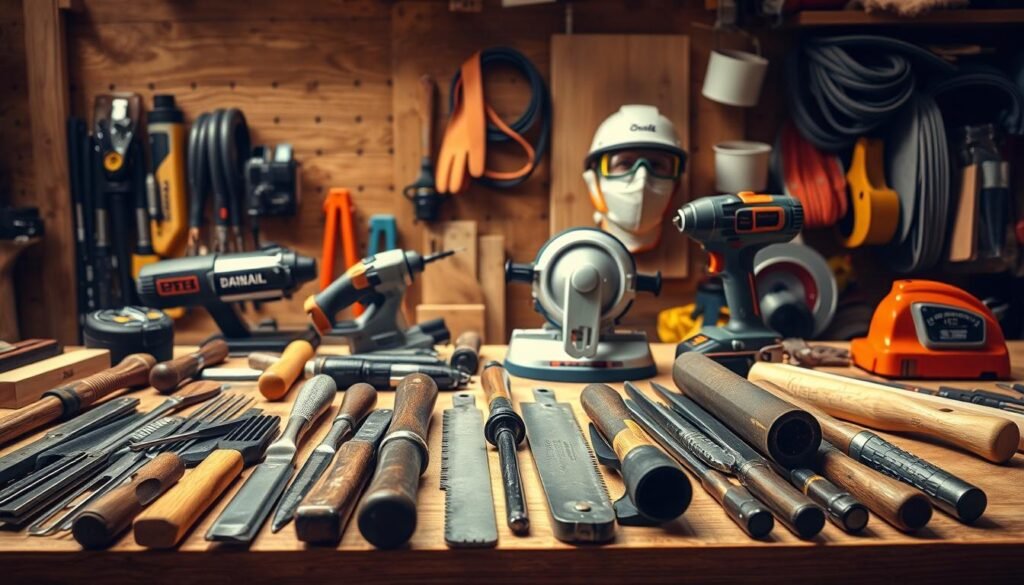
Your next masterpiece begins with the right foundation—both in materials and methods. Let’s blend creativity with technique to ensure your work shines while keeping fingers intact. Whether you’re crafting your first shelf or tenth table, these insights elevate results.
Essential Tools and Equipment
Start smart with core tools that balance precision and versatility. A quality power drill handles everything from pilot holes to assembly. Pair it with sharp cutting tools—think handsaws for detail work or circular saws for straight lines. Specialized gear like pocket hole jigs? They’re game-changers for seamless joints.
Material selection matters as much as tools. Softwoods like pine forgive rookie mistakes, while oak’s density demands sharper blades. Always inspect grain patterns and textures—they’ll guide your finishing choices. Warped boards? Flip them into rustic frames instead of fighting imperfections.
Safety Precautions and Best Practices
That satisfying hum of a saw shouldn’t drown out safety sense. Goggles first, always. Add a dust mask when sanding, and ear protection during prolonged cutting. Keep workspaces clutter-free—tripping over cords ruins focus and projects.
Master cutting angles before speeding through cuts. Secure materials with clamps, not just your free hand. Salvaged pieces from pallets? Check for hidden nails or chemical treatments. Remember: Patience isn’t just virtuous—it’s the secret to splinter-free results.
Build confidence through preparation. Measure twice, then let tools do their job. With each safe, intentional step, you’ll craft pieces that reflect both skill and care.
Innovative Ideas for Home Decor and Room Organization
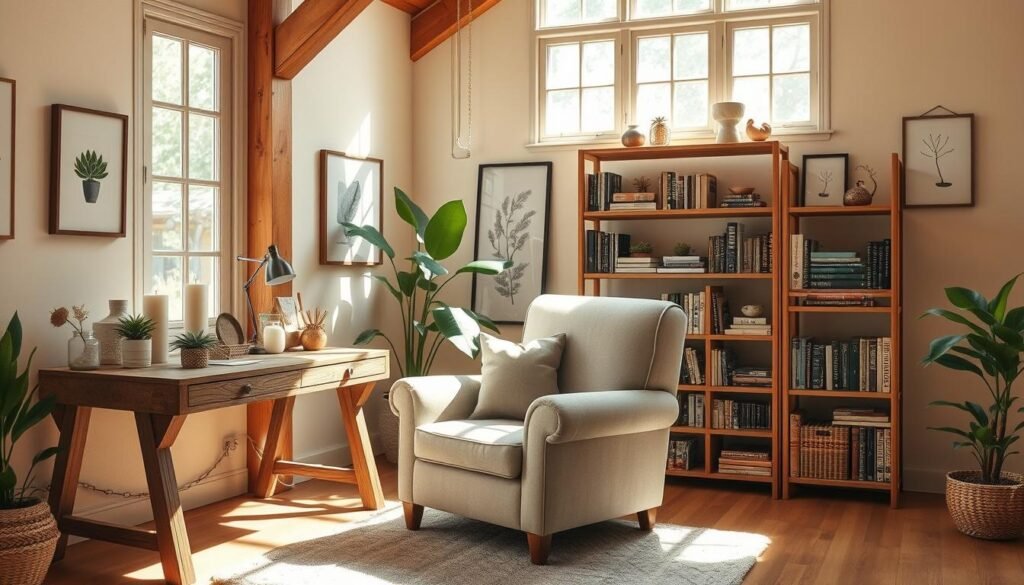
Bare walls and cluttered surfaces? They’re blank canvases waiting for your touch. With clever design thinking, every corner becomes an opportunity to blend beauty with purpose—transforming chaos into curated charm.
Creative Wall Art and Functional Furniture
Plywood becomes poetry when cut into modern wall clocks. Their geometric shapes add rhythm to empty spaces while keeping time. Pair them with floating shelves made from mismatched planks for a gallery effect that stores books or displays treasures.
Need dual-purpose solutions? A tiered plant stand organizes greenery while creating vertical interest. Use leftover 2×2 boards to craft candle holders that moonlight as table runners. They’ll protect surfaces during dinners and glow warmly at night.
Desk organization gets stylish with angled laptop risers. Their natural grain patterns turn workspace essentials into decor. For kitchens, try simple home upgrades like wall-mounted spice racks with labeled jars. They save counter space while adding rustic warmth.
Small rooms shine with rotating picture frames. These space-saving displays let you showcase multiple memories in one footprint. Bathrooms gain flair with towel hooks backed by decorative plywood cutouts—practical art that dries and delights.
Blend materials for modern edge. Plexiglass tops on wooden frames create sleek display cases for jewelry or collectibles. Test tube bud vases mounted on reclaimed boards bring living art to walls. Each piece solves a problem while sparking joy.
Conclusion
Every handcrafted piece tells a story—one where sustainability meets self-expression. What begins as forgotten materials evolves into functional art that grows with your skills. Each creation strengthens your ability to see potential where others see waste.
This journey does more than declutter your workspace. It builds confidence through small victories—a perfectly sanded edge here, a clever storage solution there. Over time, these skills ripple into other areas of home improvement, empowering you to tackle bigger challenges.
There’s beauty in the cycle of creation. As you complete projects, new remnants emerge—fueling fresh ideas. Share your successes to inspire others, whether through social media or handmade gifts. Communities thrive when creativity becomes contagious.
For ongoing inspiration, explore more inventive concepts that turn limitations into advantages. Remember: every cut, stain, and assembly isn’t just crafting—it’s cultivating a mindset where resourcefulness and beauty coexist.
Your efforts matter beyond the workshop. By choosing sustainability, you join a movement valuing both artistry and environmental care. Keep that spark alive—your next masterpiece is already taking shape.