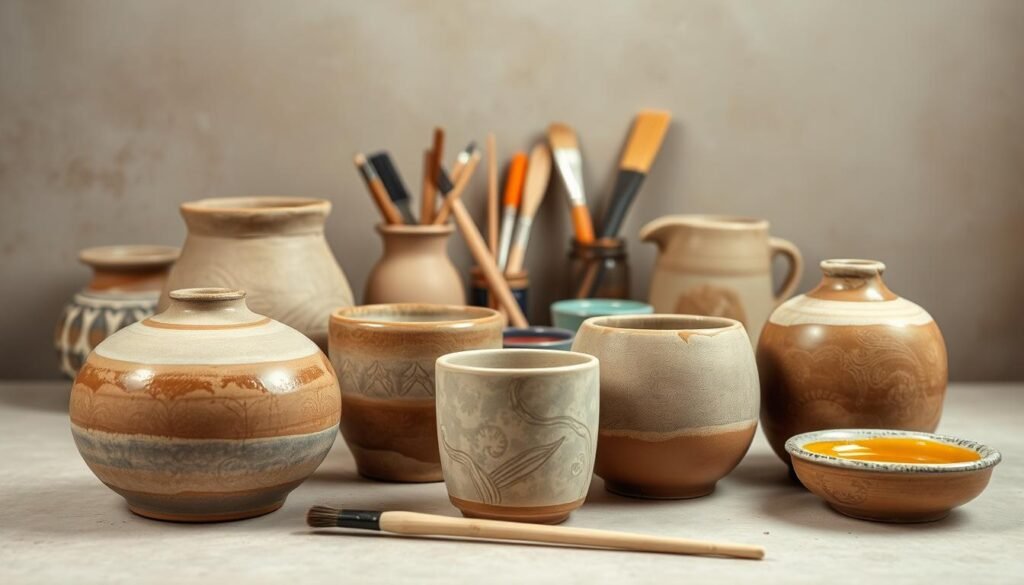

You’ve molded, shaped, and brought your artistic vision to life with that magical material that hardens without a kiln. But here’s the catch—without proper protection, your masterpiece might crumble (literally) at the first sign of moisture. That’s where the magic of finishing techniques comes in.
Unlike its ceramic cousin, this craft-friendly medium has unique needs. While it’s wonderfully accessible for creators, its porous nature means finished pieces can soften or warp when exposed to water. But don’t let that dampen your creativity! With the right approach, you can achieve both durability and that gorgeous ceramic-like sheen.
Think of sealing as your secret weapon. It’s not just about waterproofing—though that’s a big perk. A quality finish elevates colors, adds depth, and gives your work that gallery-ready polish. Whether you prefer brush-on sealants or spray varnishes, the options are as versatile as your imagination.
Ready to transform fragile crafts into heirloom-quality pieces? We’ll walk through pro techniques that balance practicality with stunning results. From kitchen-counter solutions to artist-grade products, you’ll discover how to protect your work while making every texture and detail pop.
Introduction to Air Dry Clay Glazing
Your craft projects deserve more than just drying—they need armor that dazzles. While traditional ceramic methods involve kilns and high heat, finishing air-dry creations requires a smarter approach. Let’s explore how simple coatings can turn vulnerable artworks into lasting treasures.
Overview of the Process
Sealing these porous creations works like invisible armor. Instead of firing, you’ll layer protective coatings—brushing or spraying thin, even coats. Varnishes act as both shield and spotlight, locking in colors while adding depth.
Benefits of a Glazed Finish
A quality sealant does triple duty:
- Weatherproofing: Repels moisture and resists fingerprints
- Color boost: Makes acrylics and pigments pop
- Surface magic: Unifies textures from rough to silky-smooth
| Feature | Traditional Glazing | Air Dry Method |
|---|---|---|
| Drying Time | Hours (kiln-fired) | 20-30 mins per coat |
| Finish Options | Gloss only | Matte, satin, or gloss |
| UV Protection | Limited | High (with acrylics) |
Pro tip: Always test your finish on scrap material first—some formulas can slightly alter color tones. The right sealant transforms fragile works into display-ready masterpieces that withstand daily life (and curious hands!).
Understanding Air Dry Clay: Properties and Limitations
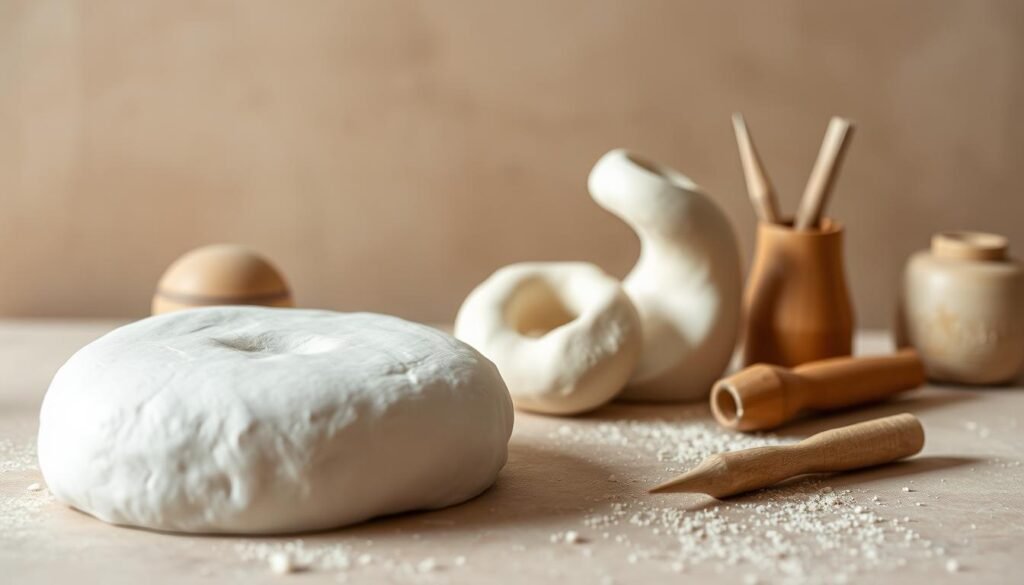
That magical material sitting on your craft desk? It’s full of surprises—both delightful and tricky. Let’s unpack what makes this medium so accessible yet demanding of thoughtful care.
Key Characteristics
No-kilne convenience means you can skip the ceramic studio. Shape jewelry bowls or decorative tiles anywhere—your kitchen counter works perfectly. But here’s the catch: pieces harden through evaporation, leaving microscopic tunnels in their structure.
These hidden pathways act like straws. Spill tea? Expect sips. Touch with oily fingers? Hello, stains. Unlike fired ceramics that become glass-like, your creations stay slightly spongy—ready to absorb liquids or humidity.
| Feature | Air Dry Material | Traditional Ceramic |
|---|---|---|
| Drying Method | Evaporation | Kiln Firing |
| Water Resistance | Low (absorbs moisture) | High |
| Edge Durability | Prone to chipping | Resilient |
| Maintenance | Requires sealing | None needed |
Thin areas? Handle with care. Detailed carvings? They’ll need extra protection. This doesn’t mean your work is fragile—it just needs smart reinforcement. A well-sealed piece can withstand daily use while keeping its handmade charm intact.
Pro insight: Test finishes on scrap clay first. Some sealants darken surfaces slightly—plan your color choices accordingly. With the right prep, your art becomes both gallery-worthy and functional.
Why Glaze Your Air Dry Clay Creations?
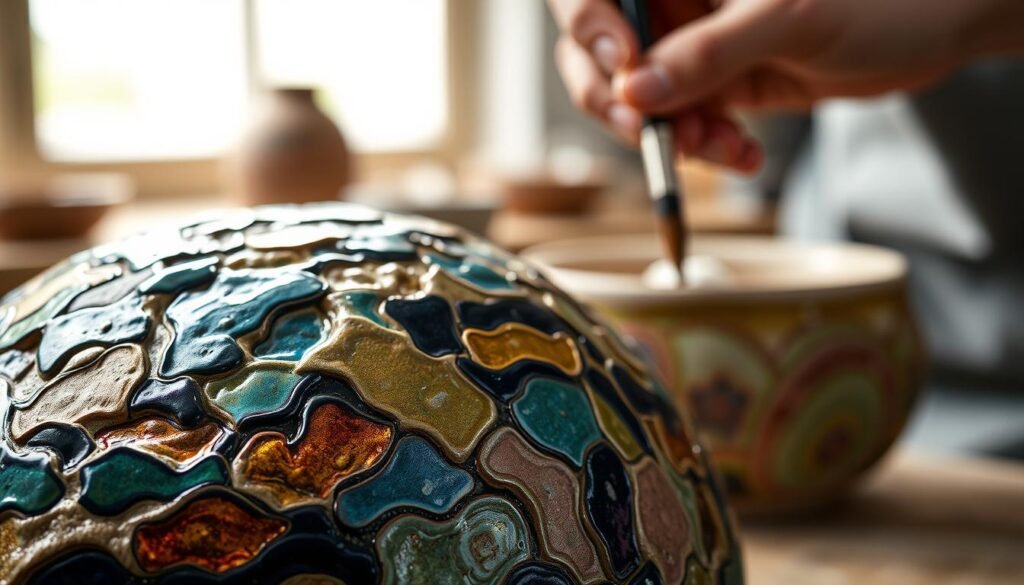
Ever held a finished piece that felt incomplete—like it needed that final touch to truly shine? That’s where protective finishes step in. While your air dry projects harden beautifully, they crave reinforcement to withstand real-world use and showcase their full potential.
Enhancing Durability and Appearance
Think of sealing as giving your work superpowers. A quality finish does more than prettify—it transforms fragile crafts into resilient treasures. Here’s what happens when you add that crucial layer:
| Feature | Glazed | Unglazed |
|---|---|---|
| Color Vibrancy | Rich, saturated hues | Dull or chalky tones |
| Moisture Resistance | Repels spills | Absorbs liquids |
| UV Protection | Prevents fading | Sunlight damage risk |
| Surface Texture | Unified finish | Uneven pores visible |
Your creation becomes practically indestructible—well, almost. Coffee rings wipe away easily. Dust can’t settle into intricate details. Best part? Those hand-painted colours stay bold for years, not weeks.
And let’s talk look. That glossy sheen makes people lean in closer. Matte finishes give modern sophistication. Satin options? Pure magic for textured surfaces. Suddenly, your craft looks like it belongs in a boutique window—not just your bookshelf.
Glaze for Air Dry Clay: How to Choose Your Finish
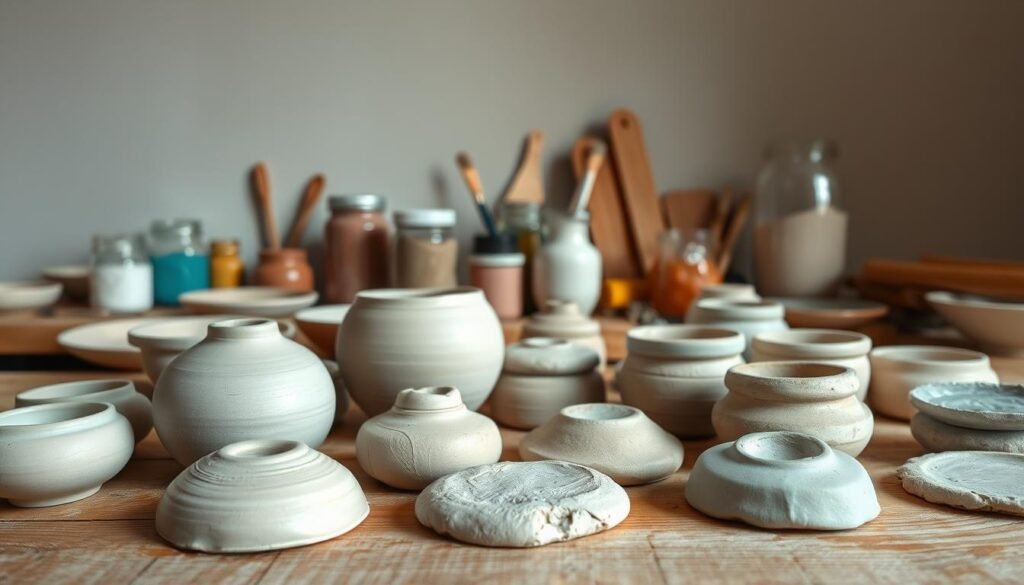
The final touch on your masterpiece isn’t just about shine—it’s about smart protection. With endless options crowding craft store shelves, your choice hinges on two factors: how your piece will live (shelf queen vs. daily warrior) and the look you’re chasing (museum matte or glass-like gleam). Let’s crack the code.
Traditional vs. DIY Glaze Options
Budget-friendly craft glue (like PVA) works for temporary pieces—think kids’ art or seasonal decor. It dries clear but yellows over time, especially near windows. For sturdier projects, Mod Podge offers better water resistance, though sunlight remains its nemesis.
DIY mixes let you play chemist. Blend clear nail polish with glue and water for a custom glaze—add acrylic paint drops for tinted effects. Fun? Absolutely. Durable? Not quite. These homemade solutions suit experimental pieces but lack UV protection.
Acrylic and Varnish Sealants Comparison
When longevity matters, use acrylic sealers or polyurethane varnish. Here’s the breakdown:
| Type | Best For | Dry Time |
|---|---|---|
| Acrylic gloss | Indoor decor | 30 mins |
| Spray varnish | Textured surfaces | 15 mins |
| Polyurethane | Outdoor items | 2 hours |
Pro picks like DecoArt Triple Thick Glaze deliver ceramic-like depth in one coat. Spray options? Ideal for intricate carvings. Match the finish to your piece’s purpose—matte for rustic bowls, high-shine for statement jewelry.
Preparing Your Clay: Drying and Surface Prep
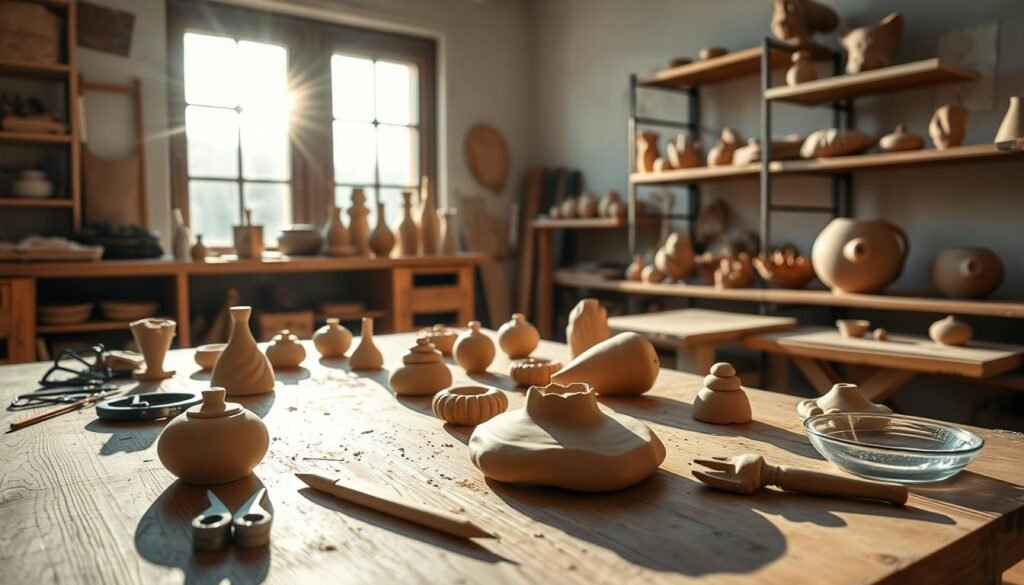
Ever wondered why your finished pieces sometimes crack or lose their shine? The secret lies in what happens before the finishing touches. Proper preparation turns fragile crafts into lasting treasures.
Ensuring Complete Dryness Before Glazing
Time is your silent partner here. Rushing leads to cloudy finishes or worse—trapped moisture causing cracks. Wait 72 hours minimum after shaping. Cool-to-the-touch surfaces signal readiness, while any residual softness means more waiting.
Painted pieces need extra care. Acrylics demand 24 hours to cure fully. Thick layers? Add 12-24 more. Oil-based paints require weeks—patience pays in pristine results.
Effective Surface Cleaning Techniques
Dust is the enemy of smooth finishes. Use a soft makeup brush (yes, really!) to sweep away particles. Check crevices with a cotton swab—lint-free precision matters.
For stubborn debris:
- Gently wipe with slightly damp microfiber cloth
- Use compressed air for intricate details
- Never scrub—you’ll scratch the surface
“The difference between good and great? It’s in the invisible prep work.”
| Material | Dry Time | Surface Test |
|---|---|---|
| Unpainted | 72 hours | Cool & firm |
| Acrylics | 24-48 hours | No tackiness |
| Oils | 2-4 weeks | Odor-free |
Step-by-Step Glazing Application Process
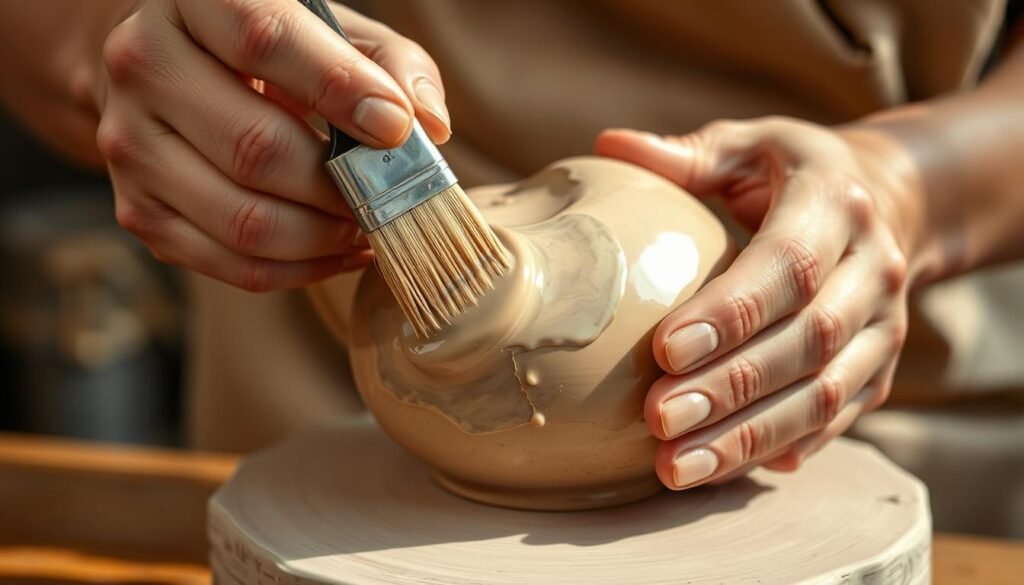
Witness your creation evolve from fragile craft to gallery-worthy art with these pro application secrets. The right technique turns streaky disasters into flawless finishes—no kiln required.
Applying Thin Coats for a Smooth Finish
Grab a 2-inch flat brush reserved only for sealants. Dip just the tip into your varnish, then swipe it against the container’s edge. This removes excess product—your defense against drips.
Work top to bottom in long, even strokes. Maintain a “wet edge” by slightly overlapping each pass. If the piece dries too quickly, you’ll see lap marks. Pet owners: close windows to keep fur out!
Layering Methods to Build Depth
First coat? Let it cure 24 hours—no shortcuts. Sand lightly with 400-grit paper between layers for glass-like smoothness. Second application? Brush perpendicular to initial strokes to erase texture.
| Method | Tools | Coats Needed | Finish |
|---|---|---|---|
| Brush | Flat synthetic | 2-3 | Hand-painted texture |
| Sponge | Wedge applicator | 3-4 | Organic variation |
| Spray | Aerosol can | 1-2 | Factory-smooth |
Pro tip from ceramicist Lila Monroe:
“Treat each layer like a separate sculpture session—patience rewards you with depth.”
Heavy-duty projects? Add a fourth coat to high-contact areas. Watch light dance across surfaces that once looked flat. Your work now wears its armor with elegance.
Exploring Varnish and Sealant Options
The final flourish on your artwork isn’t just about protection—it’s about personality. Your choice between brush and spray techniques shapes both the process and the result, turning functional coatings into artistic statements.
Precision Brushes vs. Misty Sprays
Spray varnish becomes your ally for complex sculptures with labyrinthine textures. Its fine mist slips into every crevice, creating museum-quality uniformity on detailed surfaces. But remember—always apply outdoors. Those fumes mean business.
Brush-on methods shine when control matters. Mix matte and glossy varnish acrylic to craft custom sheens. Perfect for flat surfaces or color-blending experiments, this approach lets you work anywhere—rain or shine.
| Method | Best For | Pro Tip |
|---|---|---|
| Spray | 3D pieces, loose pigments | Use rotating turntable |
| Brush | Mixed-media art | Try foam wedges |
Indoor crafters? Embrace brush techniques. Outdoor warriors? Spray away. Whichever you choose, test your finish on scrap clay first. Your masterpiece deserves perfection—no compromises.