
Ever opened your kitchen storage space and felt instant overwhelm? Jumbled spice jars, half-empty snack bags, and mystery containers create chaos that slows down meal prep. But here’s the secret: a functional, beautiful storage area isn’t just for Instagram influencers.
Transforming cluttered shelves into a streamlined system solves daily frustrations. No more buying duplicate items or wasting time digging for ingredients. Even better – it boosts your cooking creativity when everything has its place.
You don’t need a magazine-worthy walk-in design to make this work. Clever solutions like tiered organizers, clear bins, and vertical dividers maximize space in even the tiniest nooks. Pro tip: Start by sorting items into zones (baking supplies, snacks, breakfast staples) to build a layout that matches your routine.
This guide blends practical strategies with aesthetic touches – think woven baskets for texture or chic labels for cohesion. Ready to create a space that sparks joy and saves time? Let’s turn that jumbled corner into your kitchen’s secret weapon.
Introduction to Innovative Pantry Concepts
Your pantry isn’t just a closet—it’s a canvas for culinary creativity. For years, these areas were treated like storage jail cells – dark corners where expired crackers and lonely spices went to hide. But modern design flips this script entirely.
Today’s best solutions blend smart functionality with visually appealing features you’ll want to show off. Glass-front cabinets reveal neatly stacked ingredients like edible decor. Pull-out racks turn deep shelves into accessible command centers. Even small nooks can become functional art with color-coded containers or floating wood shelves.
The secret? Treat this zone as your kitchen’s backstage crew. It should support your cooking routine while reflecting your style. A coffee station with built-in grinders. Baking supplies arranged like a pastry chef’s toolkit. Snack zones that make lunch-packing effortless.
This shift isn’t about luxury – it’s about creating intentional spaces that work harder for you. Whether you’re revamping existing shelves or designing from scratch, focus on flow. How you reach for olive oil. Where grains live between shopping trips. Every choice should solve a real problem – beautifully.
Bright and Functional Kitchen Storage Solutions
Light transforms more than just rooms—it reshapes how you interact with your kitchen’s hidden potential. Built-in white shelves act like architectural sunlight, bouncing brightness into every corner while keeping essentials visible. No more squinting at back rows or guessing what’s behind cereal boxes.
These shelves do double duty: their crisp hue blends with subway tiles or rustic wood accents effortlessly. You’ll love how they make olive oil bottles and spice jars look like intentional decor. Bonus? The reflective surface tricks your eye into seeing more room than you actually have.
Smart lighting takes this further. Stick-on LED strips under shelves turn shadowy zones into practical display areas. Suddenly, that forgotten grain collection becomes a textural focal point. Transparent canisters amplify the effect—try matching them with metallic labels for subtle glam.
Here’s the real win: clarity reduces stress. When you spot lentils before they expire or notice when tea bags run low, cooking feels smoother. Your mornings become less “Where’s the coffee?” and more “Let’s brew something amazing.”
Pro move: Use slim acrylic risers to create vertical layers. Stacked snacks or baking supplies stay accessible without crowding surfaces. It’s like giving every item front-row seats to your culinary show.
Pantry Ideas: Simple and Stylish Solutions
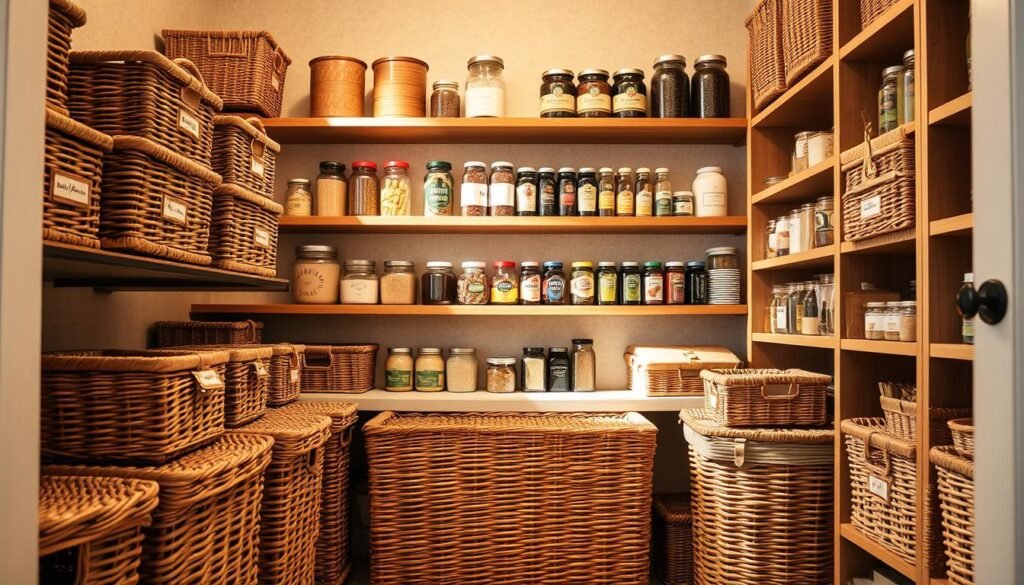
What if your kitchen’s hardest-working zone could feel both effortless and inviting? The answer lies in balancing crisp organization with organic warmth. White shelving acts like a blank canvas – amplifying light while letting your staples take center stage.
Pair those bright surfaces with woven baskets for instant texture. This combo solves two problems: visual clutter disappears behind natural fibers, while frequently used items stay within arm’s reach. Pro tip: Choose baskets in varying sizes but similar tones – think oatmeals, clays, or soft grays.
| Basket Material | Best For | Style Pairing |
|---|---|---|
| Seagrass | Snacks & produce | Coastal, minimalist |
| Rattan | Baking supplies | Bohemian, farmhouse |
| Canvas | Spices & packets | Modern, industrial |
Notice how this approach softens sterile vibes? The woven elements add depth without sacrificing function. You’ll love how easily baskets slide off shelves for countertop access – no more digging through cramped corners.
Keep labels simple: chalk tags or kraft paper strips maintain that earthy charm. Secret bonus: This system grows with your needs. Swap baskets seasonally or rearrange zones as your cooking habits evolve. Suddenly, “putting things away” feels less like a chore and more like styling your space.
Maximizing Walk-In Pantry Space
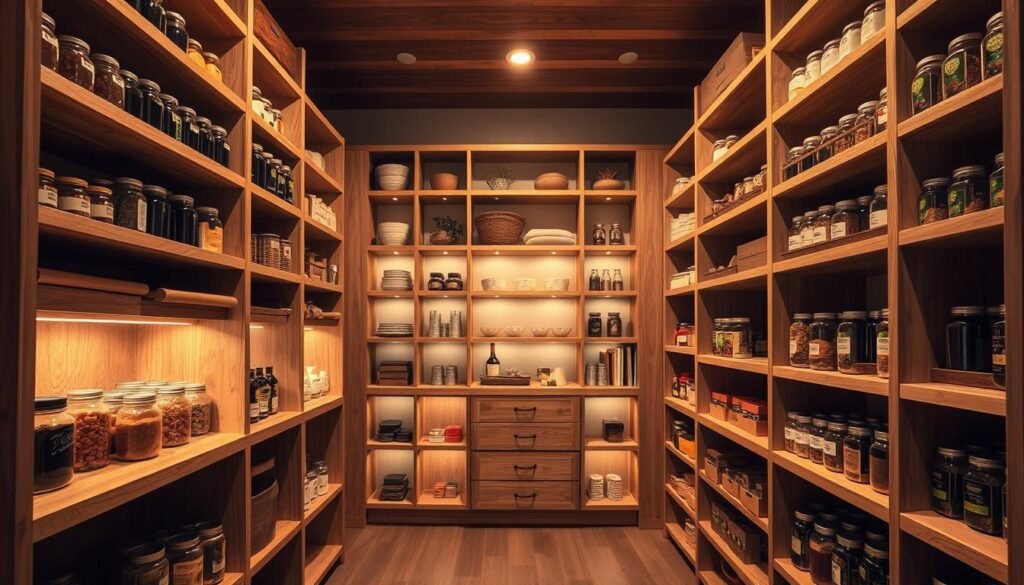
Imagine stepping into a storage area that works as hard as you do. A walk-in design transforms forgotten corners into a culinary command center. Unlike standard storage, this layout lets you curate zones for every need – from bulk grains to that specialty olive oil collection.
Designing with Ample Shelves and Cabinets
Adjustable shelving is your best friend here. Build deeper units near the floor for Costco-sized items, and shallower ones at eye level for daily essentials. Mix open racks with glass-front cabinets – perfect for hiding small appliances while keeping pasta jars visible.
Utilizing Vertical and Corner Spaces
Don’t let height go to waste. Install ceiling-high racks for holiday platters or extra paper goods. Corners become superstars with rotating carousels – no more lost spice jars behind cereal boxes. Pro tip: Use tension rods between walls to hang lightweight baskets for onions or garlic.
- Create a snack station: Use pull-out bins at kid-height
- Add a narrow countertop for appliance charging or meal prep
- Mount hooks inside cabinet doors for measuring cups
Your walk-in becomes a productivity hub when every inch serves a purpose. Those 2 a.m. snack runs? Suddenly efficient – and oddly satisfying.
Embracing the Butler Pantry Concept
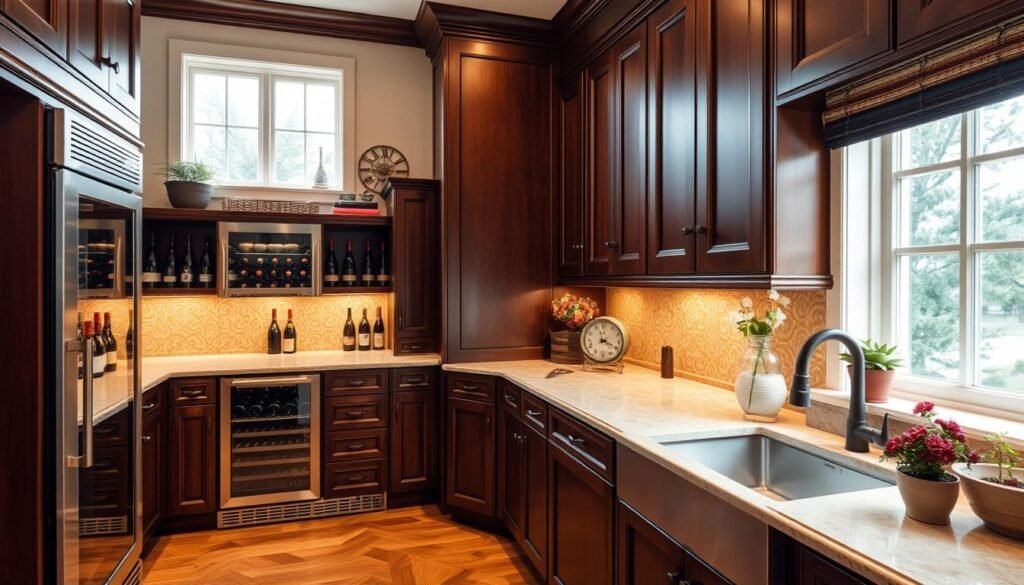
Imagine hosting a dinner where chaos stays hidden – clinking glasses and laughter flow freely while your kitchen remains spotless. That’s the magic of a butler pantry, your home’s secret backstage for effortless entertaining.
Originally designed as transitional spaces between kitchens and dining rooms, modern versions blend luxury with hardworking utility. Think of it as your kitchen’s stylish twin – handling messy prep work so your main cooking zone stays camera-ready.
Benefits of a Dedicated Serving Area
This secondary space solves three modern headaches. First: appliance overflow. Coffee makers and air fryers disappear behind closed doors. Second: serving station efficiency. Plates stay stacked near dining areas, and wine glasses gleam within reach. Third: holiday sanity. Thanksgiving dinner prep happens here while your primary oven roasts the turkey.
| Feature | Traditional Butler Pantry | Modern Upgrade |
|---|---|---|
| Location | Between kitchen/dining room | Adjacent to open-concept living areas |
| Primary Use | China storage | Appliance hub + serving station |
| Essential Add-On | Silverware drawers | Built-in wine fridge |
Integrating Wine Fridges and Appliances
Today’s butler spaces shine with specialized appliances. Undercounter wine chillers keep reds at perfect temps without crowding your main fridge. Mini dishwashers handle post-party cleanup discreetly. For coffee lovers – a hidden espresso bar with built-in grinders.
The real win? These features increase your home’s flow. Guests never see the blender’s crumbs or empty champagne bottles. Your kitchen maintains its magazine-ready allure while the butler pantry handles the messy magic.
Creative Storage Using Cabinets and Shelves
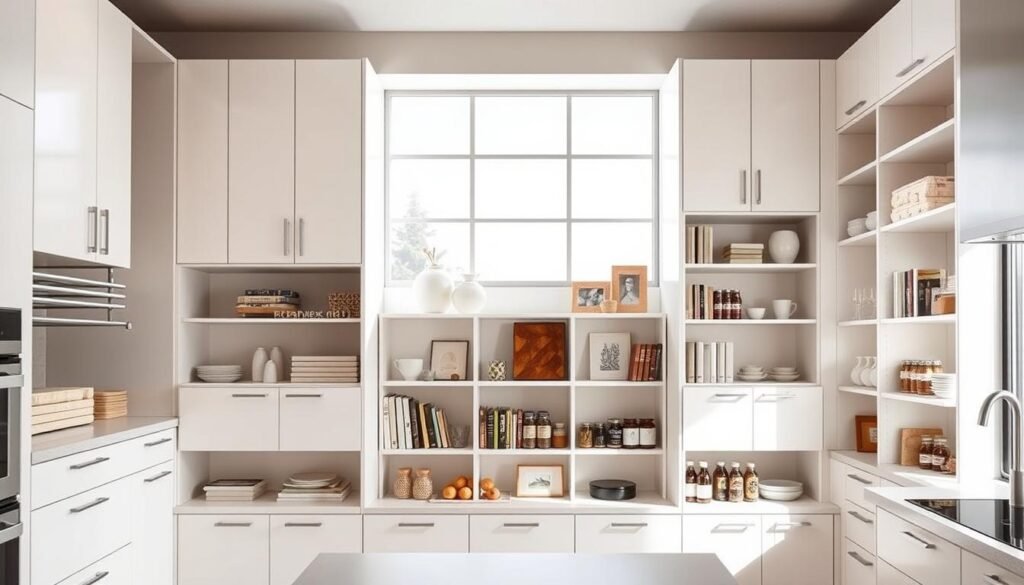
Think beyond basic shelving to maximize every inch of your storage. Cabinets become secret weapons when you mix styles – imagine glass-front uppers showcasing pretty pasta jars while closed lowers hide bulk snacks. This yin-yang approach keeps daily essentials visible yet tames visual chaos.
Depth matters more than you’d guess. Shallow shelves near cooking zones keep spices and oils within reach. Deeper bases store mixing bowls or small appliances. Got awkward gaps? Slide in a slim pull-out tray for baking sheets – suddenly, dead space becomes functional real estate.
Upper cabinets aren’t just for special occasion dishes. Add tiered organizers inside doors to store measuring spoons or tea bags. Lower units shine with full-extension drawers – no more spelunking for back-row soup cans. Pro move: Reserve eye-level areas for weekly staples like coffee or cereal.
Your cooking habits should dictate the layout. Bakers might dedicate a cabinet to rolling pins and sheet pans. Entertainers? Designate a shelf for cocktail napkins and serving platters. The magic happens when storage adapts to you, not the other way around.
Remember: closed cabinets keep countertops serene, while open shelves celebrate your prettiest ingredients. Blend both to create a space that’s equal parts practical and personality-packed.
Innovative Use of Vertical Space
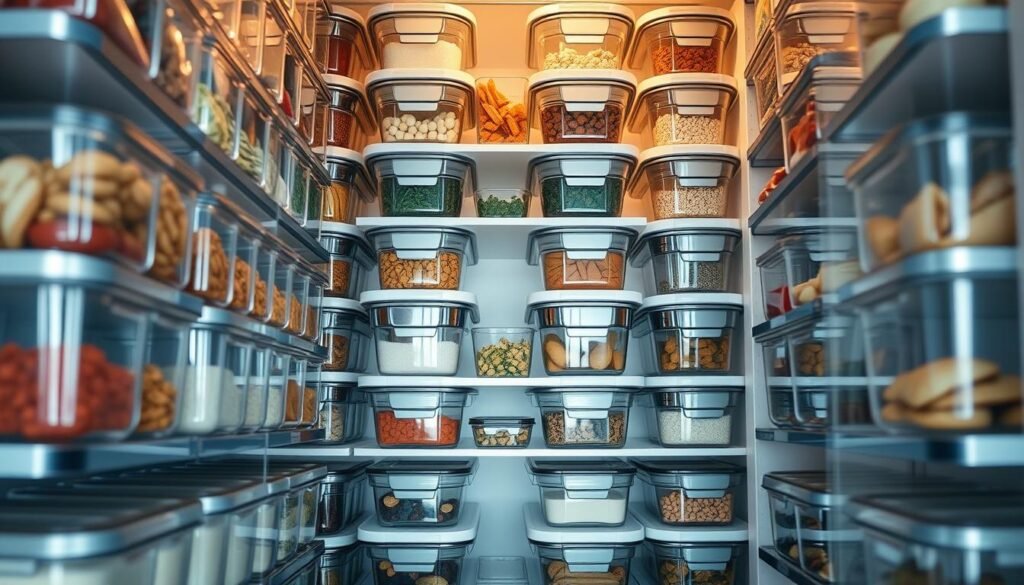
Most kitchens have a goldmine of unused real estate – the air above your shelves. Vertical storage isn’t just about stacking higher; it’s about creating strategic visibility that turns chaotic corners into orderly columns. Think of your shelves as skyscrapers – every inch should serve a purpose.
Clear, Stackable Food Storage Containers
Transparent bins with straight edges transform cluttered shelves into a grocery store display. You’ll spot dwindling quinoa supplies at a glance and never buy duplicate cinnamon again. The magic? Secure stacking lets you build stable towers without wobbling disasters.
Prioritize containers with airtight seals for freshness. Short stacks work best for daily-use items like oats or nuts. Reserve taller columns for bulk flour or seasonal treats. Bonus: Uniform shapes create satisfying symmetry that looks intentional – even when you’re just storing cereal.
Pro tip: Label the underside of lids for quick identification without disrupting your neat rows. Suddenly, that back-of-shelf black hole becomes a functional part of your cooking workflow. Vertical organization isn’t just smart – it’s your secret weapon against kitchen chaos.
Customization: Built-In and DIY Pantry Shelving
Your kitchen’s backbone isn’t just what you store – it’s how you shape the space holding it all. Custom shelving transforms generic storage into a system that bends to your daily rhythm. No more squeezing cereal boxes onto shelves meant for spice jars.
Designing Custom Built-In Shelves
Depth matters more than you’d think. Shelves deeper than 16 inches become Bermuda Triangles for granola bars and baking soda. Aim for 12-14 inches – enough for large pasta boxes without creating no-man’s-land behind them. Adjustable heights let you swap snack zones for appliance storage as needs change.
Budget-Friendly DIY Shelf Builds
Not ready for a full renovation? Tension rods create instant vertical dividers between canned goods. Repurpose old bookshelves by adding slide-out bins for lazy Susan functionality. Pro hack: Use adhesive-backed hooks under shelves to hang measuring cups or oven mitts – wasted airspace becomes prime real estate.
The magic happens when your storage adapts to how you actually cook. Maybe you need shallow spice ledges by the stove or deep bins for bulk flour. Your shelves shouldn’t dictate your habits – they should celebrate them.