
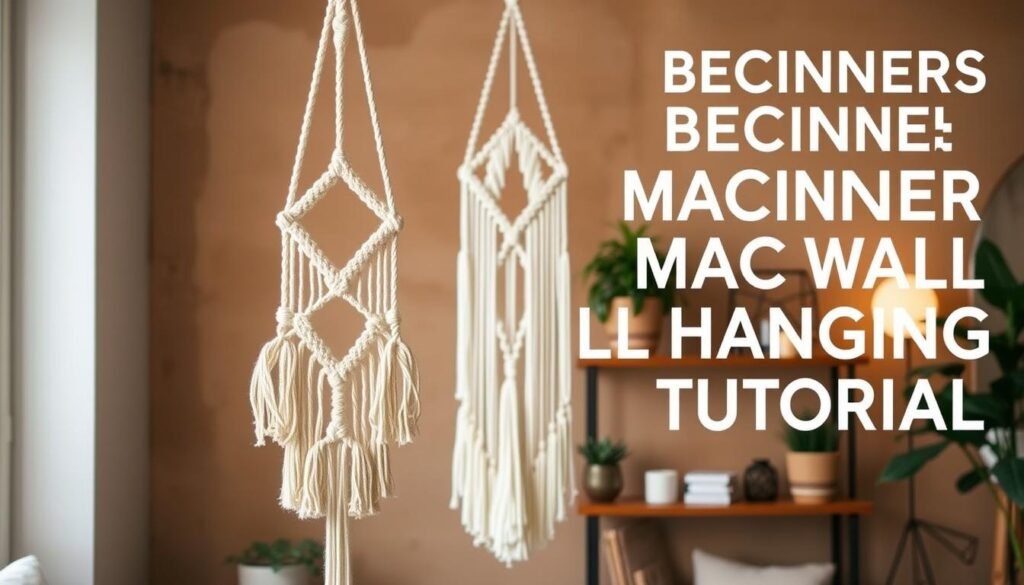
Ready to add boho flair to your home with something you created yourself? You’re just a few knots away from crafting a stunning piece that reflects your personal style—and I promise, it’s simpler than it looks.
Whether you’ve never held a cord before or just need a refresher, this guide breaks down the essentials. We’ll cover materials, basic techniques, and pro tips to ensure your first project feels rewarding, not overwhelming. No complicated terms or endless supplies—just clear, friendly advice.
Why choose this craft? Knotting has surged in popularity because it’s equal parts therapeutic and creative. It lets you disconnect from screens while making decor that sparks joy. Plus, finished pieces work in any room—from cozy bedrooms to Instagram-worthy studio spaces.
By the end, you’ll not only master foundational skills but also gain the confidence to experiment with patterns. Think of this as your creative companion: patient, practical, and packed with encouragement. Let’s turn those jitters into something beautiful.
Introduction to Macrame and Its Rising Popularity
That textured piece catching your eye at the local café? Chances are, it’s part of macrame’s modern revival. Once a 70s staple, this knot-based art now graces design magazines and millennial dream homes alike. You’ve likely spotted intricate patterns in unexpected places—airy hotel lobbies, minimalist offices, even that chic friend’s gallery wall.
Rooted in 13th-century Arabic weaving traditions, the craft evolved into today’s boho-chic essential. Contemporary artists blend ancient techniques with clean lines, proving knots aren’t just for sailors. What keeps creators hooked? The rhythm of looping cords becomes a moving meditation—a welcome break from constant screen scrolling.
Let’s compare macrame to other popular crafts:
| Craft Type | Materials Needed | Average Cost | Skill Curve |
|---|---|---|---|
| Macrame | Rope, scissors | $15-$30 | Beginner-friendly |
| Knitting | Needles, yarn | $25-$60 | Moderate |
| Weaving | Loom, threads | $50-$150 | Advanced |
Social media fuels this resurgence—Instagram’s #macrameart hashtag boasts over 2 million posts. Unlike factory-made decor, each piece carries the maker’s fingerprint. It’s not just about aesthetics; it’s about claiming space with something your hands built. The best part? You can start with leftover materials and still create magic.
Essential Supplies for Your DIY Macrame Wall Hanging
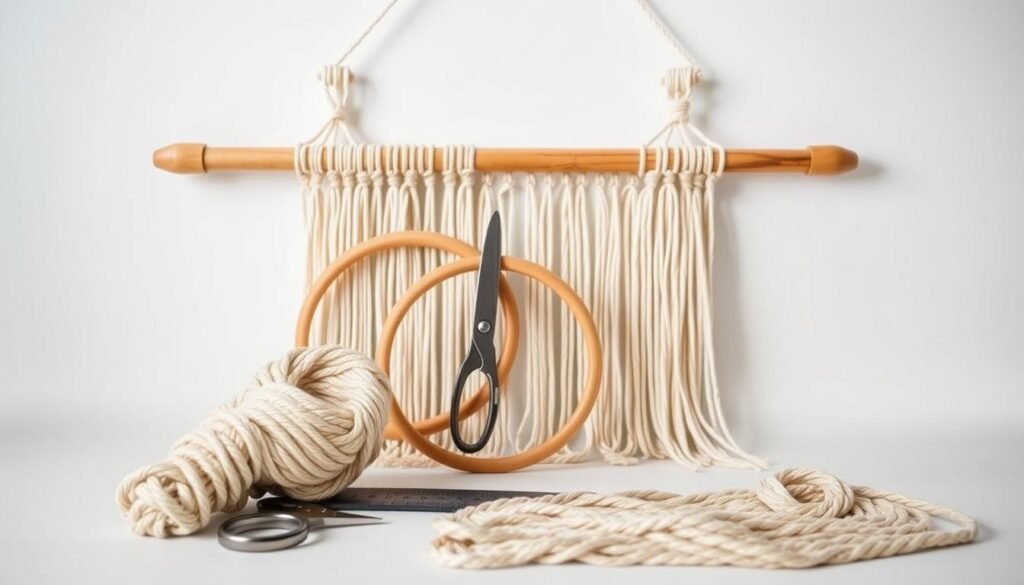
Your toolkit determines your masterpiece’s potential—think of these items as creative allies. Let’s start with the hero material: 3-ply cotton cord. This soft yet sturdy rope holds knots beautifully and frays into dreamy fringes when untwisted. For a standard project, grab 3-6mm thickness—it’s Goldilocks-approved for balance and control.
Size matters when choosing your wooden dowel. A 28-inch rod works for compact designs, while 48-inch giants suit statement pieces. Pair it with sharp fabric scissors—dull blades create messy ends that scream “first draft” instead of “finished art.”
Precision tools transform guesswork into confidence. Painter’s tape marks exact spacing, while a measuring tape ensures rows stay disciplined. Need to knot for hours? Hang your work on a temporary rack—your shoulders will appreciate the ergonomic upgrade.
Pro tip: Skip stretchy yarns that sag over time. Quality cotton rope costs slightly more but laughs at gravity. For ambitious patterns, stock 400+ feet of 4mm cord—it’s better to have leftovers than mid-project panic.
Accessories like ceramic beads add flair, but master the basics first. Remember: every stunning piece begins with these seven essentials. Now let’s turn your supplies into something that whispers, “I made that.”
Understanding Essential Macrame Knots
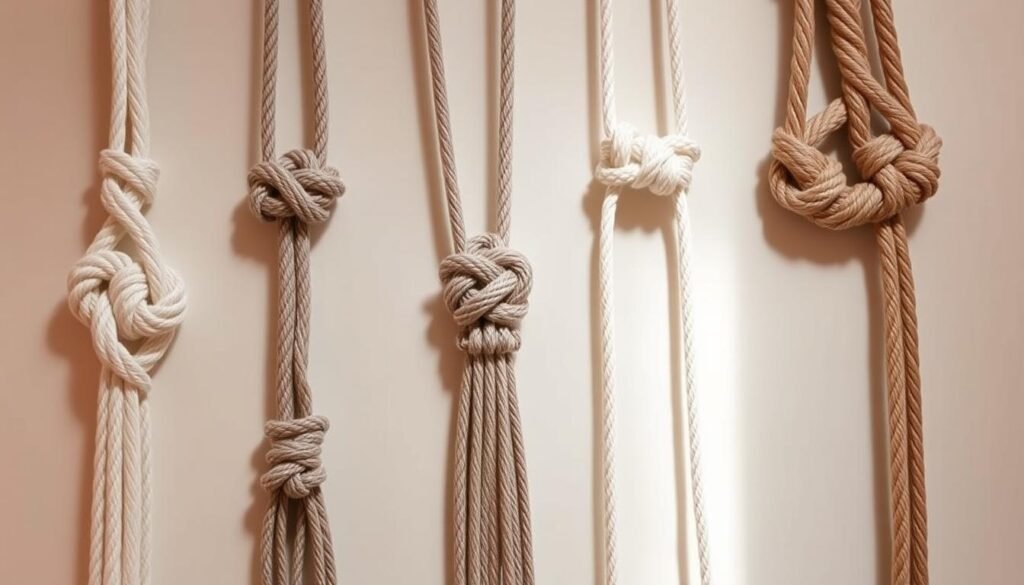
The secret to stunning patterns lies in two simple yet powerful techniques every crafter should know. Think of these as your creative alphabet—once mastered, they let you spell out any design imaginable.
The Lark’s Head Knot Explained
This trusty knot acts like a friendly handshake between your cord and dowel. Fold your rope in half, loop it over the rod, then pull the loose ends through the bend. Voilà—you’ve just secured your first row without fuss.
The Square Knot and Variations
Meet your pattern-making MVP: the square knot. Start with four strands—right cord crosses over the center pair, left cord swoops over-right-under-center. Reverse direction next row to lock the twist. Consistent tension here? Non-negotiable. Too tight strains progress; too slack invites chaos.
Double the fun by working with eight strands for bolder textures. These chunkier versions create striking contrasts when alternated with standard knots. And if your initial attempts resemble abstract art? Perfect. Muscle memory kicks in faster than you’d think—soon you’ll knot rhythmically while brainstorming blog posts.
Detailed Project Blueprint and Cutting Guides
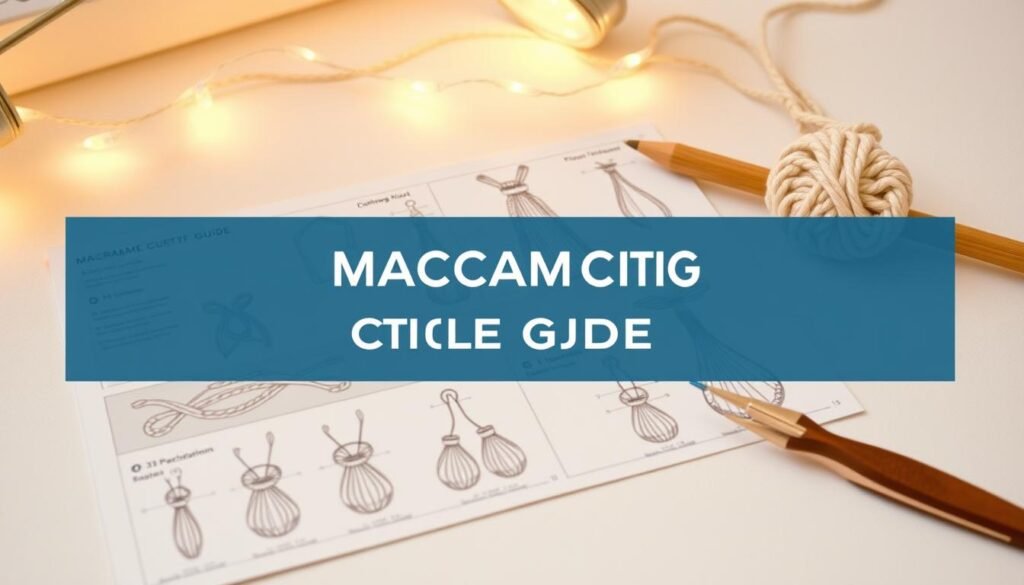
Precision transforms potential into polished creations—especially when handling fibers. Let’s turn “good enough” into “flawless execution” with measurement strategies that save time and frustration.
Preparing Your Rope and Measuring Accurately
Sharp scissors in hand? Perfect. Start by clearing a 6-foot workspace—your dining table works beautifully. For a standard 3-foot design, cut 28 pieces at 16 feet each. That extra length? It disappears into knots faster than you’d think.
Compare two popular patterns:
| Pattern Type | Longest Strand | Total Pieces | Backup Cuts |
|---|---|---|---|
| Geometric | 128″ | 92 | +3 per length |
| Flow | 70″ | 135 | +5 per length |
Label bundles with washi tape marked “40-inch” or “34-inch.” As textile artist Lila Chen advises:
“Measure twice, cut once—then add two spares. Your future self will send thank-you notes.”
Step-by-Step Knotting Instructions
Follow this rhythm: measure, mark, cut, repeat. For intricate designs requiring 46 pieces at 34 inches, stack five strands together. Align ends before slicing—crooked cuts waste precious cord.
Pro tip: Lay shorter strands (20″) vertically and longer ones (128″) horizontally. This prevents tangling when you reach for materials mid-pattern. If your fingers ache from measuring, wrap a rubber band around grouped strands—it acts as a makeshift handle.
Remember: cords shrink 30% through knotting. That 16-foot strand becomes 11 feet of usable length. Now breathe—you’ve just mastered the most technical part. Time to make those strands dance.
Building Your Wall Hanging: Setting Up and Weaving the Pattern
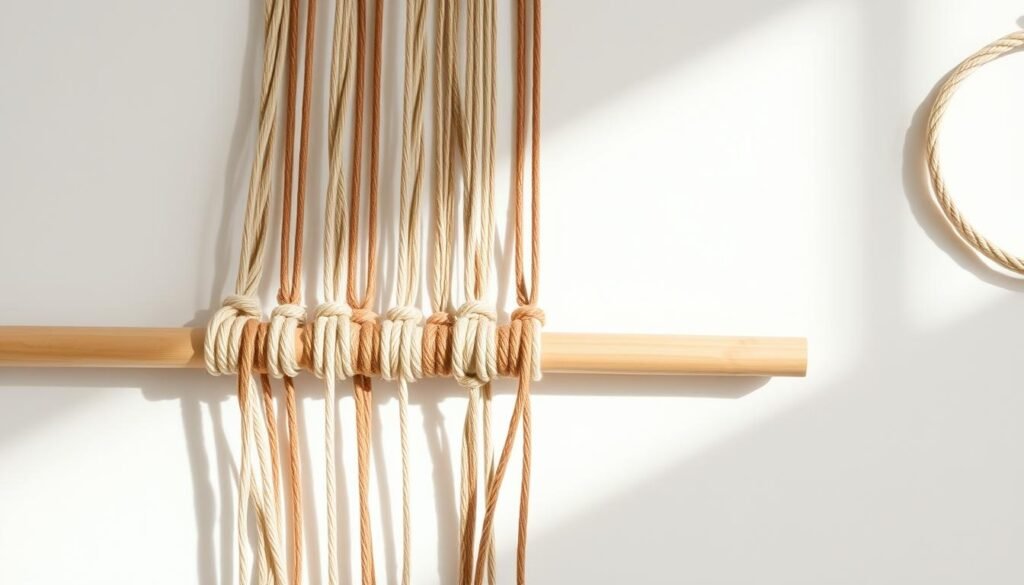
Your masterpiece begins long before the first knot—it starts with intentional setup. Think of this phase as laying railroad tracks: precise alignment now ensures smooth sailing later. Symmetry here isn’t just about looks—it’s what keeps your design from veering off-course mid-project.
Arranging Cords on Your Dowel
Find your dowel’s midpoint using a fabric marker. Center cords nestle together here, while outer pairs sit 4 inches to each side. This spacing creates breathing room for patterns to expand naturally. As fiber artist Mara Torres notes:
“A balanced start forgives minor tension slips down the line—like good foundation makeup.”
Follow these steps for flawless setup:
- Secure painter’s tape markers every 2 inches from the center outward
- Group cords in bundles of four, checking alignment after each placement
- Verify left/right measurements match using a retractable tape measure
Notice your initial setup looking narrow? Perfect. Rows will fan outward as you work—trust the process. Elevate your workspace to elbow height to prevent hunching. Those first five minutes of double-checking save hours of frustrated adjustments later.
Pro tip: Number cord groups with removable stickers. When Row 3 calls for “3rd cord,” you’ll pinpoint it instantly. Now take a breath—your canvas is ready.
Advanced Knots and Decorative Techniques
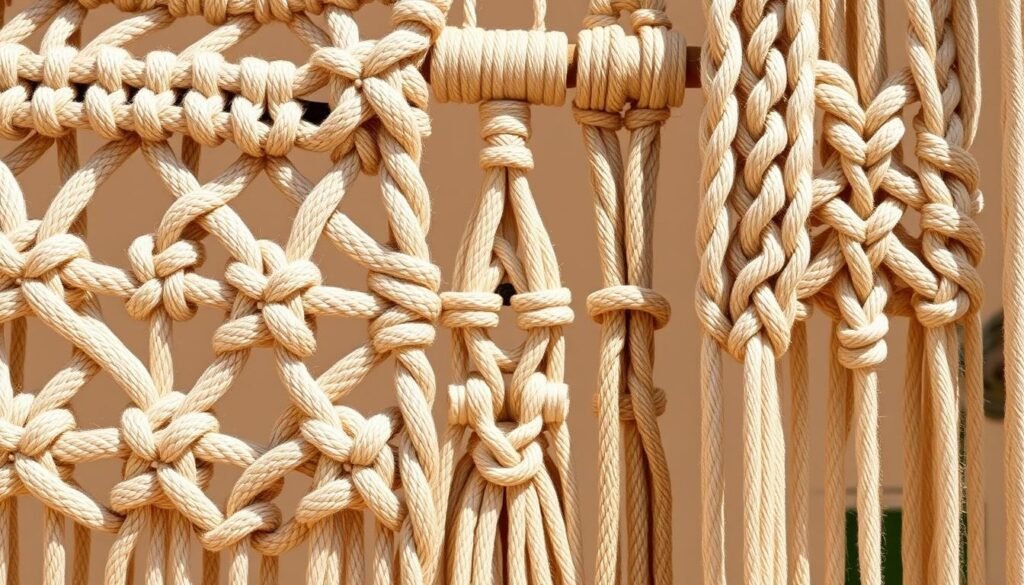
Elevate your knotting game with techniques that turn simple patterns into showstoppers. While foundational knots build structure, advanced methods add personality—think of them as punctuation marks in your fiber story.
Incorporating the Rya Knot
Meet the rya knot—your secret weapon for adding lush texture. Grab three 20-inch rope strands and untwist them completely. Bundle them together, then weave through your pattern’s diamond spaces left and right of center cords. Thread ends under the loop, pull taut, and trim to three inches. The result? Soft, cascading tassels that beg to be touched.
Pair this with double half-hitch knots for dynamic movement. These angled cousins of basic hitches create flowing lines and geometric accents. As fiber artist Elena Marquez advises:
“Advanced techniques feel intimidating until you realize they’re just familiar knots wearing new hats.”
Test new methods on scrap materials first—your fingers need rehearsal space. Notice tension inconsistencies? Adjust your grip rather than cutting cords. For structured guidance, our macrame design guide breaks down complex patterns into manageable steps.
Remember: mastery comes through strategic repetition, not perfection. Those “failed” attempts? They’re actually progress receipts. Now go make some happy accidents.
Styling and Finishing Touches for a Chic Boho Look
Your creation’s personality shines through in those final artistic choices—the details that whisper ‘carefully curated’ rather than ‘factory-made.’ Screw ceramic drawer pulls onto your rod ends for instant boho finials—they’re thrift store treasures masquerading as high-end accents. Gently untwist fringe strands with your fingers until they dance like loose threads in a summer breeze.
For textural drama, tuck air plants between knots or slide wooden beads onto strategic cords. Trim fringe at varying angles using sharp scissors—steep diagonals create movement, while soft curves keep things serene. Photograph your macrame wall piece against neutral backdrops to let the textures sing, or pair colored cords with contrasting walls for bold statements.
Remember: slight unevenness in your knots isn’t a flaw—it’s proof of human hands at work. Step back every few minutes during final adjustments. That beautiful balance between intention and imperfection? That’s where true artistry lives.
Pingback: Easy DIY Crafts for Adults - Fun Projects to Try Today - shaeblogging.com
Pingback: 10 Super Simple DIY Crafts for Adults (No Special Tools Needed)