

What if your banana peels and fallen leaves could become the secret weapon for thriving plants? You’re about to unlock nature’s ultimate recycling system – one where yesterday’s coffee grounds transform into tomorrow’s vibrant blooms.
This isn’t just dirt science. It’s a living ecosystem where microscopic allies – bacteria, fungi, and hardworking earthworms – team up to break down organic materials. Together, they create that crumbly, dark treasure seasoned growers call “black gold.”
The magic happens through simple chemistry. As materials decompose, they release nutrients plants crave. Best part? You don’t need a chemistry degree – just a mix of greens (food scraps) and browns (dry leaves). Layer them like lasagna, and let nature’s cleanup crew work their magic.
Imagine trimming your trash while feeding your flowers. This closed-loop system reduces household waste by up to 30%, according to EPA data. Your plants get slow-release nutrition without synthetic fertilizers. It’s a win for your wallet and local ecosystems.
We’ll guide you through creating this sustainable cycle – from balancing materials to troubleshooting smells. Soon, you’ll harvest humus that makes seedlings sing and neighbors ask for your secret. Ready to turn scraps into soil superstars?
Understanding the Benefits of Composting
Picture your kitchen scraps and yard debris becoming the ultimate plant superfood. This natural recycling process doesn’t just reduce waste – it creates a powerhouse resource that revitalizes tired earth and boosts greenery effortlessly.
Improving Soil Health and Structure
Your earth becomes a living buffet for beneficial microbes when enriched with decomposed organic matter. These tiny workers transform dense dirt into crumbly, aerated soil that behaves like a sponge – holding moisture during dry spells while preventing waterlogging after heavy rains.
The secret lies in tilth, a gardener’s term for ideal growing conditions. Good tilth means roots penetrate easily, nutrients stay available longer, and plants develop stronger foundations. You’ll notice seedlings bursting through the surface faster, their roots spreading through that rich, dark gold you’ve created.
Environmental and Cost Advantages
Every apple core you divert from the trash becomes free fertilizer. Households using this method typically slash their waste bills while eliminating the need for pricey soil amendments. Municipal data shows communities using these practices reduce landfill contributions by nearly one-third annually.
Unlike synthetic alternatives, your homemade blend releases nutrients gradually. This prevents chemical burns and keeps plants fed for months. Earthworms and beneficial fungi multiply naturally, creating a self-sustaining system that outlasts any store-bought solution.
Creating Your Compost Garden
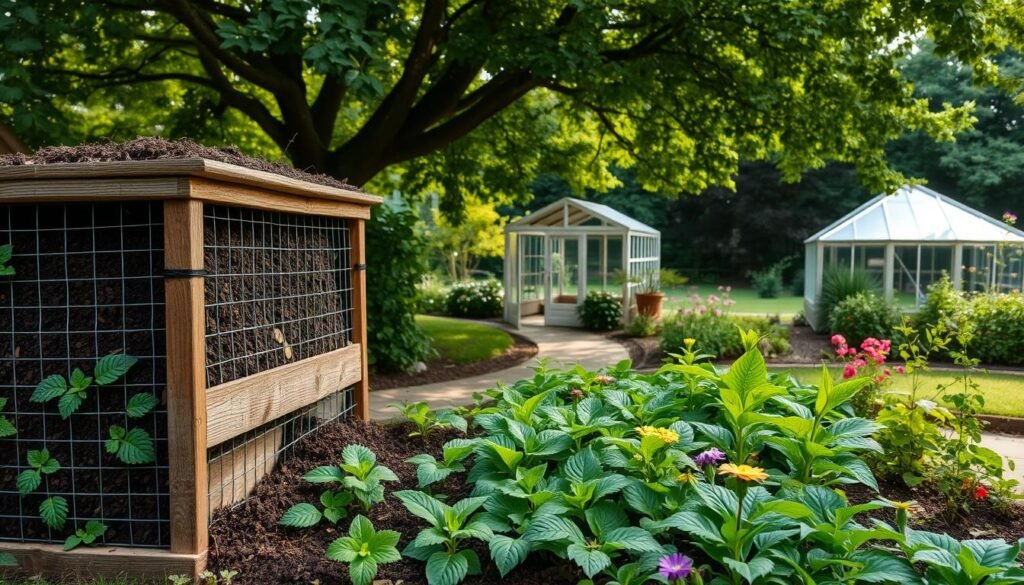
Location determines everything in this earthy alchemy. Think of it as real estate for rot – you want easy access without nose-wrinkling consequences. Three factors make or break your setup: convenience, drainage, and shade balance.
Choosing the Right Structure and Location
Place your operation within arm’s reach of where you’ll use the final product. A 30-second walk from back door to pile prevents abandoned carrot tops on countertops. Level ground with decent drainage keeps excess moisture at bay – soggy layers attract fruit flies faster than overripe bananas.
Partial shade works best. Morning sun warms the heap without afternoon baking. Got only sunny spots? Add extra browns like shredded newspaper to retain moisture. Urban spaces? Try odor-free bokashi bins under sinks.
Hot vs. Cold Composting Methods
Your schedule dictates the technique. Active managers choose hot methods for rapid results – think 6-week turnovers using precise layering. Passive practitioners stack materials as they accumulate, letting seasons handle decomposition.
| Method | Time | Effort | Best For |
|---|---|---|---|
| Hot | 6-8 weeks | High (daily monitoring) | Vegetable beds needing quick nutrients |
| Cold | 6-12 months | Low (monthly checks) | Low-maintenance flower borders |
Hot systems require thermometers and weekly turning. Cold piles accept pizza boxes and autumn leaves without complaint. Both methods eventually yield that crumbly texture plants adore – it’s just a matter of how hands-on you want to be.
Layering Techniques and the Carbon-to-Nitrogen Ratio
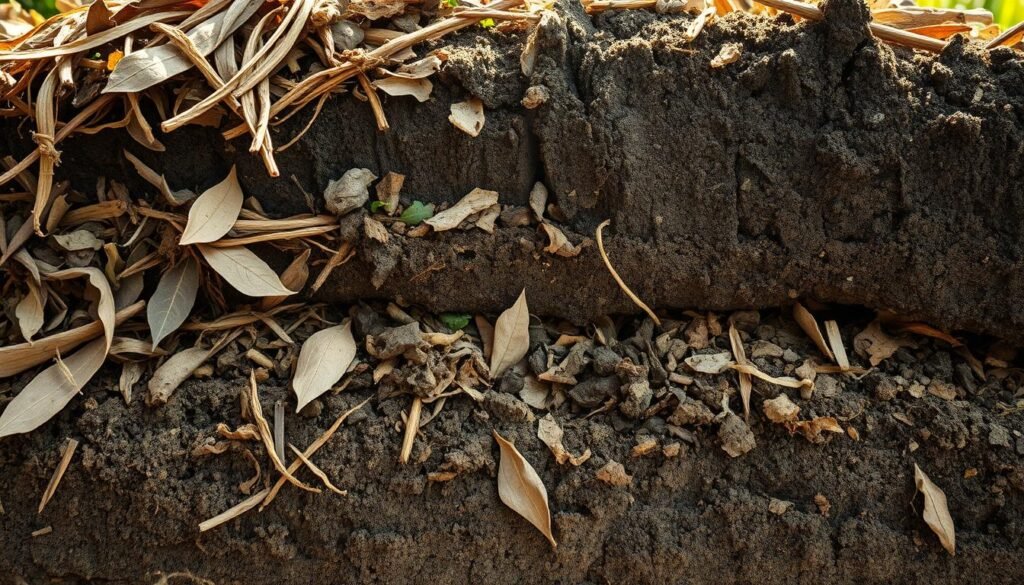
Imagine crafting the perfect sourdough starter – success lies in balancing ingredients. Your decomposing masterpiece works the same way. The right mix of carbon-rich and nitrogen-packed materials creates an environment where microbes thrive, transforming scraps into plant-ready nutrients.
Optimizing Brown and Green Material Ratios
Browns are your carb-loaded crackers – think dried leaves, straw, or woody grass stalks. These provide structure and absorb excess moisture. Greens act like protein shakes for microbes: coffee grounds, veggie peels, and fresh plant clippings.
Aim for 2-3 parts browns to 1 part greens. Too much nitrogen? You’ll get a slimy mess. Excess carbon? Decomposition slows to a crawl. Shred larger materials first – smaller pieces mean faster breakdown.
Step-by-Step Layer Construction
Start with a 6-inch brown base. Add 3 inches of greens – that wilted spinach works perfectly. Sprinkle a handful of soil like parmesan cheese to introduce microbes. Repeat until your lasagna tower reaches 3 feet.
Twigs at the bottom improve airflow. Eggshells add calcium without attracting pests. Avoid meat and dairy – they’re the anchovies of this pizza party. Turn weekly with a pitchfork to distribute heat evenly.
Within weeks, steam rising from the pile signals active decomposition. That earthy scent means your microbial chefs are busy cooking up black gold.
Managing Moisture, Airflow, and Temperature
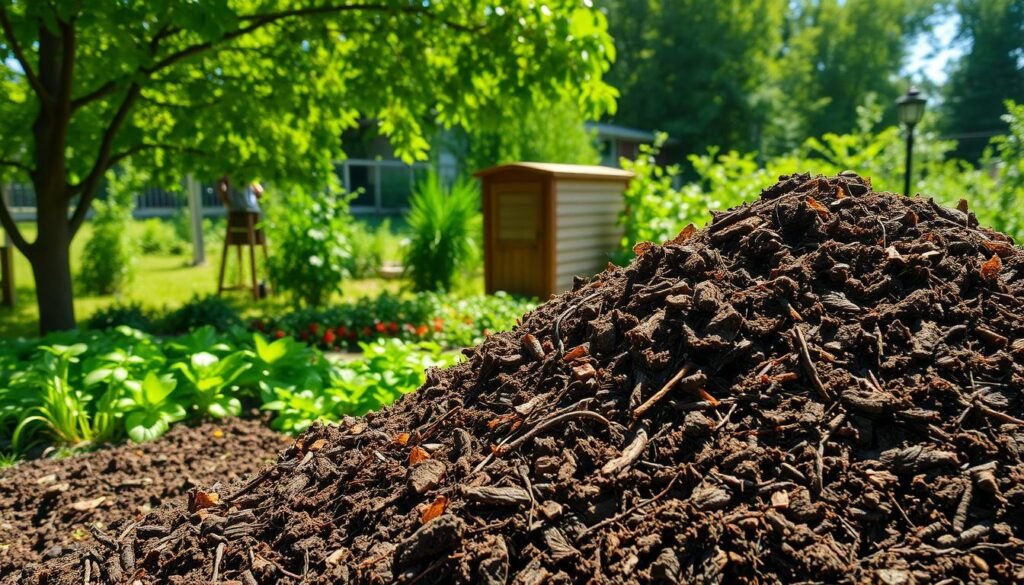
Think of your organic heap as a living recipe – too much of one ingredient throws off the whole dish. Three elements need constant choreography: moisture, air flow, and heat. Get this trio moving in sync, and you’ll witness nature’s fastest transformation act.
Water Wisdom: The Wet Sponge Rule
Your pile should feel like a rainforest floor after spring rain – damp but not swampy. Use the squeeze test: grab a handful and press. If water streams out, add dry leaves. If it crumbles, mist with a hose. Pro tip: Rainy season? Tarp it. Dry climate? Bury melon rinds deep.
“The sweet spot? When your glove comes away slightly moist but not dripping – that’s microbial happy hour.”
Oxygen Orchestra Conductor
Stagnant air turns your pile into a stinky science experiment. Weekly turning with a garden fork introduces fresh oxygen – like opening windows in a stuffy room. Follow this rhythm:
| Temperature Range | Action Needed | Frequency |
|---|---|---|
| 130-160°F | No turning | Let it cook |
| Below 130°F | Full mix | Every 7 days |
| Cool to touch | Add greens | Immediately |
For those seeking quick composting methods, remember: more turns mean faster breakdown. But even monthly rotations prevent that rotten egg smell. Your nose knows – earthy aromas mean success, while sour notes signal SOS.
Watch steam rise on chilly mornings as microbes party hard. When temperatures drop, give them a stir. This thermal tango kills weeds and pathogens while creating plant-ready nutrients. Balance these elements, and you’ll harvest black gold in record time.
Using Finished Compost Across Gardens and Lawns
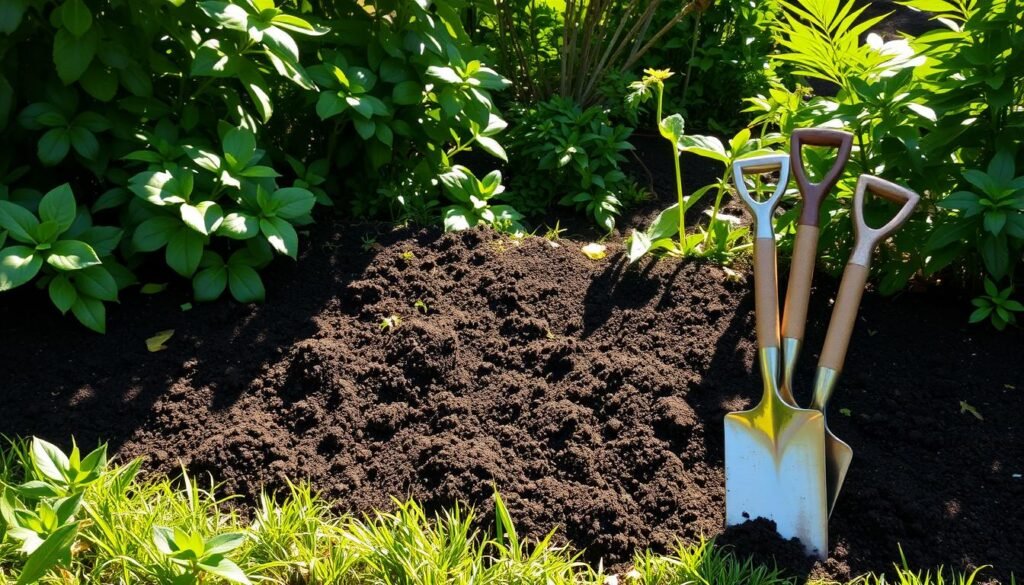
Your dark, crumbly treasure isn’t just dirt – it’s a landscape transformer waiting to happen. Let’s explore how to deploy this powerhouse resource where it matters most.
Soil’s Best Friend: Amendment Strategies
Mix 2-3 inches into planting holes for shrubs or trees. This gives roots instant access to nutrients while improving drainage. For container plants, blend 30% with potting mix – they’ll drink up moisture without drowning.
Vegetable Victories and Lawn Luxuries
New tomato beds crave 4 inches worked into the topsoil. Established plots? A light ½-inch dusting before planting acts like a vitamin boost. Turf thrives when you:
| Application | Depth | Timing |
|---|---|---|
| New lawn prep | 1-2 inches | Before seeding |
| Topdressing | ¼ inch | Spring/Fall |
| Bare spots | ½ inch | Any season |
Spread it like chocolate sprinkles over grass. Rain will wash nutrients down to the roots. Pair with overseeding for thicker turf that outcompetes weeds.
“Compost is nature’s multivitamin – it doesn’t just feed your plants, it rebuilds the entire ecosystem beneath them.”
Annuals adore a 3-inch mulch layer to retain moisture. For roses and hydrangeas, pile 6 inches around the base before winter. Your soil will thank you with blooms that stop neighbors mid-stride.
Troubleshooting Common Composting Challenges
Even seasoned soil chefs encounter hiccups. Let’s tackle the top issues before they derail your decomposition dreams – because every great transformation deserves a happy ending.
Banishing Stinks and Uninvited Guests
That sour smell? It’s nature’s way of saying “adjust the recipe.” Avoid meat, dairy, and pet waste – they’re like neon signs for raccoons. If fruit flies swarm, bury food scraps under dry leaves. State university extension experts recommend turning weekly to oxygenate the pile, shutting down anaerobic bacteria that cause odors.
Rescuing Imbalanced Mixtures
Plants looking sunburned? You might be overdoing the good stuff. More than 30% finished material in soil can create nutrient tsunamis. Dial back the amount and test your blend – ideal ratios should feel crumbly, not salty. For weedy invaders, remember: only add plants before they set seed. MI’s invasive species list is your cheat sheet for what stays out.
When your pile feels stuck, add shredded newspaper (browns) or coffee grounds (greens). State university extension services note that balanced piles heat up naturally, killing pathogens. Keep it simple – your black gold should smell like forest floors, not landfill drama.