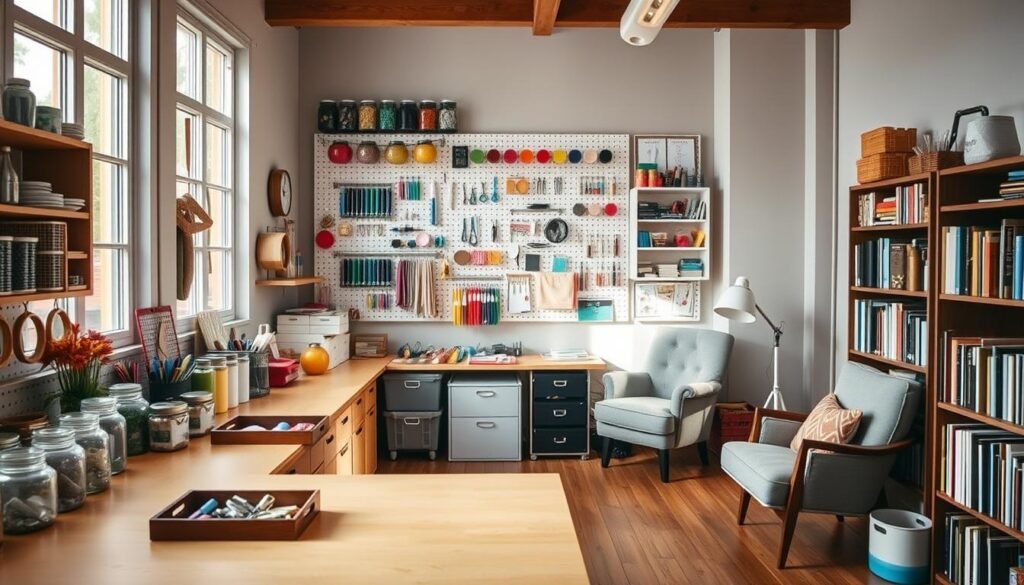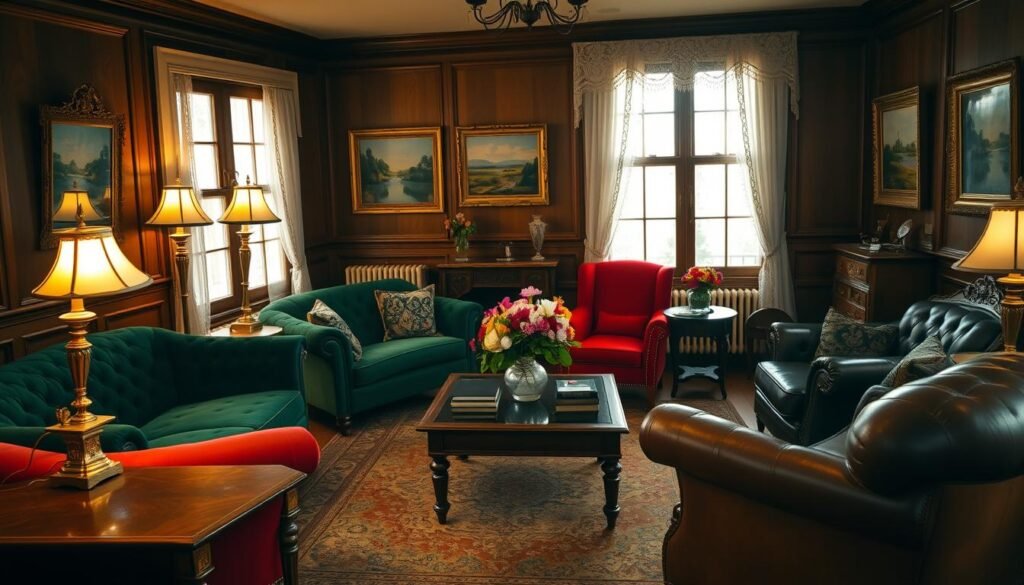
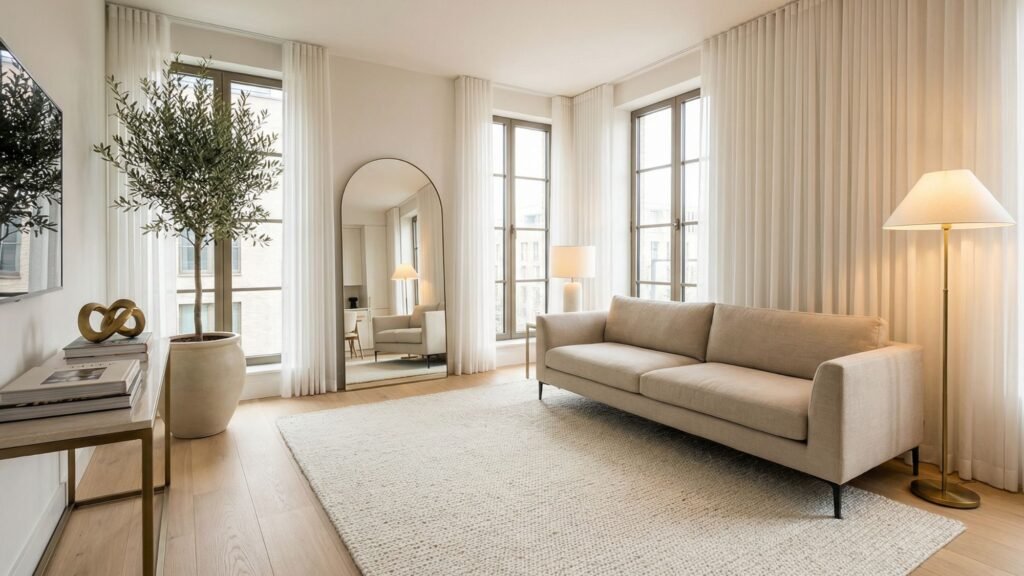
Small apartments can feel spacious. No, that is not a fairy tale. The trick is to stop fighting the square footage and start controlling what the eye notices first.
A few smart layout moves, some “why did I not do this sooner” lighting upgrades, and a little visual editing can make a tiny place feel open, calm, and expensive. And the best part: most of these ideas work in rentals, so nobody needs to fight a landlord over paint samples.
Ready to make your space feel bigger without getting rid of everything you own? Let’s do it.
1) Pick One Light Neutral and Commit to It
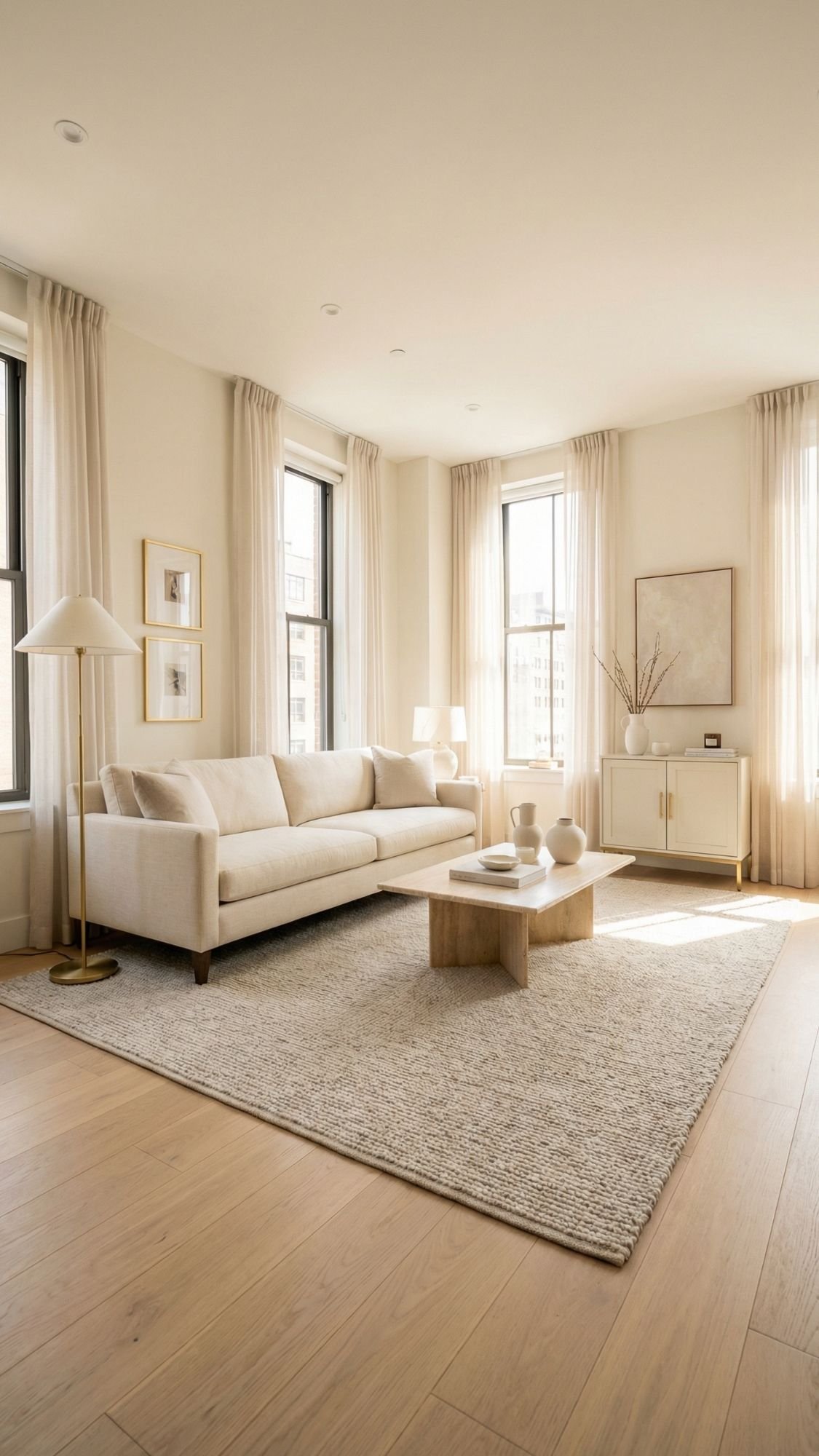
If a small apartment looks choppy, it usually comes from too many competing colors yelling for attention. A single light neutral palette quiets the room down and lets your eyes travel, which makes the space feel wider and calmer.
Stick to one main neutral for the “big stuff”:
- Walls (if you can)
- Sofa or main seating
- Rug
- Curtains
- Bedding
Then add personality with smaller accents so the room still feels like you:
- Throw pillows
- A bold vase
- One statement art piece
- A textured blanket
This keeps the apartment looking cohesive instead of “I grabbed this at three different stores because it was on sale.” No shame, just facts.
Key takeaway:One consistent light neutral makes a small apartment feel instantly larger because it reduces visual breaks.
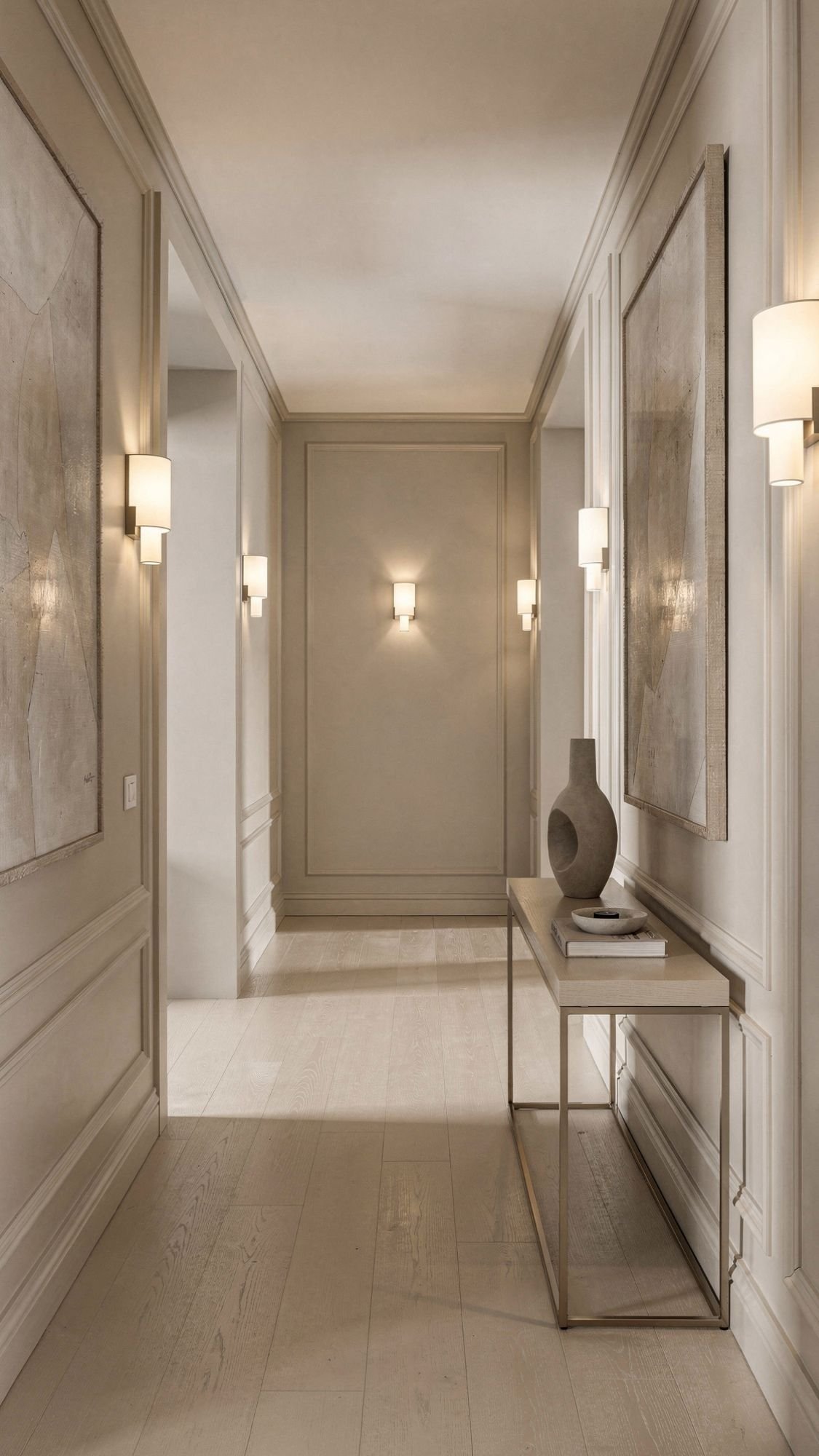
2) Paint Trim to Match the Walls
Trim can quietly make a small apartment feel smaller. When the trim color contrasts with the wall color, it outlines every edge like a highlighter. Your eye starts “measuring” the room, which is not the vibe.
When you match the trim to the wall color, the room looks smoother and taller because the edges stop screaming for attention. This works especially well in:
- Narrow hallways
- Low-ceiling rooms
- Tiny bedrooms where every visual interruption feels loud
If you rent and cannot paint, you can still steal the idea:
- Choose curtains that blend into the wall tone
- Pick frames and decor in the same color family as the walls
- Use a tall mirror or art piece to create one clean vertical line
Key takeaway:Matching trim to walls removes visual boundaries, so your small space looks more open and elevated.
3) Try Color Drenching in One Small Zone
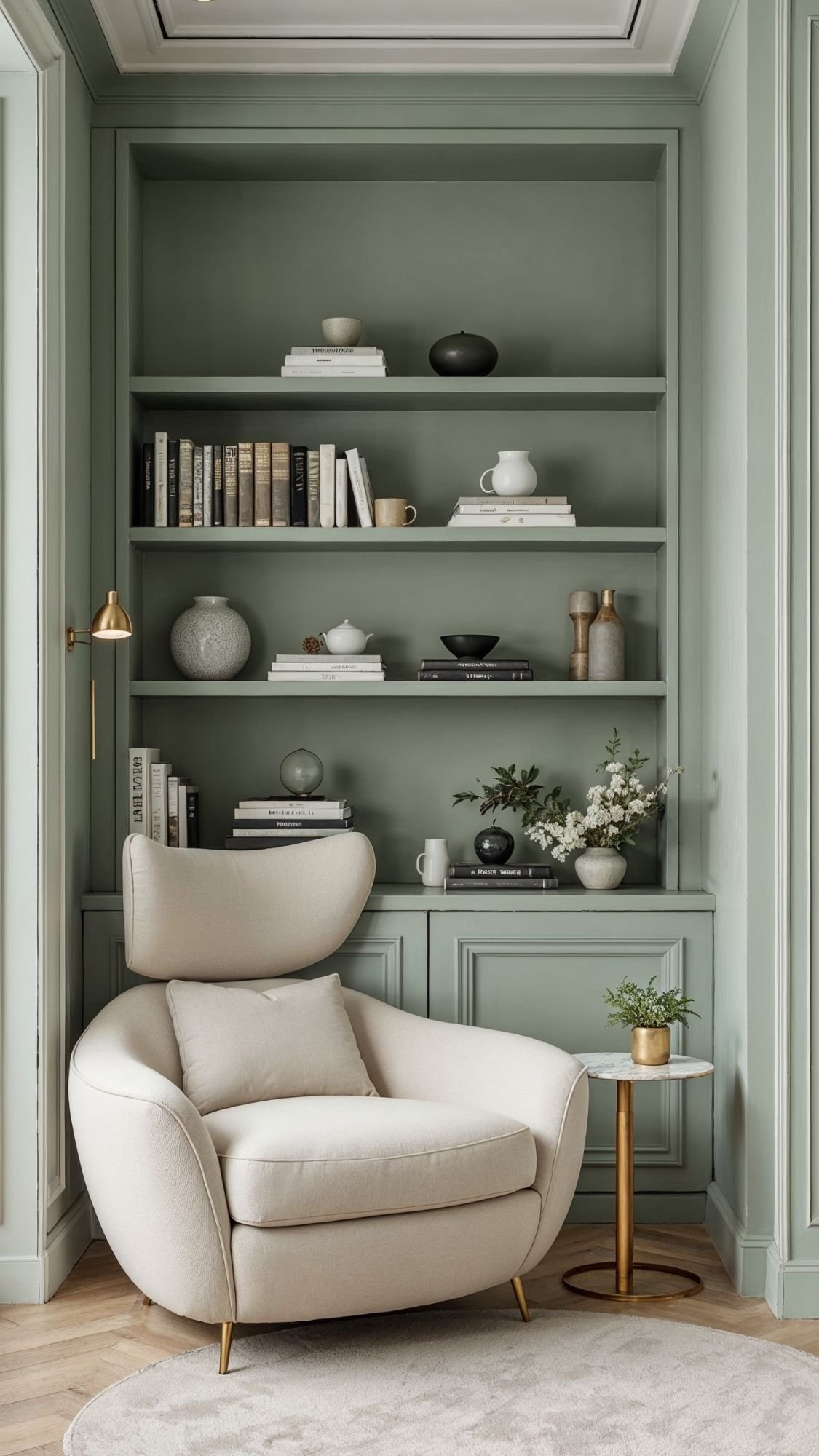
Color drenching sounds dramatic, but in a small apartment it can feel weirdly spacious. When you paint a zone in one consistent color (walls, trim, door, maybe even shelving), the boundaries blur. Your eye stops catching hard lines, and the space feels deeper.
A small apartment does best with color drenching when you keep it focused:
- A reading nook
- The wall behind your bed
- A tiny entry corner
- A built-in shelf moment (or a faux built-in using a bookcase)
Pick a color that feels grown-up and calming. Think muted and moody, not loud and chaotic:
- Sage green
- Dusty blue
- Warm clay
- Soft charcoal
Then keep the decor simple so the color does the heavy lifting. Ever notice how designer rooms look “expensive” because they do less, but better?
Key takeaway:One-tone color in a small zone creates visual depth and makes the apartment feel more intentional.
4) Hang Curtains High and Wide
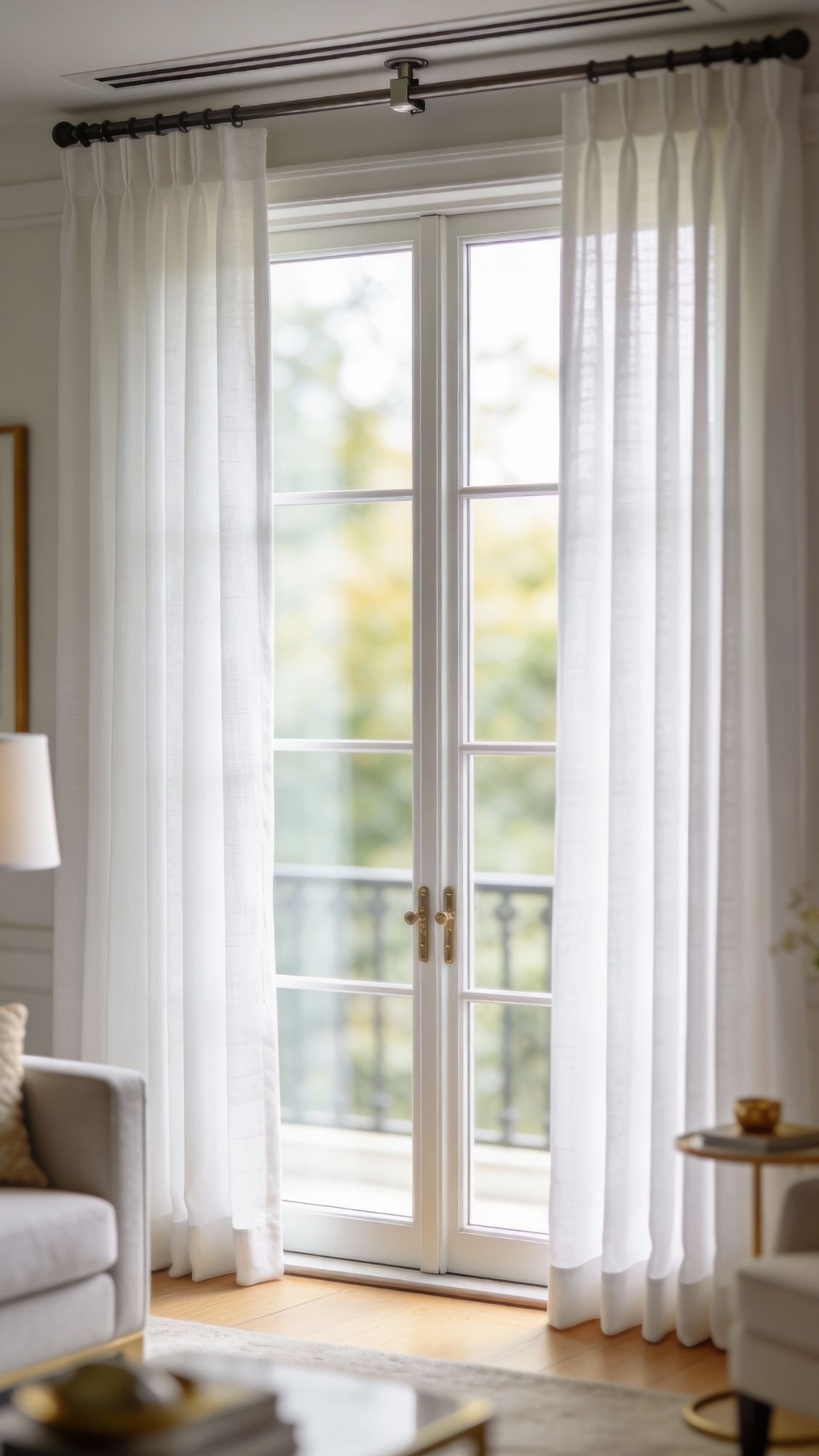
This trick feels almost too simple, which is exactly why it works. When you hang curtains right above the window frame, you basically announce, “Hi, yes, this is the exact size of my window.” And in a small apartment, that can make walls look shorter and the whole room feel tighter.
Instead, hang your curtain rod:
- Close to the ceiling (or a few inches below crown molding if you have it)
- Wider than the window so the curtains sit mostly on the wall, not blocking glass
- Long enough to touch the floor for that clean, tailored look
Why does this matter? Because it visually stretches the wall height and makes the window feel larger, which makes the entire room feel larger. Sneaky, effective, and way cheaper than moving.
Key takeaway:High and wide curtains “lift” the room and make small spaces feel taller and brighter.
5) Swap Heavy Drapes for Sheers Plus a Roller Shade
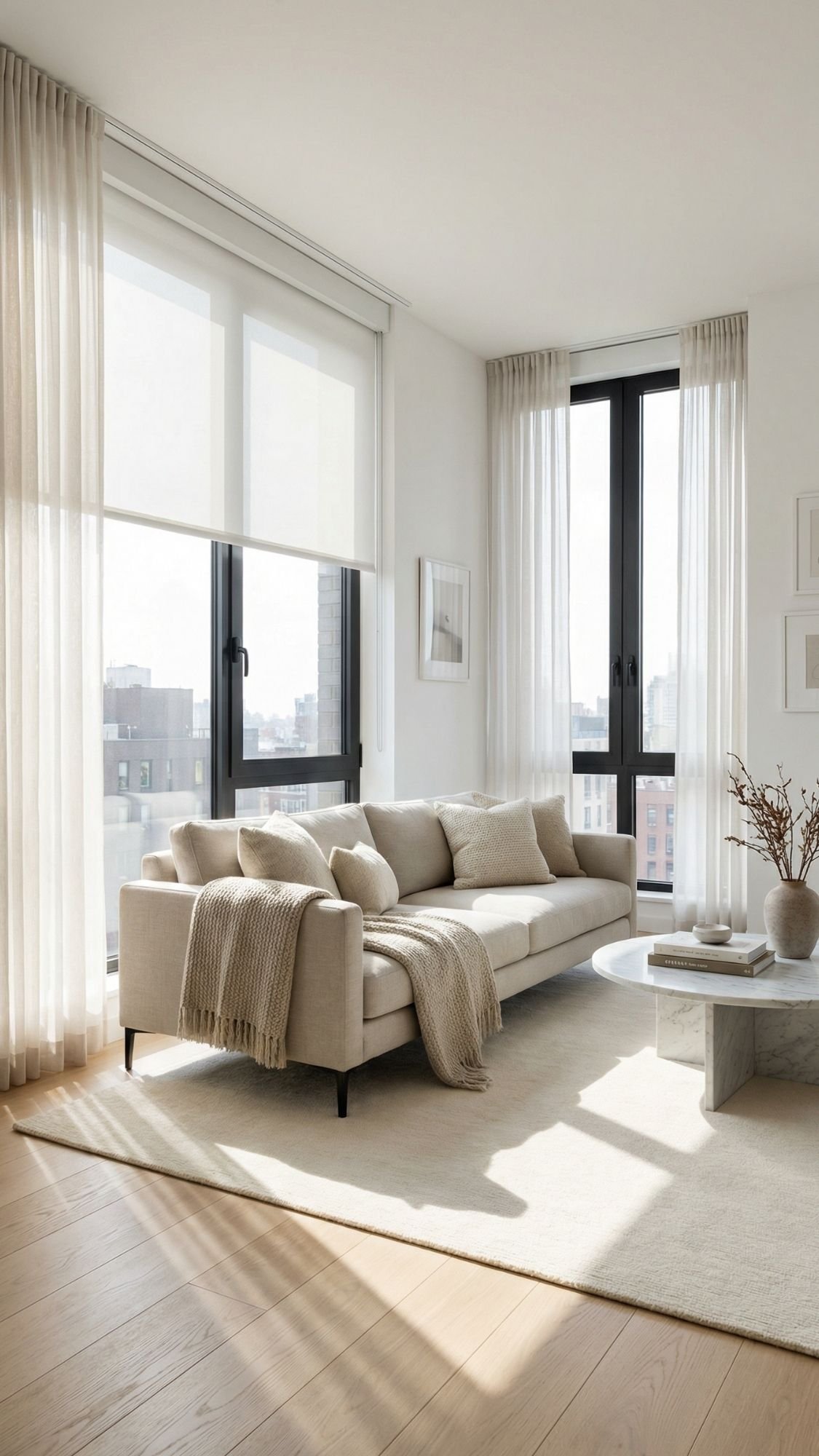
Heavy curtains can look gorgeous, but in a small apartment they also eat light, feel bulky, and sometimes make the window look smaller. Sheers keep the space bright and airy while still giving you that soft, elevated “designer” glow.
The combo that works almost everywhere:
- Sheer curtains for daytime privacy and softness
- A simple roller shade (light-filtering or blackout) for nights and real privacy
This setup makes the room feel open during the day, but still functional when you actually want to sleep or stop your neighbors from learning your full routine.
If you rent, this is still doable:
- Use a tension rod for sheers in some window setups
- Look for no-drill or command-style shade brackets if needed
- Choose shades in a tone close to your wall color so they visually disappear
Key takeaway:Sheers plus a roller shade keeps the room bright and clean while still handling privacy like an adult.
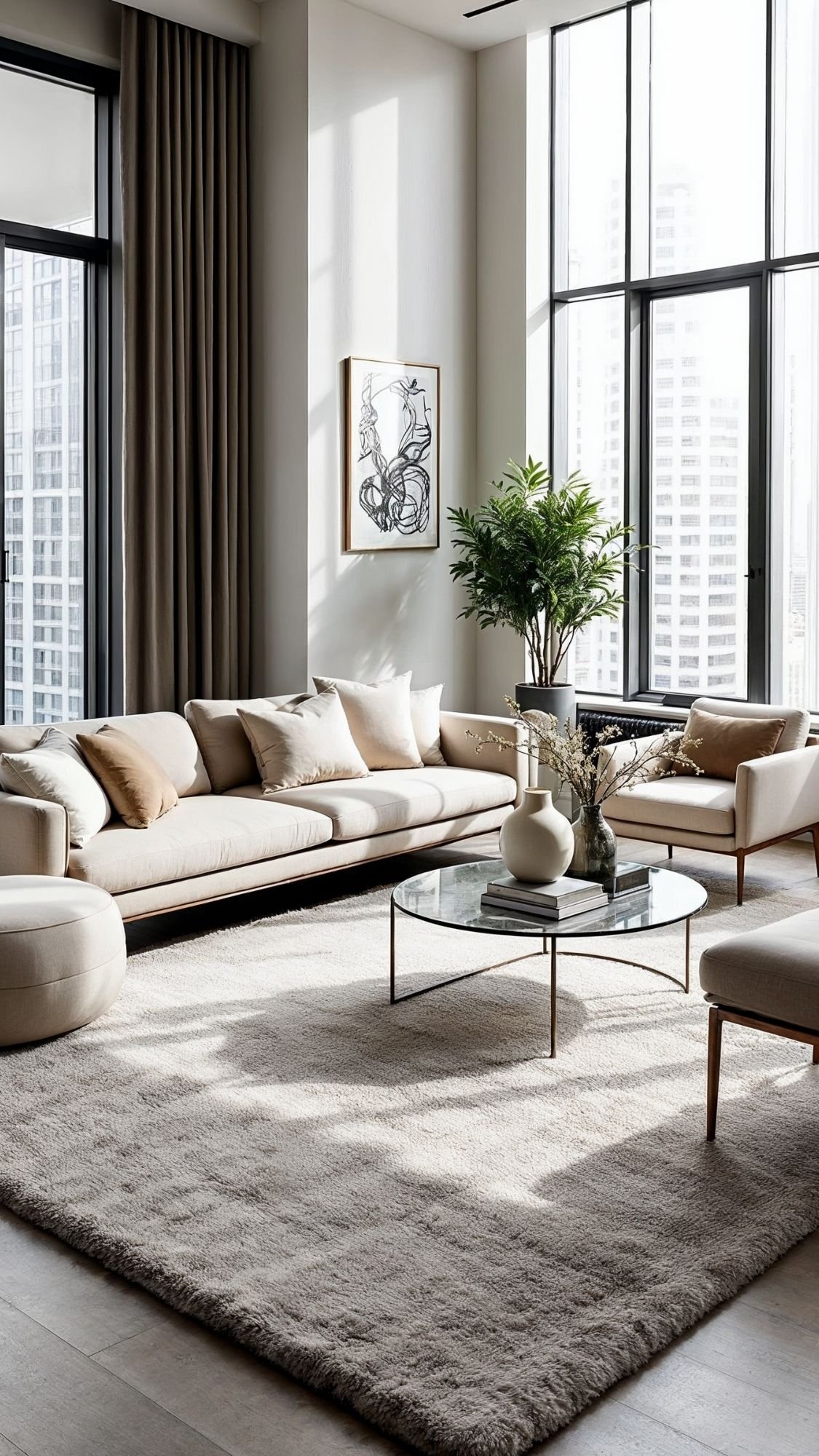
6) Use One Oversized Rug, Not Two Small Ones
Small rugs have a special talent: they make your room look like it shrank overnight. When a rug only fits under the coffee table, it slices the floor into sections, and your brain reads that as “tiny space.”
A larger rug pulls everything together and makes the layout feel intentional and roomy. The goal is simple:
- Front legs of the sofa and chairs sit on the rug
- The rug extends past the sides of the sofa
- You get one clean “zone” instead of multiple chopped-up areas
If you are deciding between sizes, go bigger. Nobody ever says, “Wow, your rug is too spacious.” People do say, “Why does everything look like it is floating?” and it is usually the rug.
Quick rule that helps:
- Living room: aim for 8×10 if you can fit it
- Small living room: 6×9 often works better than a 5×7
- Bedroom: choose a rug that extends at least 18–24 inches beyond the sides of the bed
Key takeaway:A bigger rug makes the room look bigger because it visually expands the floor plan.
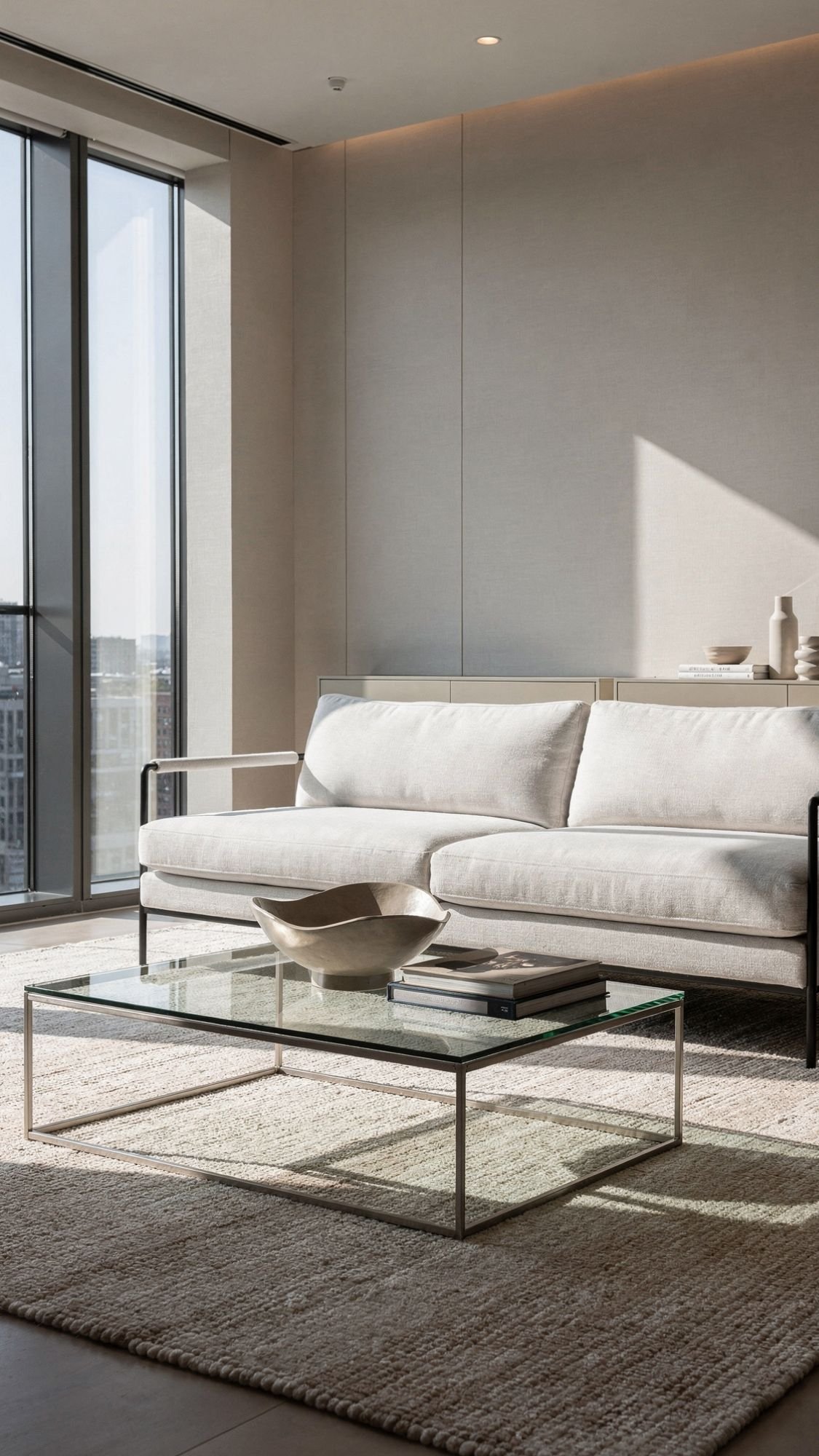
7) Choose a Low-Profile Sofa With Legs
A big, boxy sofa can swallow a small apartment whole. A low-profile sofa with visible legs does the opposite: it lets you see more floor, keeps sightlines open, and makes the room feel lighter.
Look for these sofa details:
- Raised legs (even a few inches helps)
- Slim arms instead of chunky padded arms
- Tighter silhouette with clean lines
- Lower back height if your ceilings feel low
This is one of those design cheats that feels almost unfair. You can keep the same room size, but the extra visible floor tricks your brain into reading “more space.”
If you already own a bulky sofa, you can still make it behave better:
- Use a lighter throw instead of a dark blanket draped everywhere
- Choose a low, airy coffee table (glass or slim wood)
- Keep the area around it uncluttered so it does not feel even heavier
Key takeaway:Leggy, low-profile seating makes small apartments feel open because it keeps the floor visually continuous.
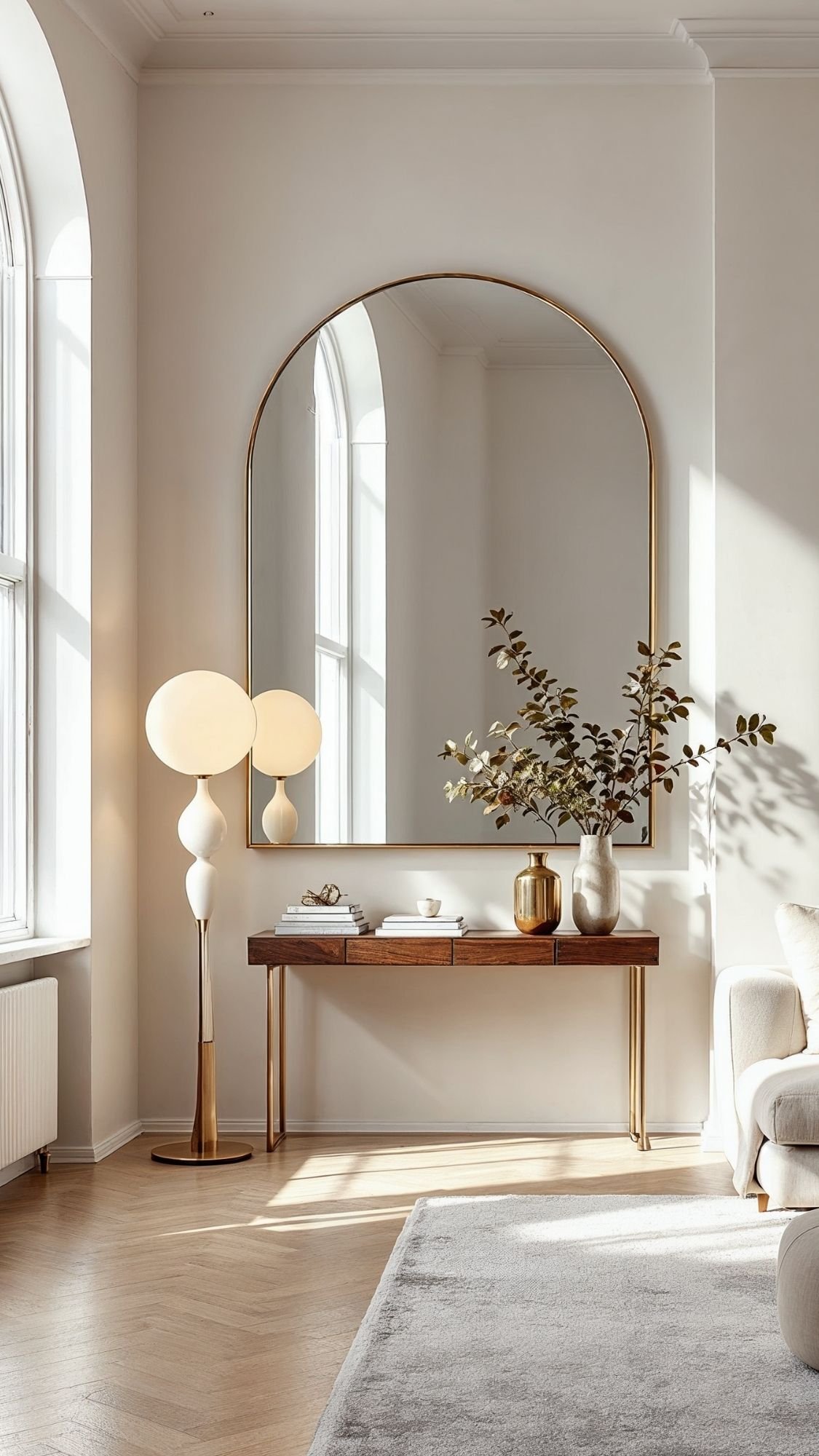
8) Add a Mirror That Reflects a Window
A well-placed mirror can pull off the biggest “small space” magic trick. When a mirror reflects a window, it doubles the light and gives the room instant depth, like your apartment suddenly learned how to breathe.
Put your mirror where it can actually do the job:
- Across from a window
- Next to a window at a slight angle
- Behind a lamp to bounce warm light at night
Go bigger than you think. A tiny mirror looks cute, but a large mirror changes the whole room vibe and makes it feel more open. Want a simple upgrade that looks expensive fast? Choose a thin frame in black, brass, or light wood, then keep the area around it clean.
Key takeaway:A large mirror reflecting natural light makes a small apartment feel brighter and deeper.
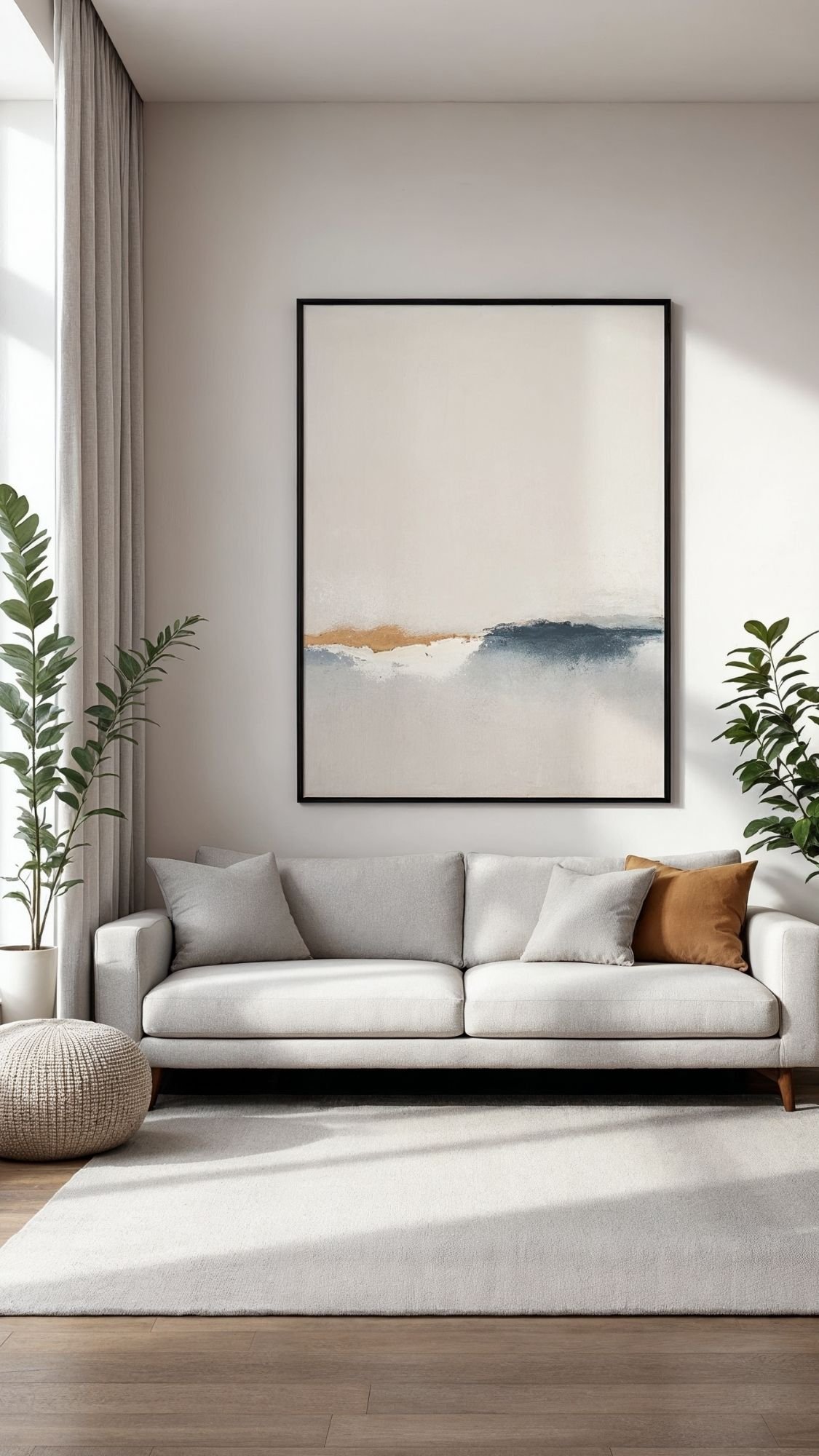
9) Skip Tiny Wall Art and Go Bigger (But Fewer)
Small art can make a small apartment feel even busier. When you scatter a bunch of little frames around, your eye bounces everywhere, and the wall starts to look cluttered instead of styled.
One larger piece creates a calmer focal point. It also makes the wall feel more expansive, which helps the whole room feel bigger.
Easy ways to do this without overthinking:
- Choose one oversized canvas for the main wall
- Hang two medium pieces as a clean pair instead of a gallery explosion
- Lean a large framed piece on a console for a relaxed, high-end look
If you love a gallery wall, you can still keep it spacious:
- Use matching frames
- Keep consistent spacing
- Limit the color palette so it reads cohesive, not chaotic
Key takeaway:Bigger, fewer pieces of art make walls feel cleaner and more spacious.
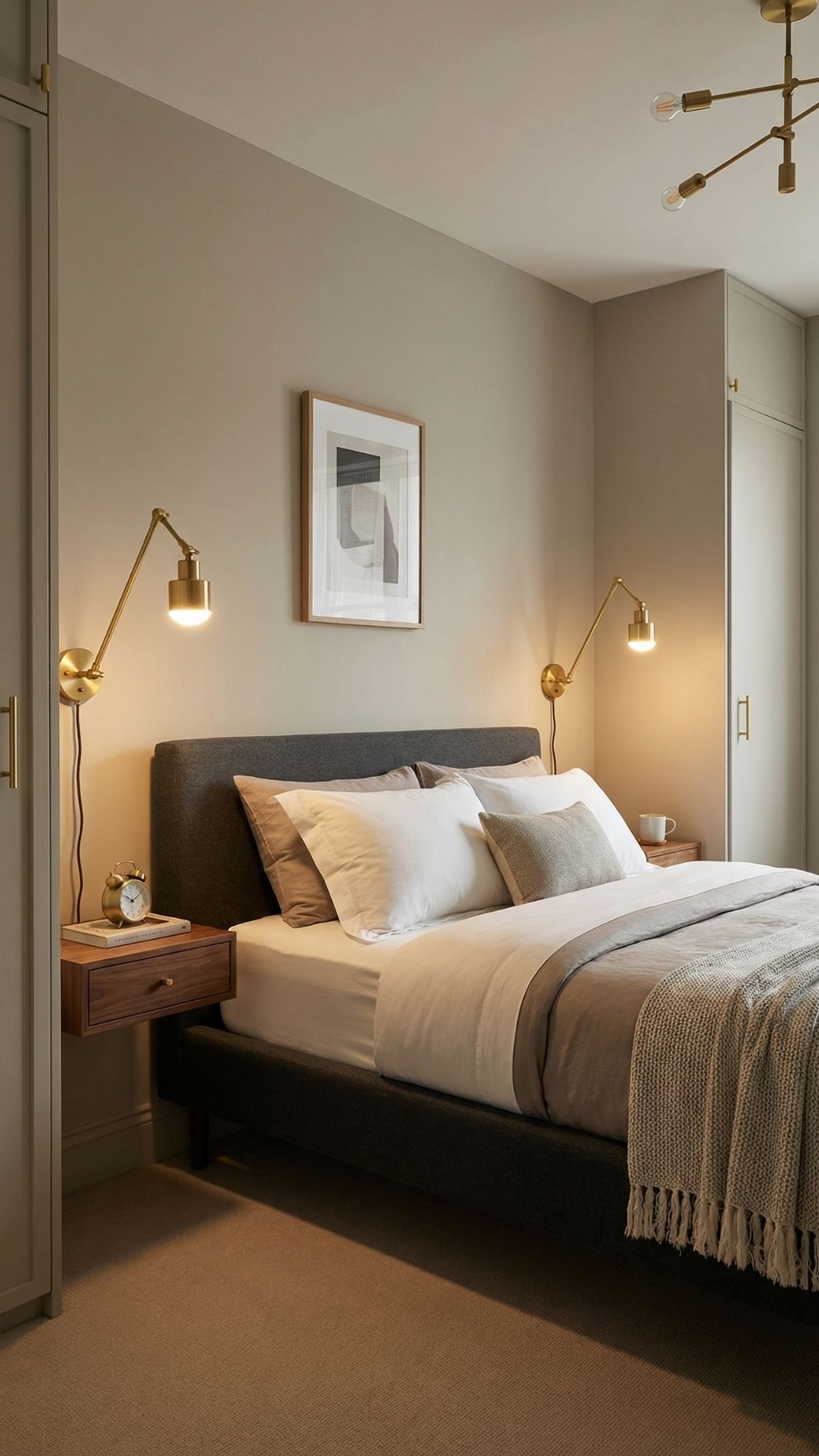
10) Put Lighting on the Walls to Free Up Surfaces
Table lamps look cute until they steal the only surface you had for, you know, living. Wall lighting keeps things functional without making your nightstand or side table feel crowded.
The best small-apartment move: plug-in sconces. You get that custom, high-end look without hardwiring anything. Hang them:
- On both sides of the bed to replace lamps
- Above a small sofa as a reading light
- In a narrow hallway to add depth and glow
This one change makes the room feel calmer because you clear visual clutter off surfaces. And clear surfaces always read “more spacious,” even if you still have a laundry pile hiding in a basket somewhere.
Key takeaway:Wall-mounted lighting opens up surfaces, and that instantly makes a small space feel bigger.
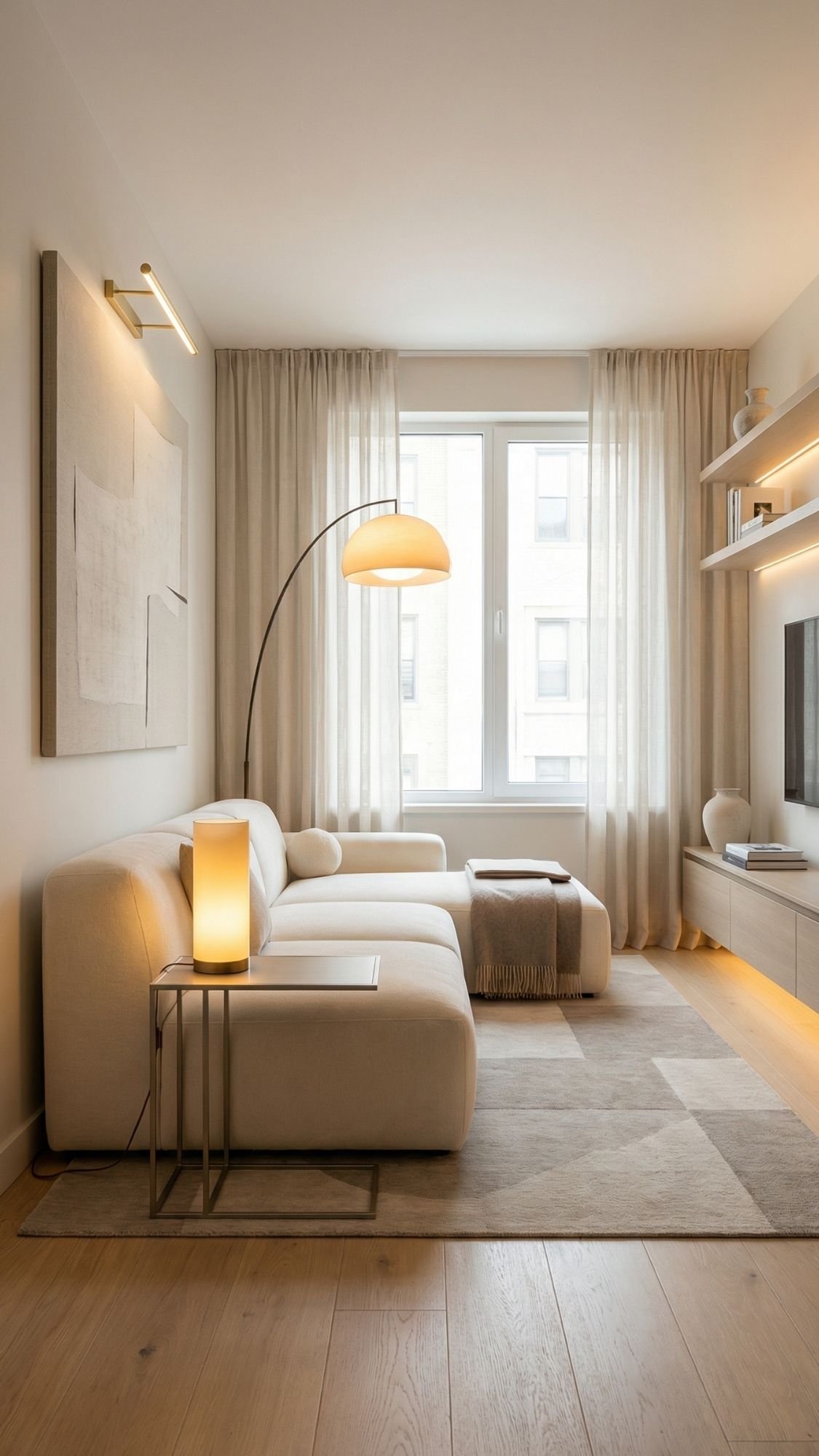
11) Layer Three Light Sources Instead of Relying on One Overhead Light
One overhead light can make a small apartment feel flat, harsh, and slightly like a waiting room. Layered lighting adds depth, warmth, and that “this place feels expensive” mood.
Aim for three types of lighting:
- Ambient: soft overall light (a floor lamp, a shaded table lamp)
- Task: focused light (a desk lamp, a reading lamp, a sconce near the bed)
- Accent: the vibe light (picture light, small LED lamp, candle-style glow)
This setup makes the room feel bigger because it creates pockets of light, not one single blast from the ceiling. The shadows soften, the corners look deeper, and the whole apartment feels more intentional.
Quick tips to keep it clean:
- Choose lamps in the same finish family (all black, all brass, or mixed but intentional)
- Use warm bulbs so the space feels cozy instead of clinical
Key takeaway:Layered lighting adds depth, and depth makes a small apartment feel more spacious.
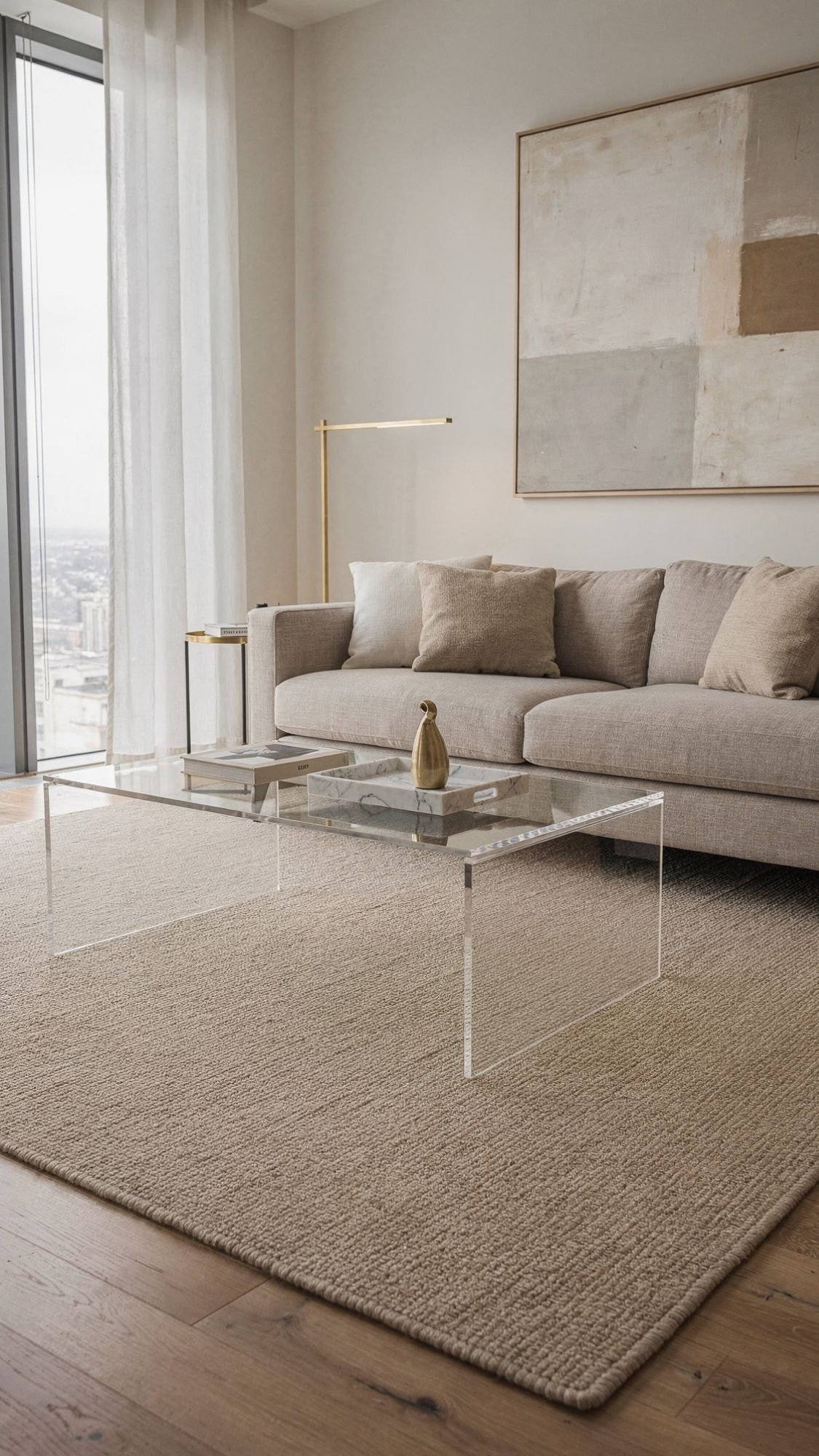
12) Use Clear Acrylic or Lucite for One Key Piece
Clear furniture pulls a sneaky little trick: it gives you function without adding visual weight. Your brain still reads the floor and sightlines as open, so the room feels bigger even though you added a piece of furniture.
This works best when you keep it to one hero item:
- A clear coffee table
- A lucite side table
- An acrylic dining chair or two
Do not overdo it or your apartment starts feeling like a trendy waiting area. One clear piece looks intentional and modern, and it pairs well with almost any style.
Style tip that always looks polished:
- Put a simple tray on the clear table
- Add one sculptural object and one small stack of books
- Stop there, because clutter shows up fast on see-through furniture
Key takeaway:One clear acrylic piece keeps a small space airy because it does not visually block the room.
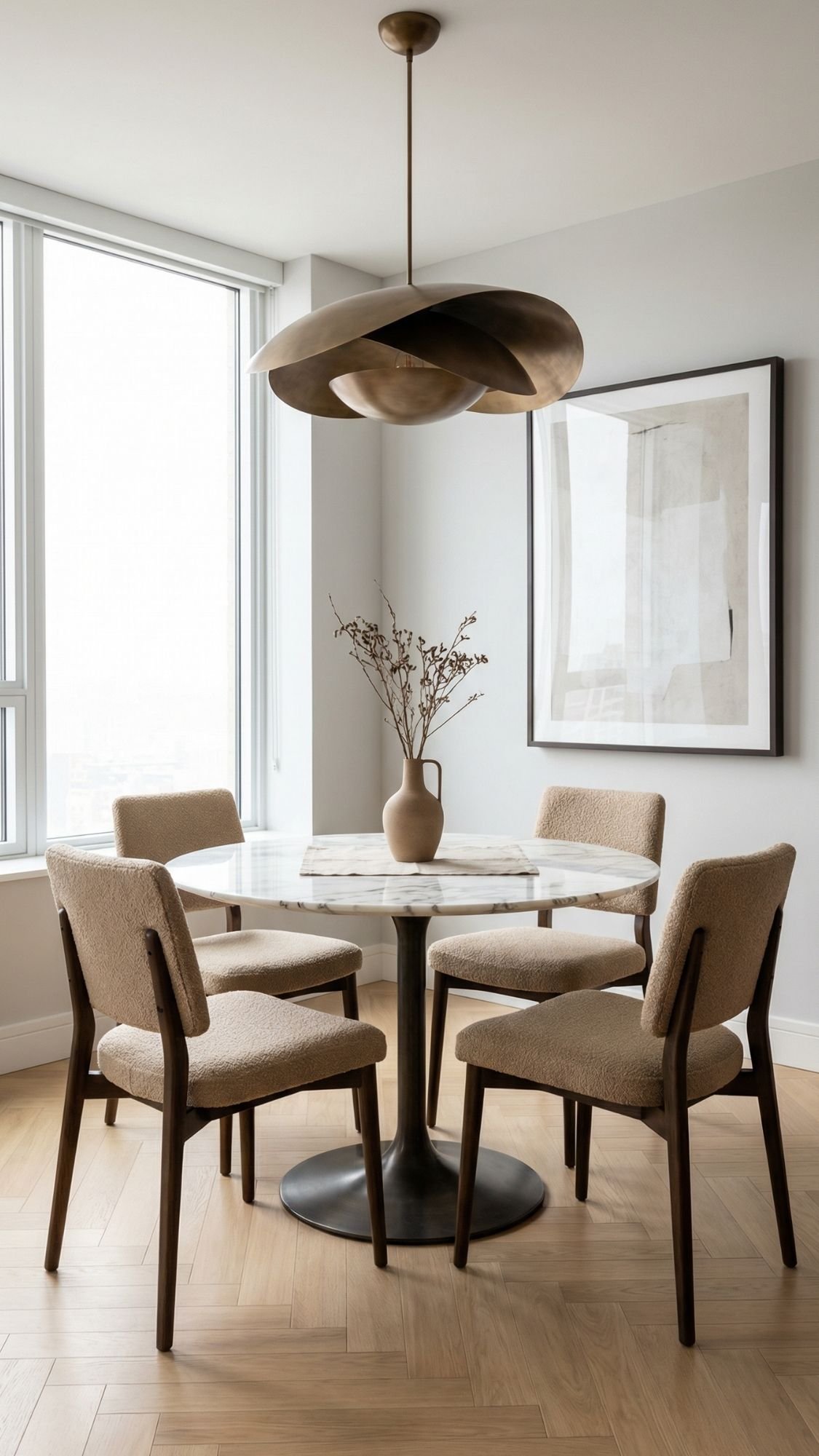
13) Pick a Round Dining Table for Tight Corners
Square tables look innocent until you try to squeeze past them 30 times a day. A round table softens the layout, improves flow, and makes a small dining area feel less cramped.
Why it works:
- No sharp corners to block walkways
- The shape keeps sightlines open
- It fits better in awkward nooks and studio layouts
If you can, choose a table with a pedestal base. Pedestals give you more leg room and make the table feel lighter than four chunky legs planted everywhere.
Smart small-apartment pairings:
- Round table + two chairs + one bench
- Round table + slim armless chairs
- Round table + one statement pendant above it for focus
Key takeaway:Round tables improve flow, and flow makes your apartment feel bigger.
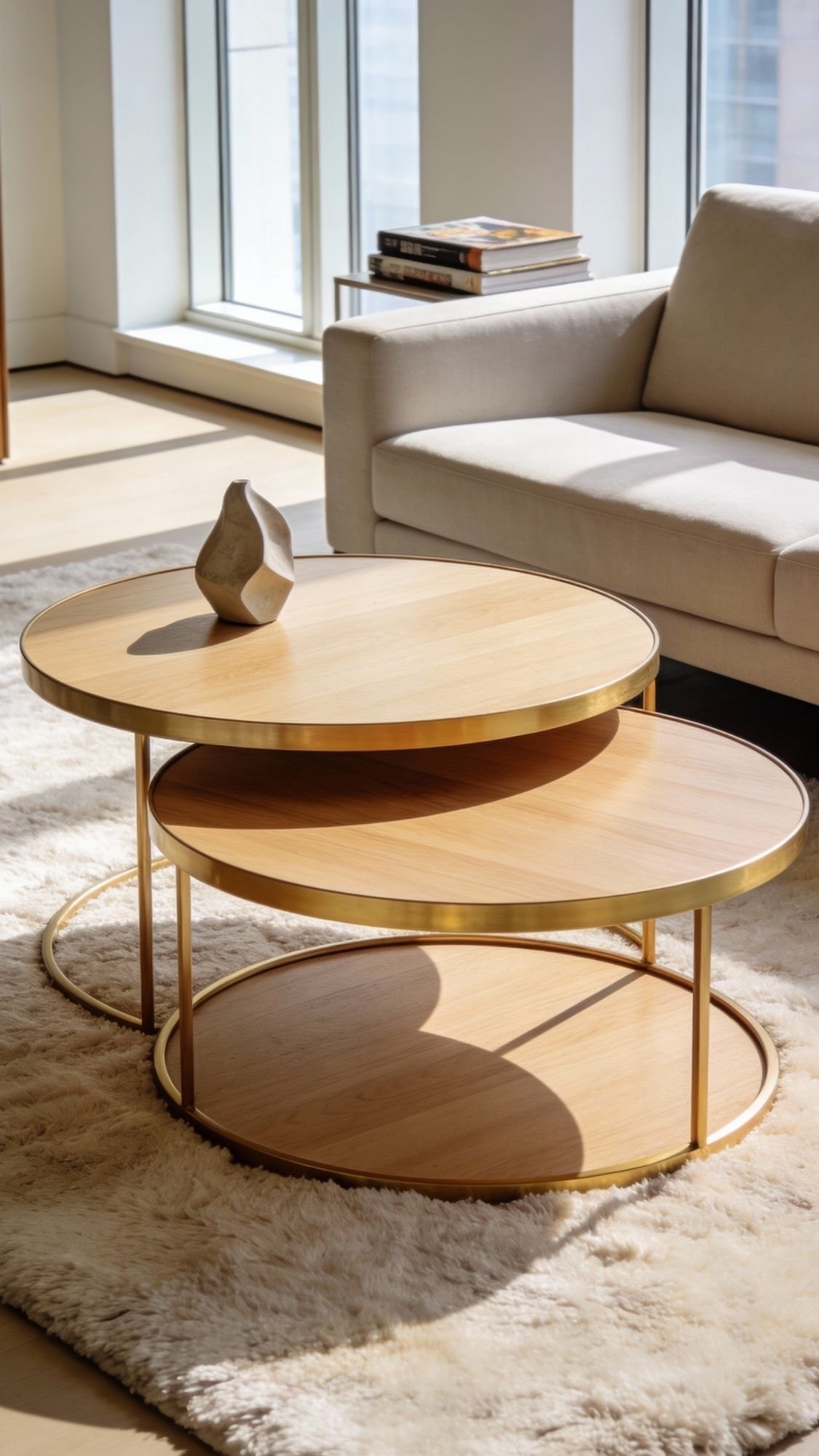
14) Use Nesting Tables Instead of a Big Coffee Table
Nesting tables give you flexibility without taking over the room. You pull them out when you need extra surface space, then you tuck them back in when you want the floor to feel open again. That quick “expand and collapse” move makes small apartments feel way more livable.
Keep it simple so it looks elevated:
- Choose two or three tables that stack cleanly
- Stick to slim legs and lighter finishes
- Style the top table with one tray or one book stack, not a whole decor parade
Key takeaway:Nesting tables keep the layout adaptable, so your small space stays open instead of crowded.
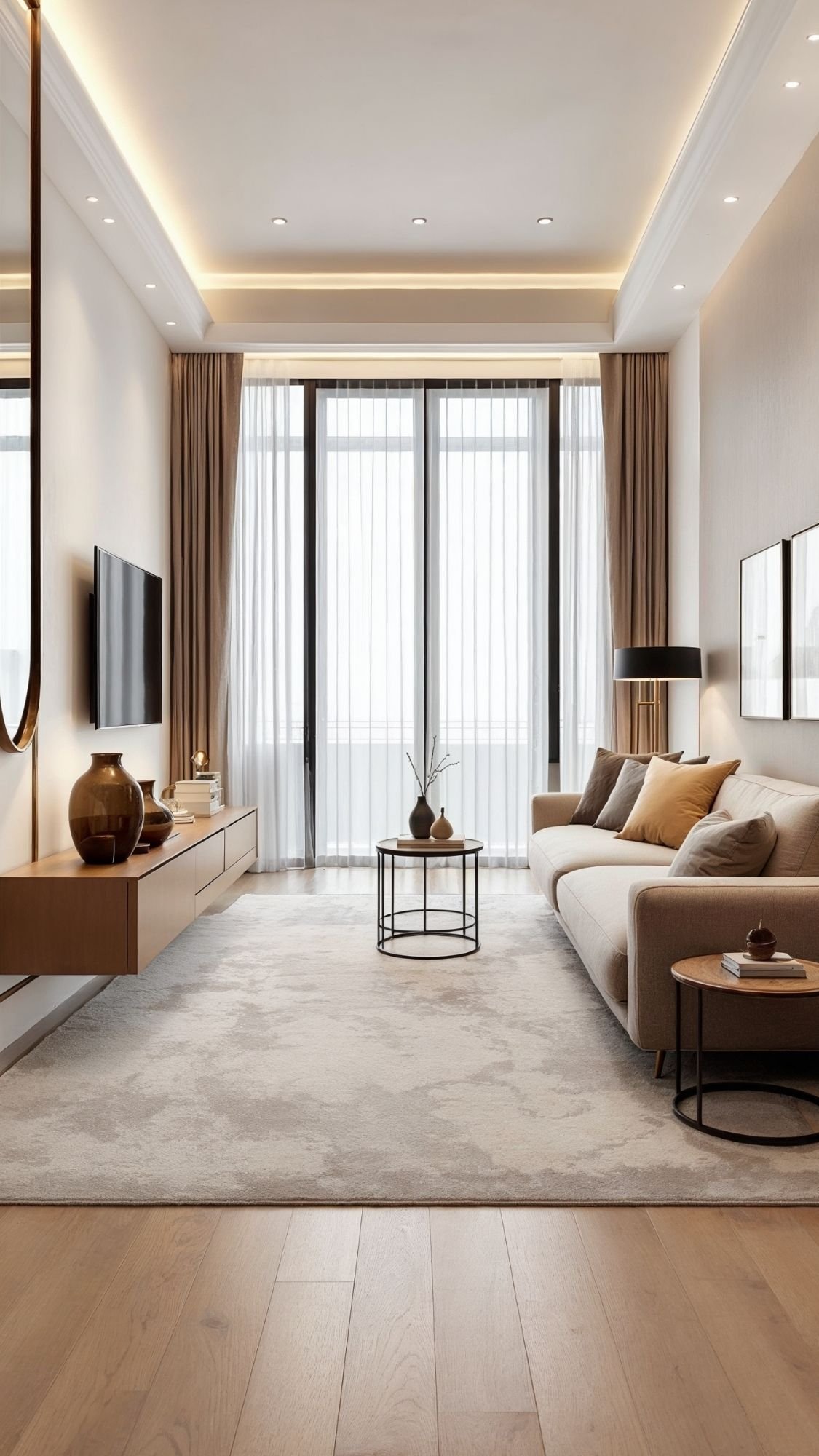
15) Float the Furniture a Few Inches Off the Walls
Pushing every piece of furniture against the wall feels like the “safe” move in a small apartment. It also makes the room look like it tries too hard to create space. When you float a sofa or chair even a few inches forward, you create breathing room and the layout looks more intentional. Your eye reads the space behind the furniture as depth, so the room feels bigger.
Keep it simple so it does not turn into a furniture obstacle course:
- Pull the sofa 3–8 inches off the wall
- Leave a clean walkway that feels natural
- Add a slim console behind the sofa if you want extra function
- Keep cords and clutter out of the “floating zone” so it stays clean
Key takeaway:Floating furniture creates depth, and depth makes small apartments feel more spacious.
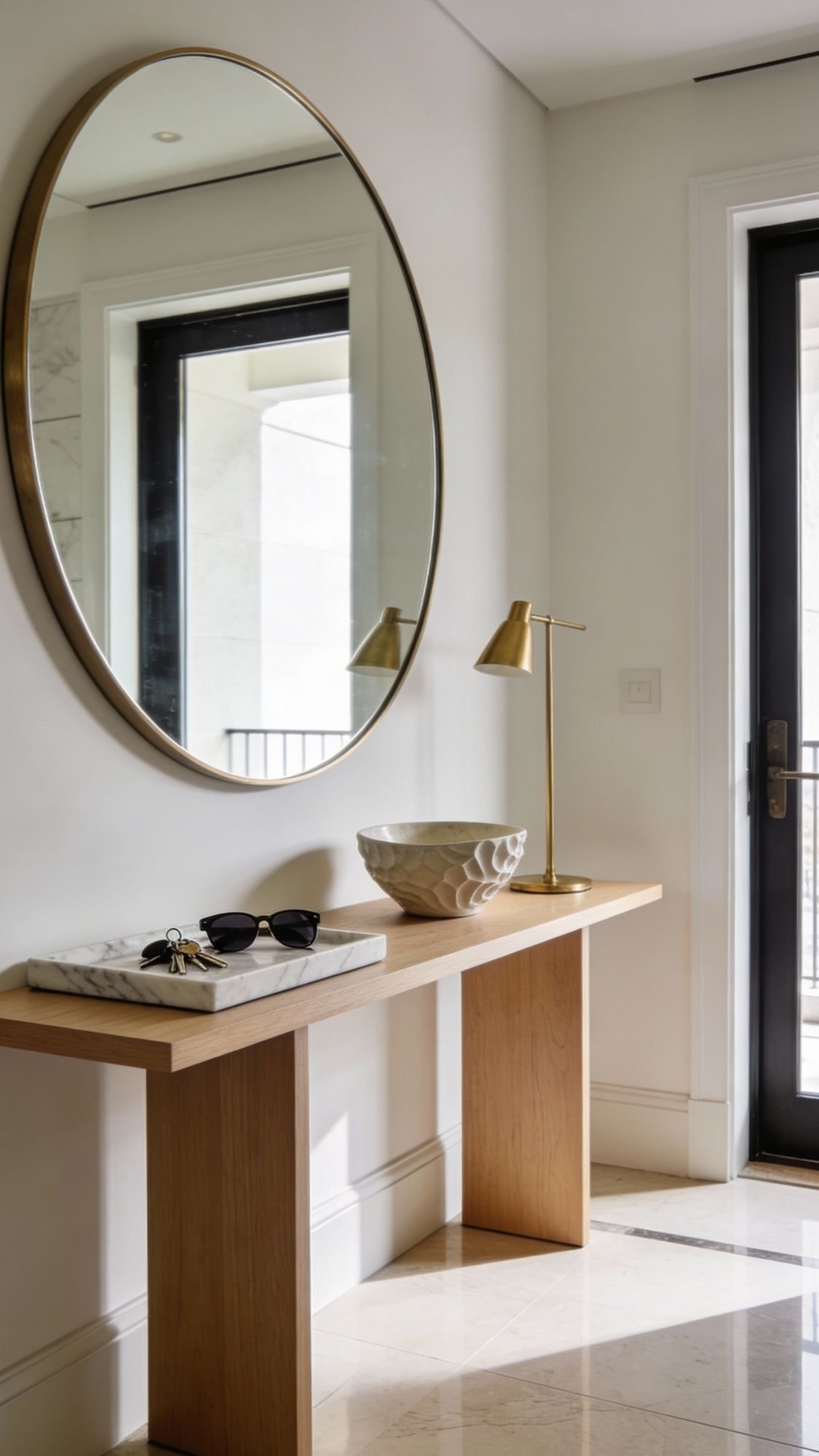
16) Create One “Drop Zone” So Surfaces Stop Exploding
Small apartments feel cramped fast when random stuff lands everywhere. Keys on the counter, mail on the table, sunglasses on the dresser, and suddenly your space looks “busy” even if it is clean.
A single drop zone fixes that. Give your everyday items one home and your apartment instantly looks calmer and bigger.
Easy drop zone setups:
- A slim console near the door
- A wall shelf with hooks underneath
- A tray on top of a dresser or cabinet
- A bowl on a small entry table
Keep the styling tight:
- Use one tray or one bowl to contain small items
- Add one catchall hook for bags or keys
- Leave some empty space so it still looks intentional
Yes, it is basically “put your clutter in a pretty container.” And yes, it works.
Key takeaway:Contained clutter looks like styling, and styling makes the apartment feel more spacious.
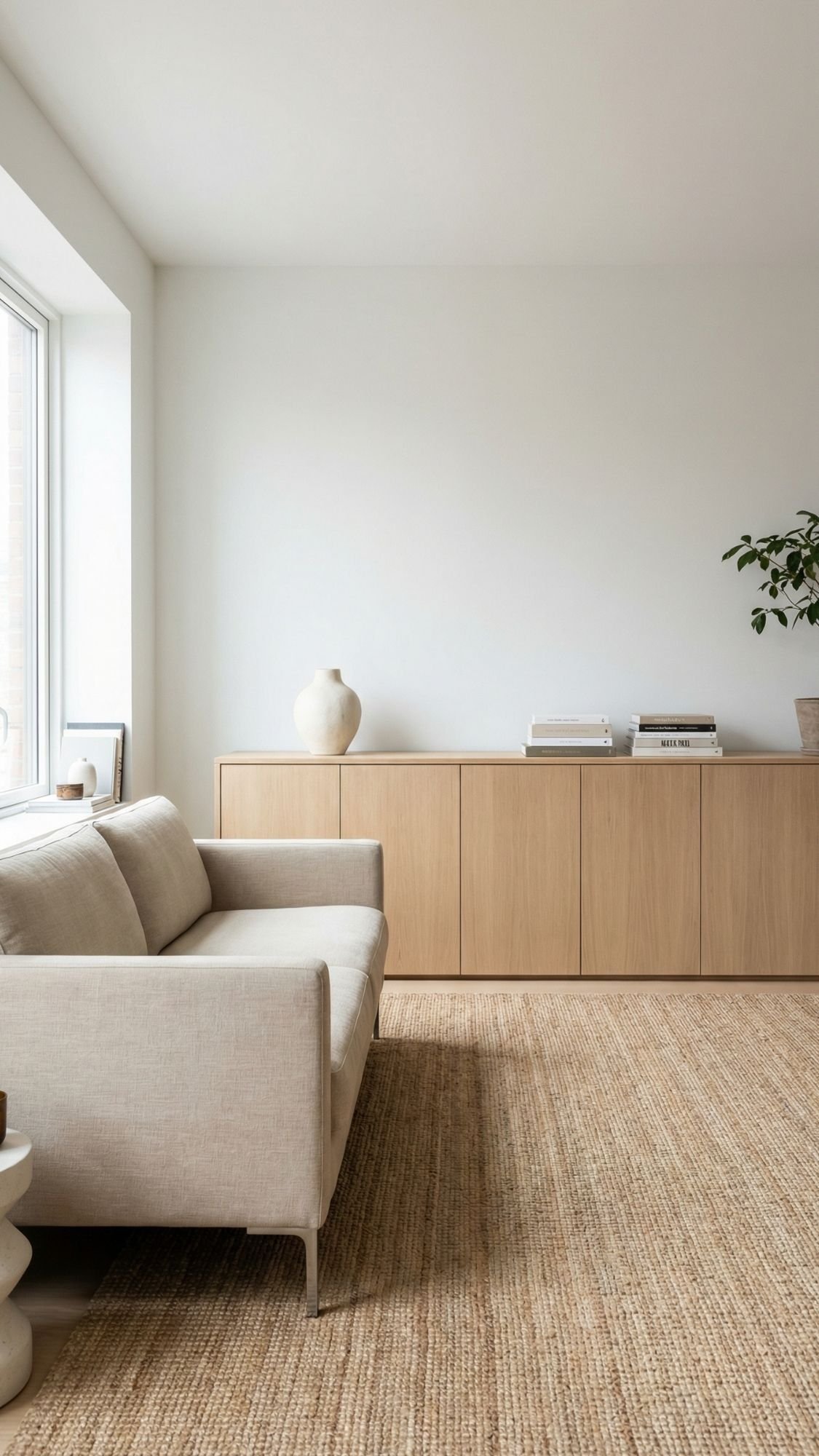
17) Hide Visual Mess With Closed Storage
Open shelves look great in photos until real life happens. In a small apartment, visual clutter piles up fast, and your brain reads it as “tight space” even when the room technically has storage.
Closed storage fixes that instantly because it removes the noise. Think:
- A low credenza with doors
- A storage ottoman
- A media console with closed cabinets
- A bed frame with drawers
- Matching bins behind cabinet doors
If you love open shelving, you can still keep it looking spacious:
- Use matching baskets or bins so the shelf looks uniform
- Keep the top shelf light and minimal
- Style in “groups” instead of scattering items everywhere
Key takeaway:Closed storage makes a small apartment feel bigger because it quiets the visual chaos.
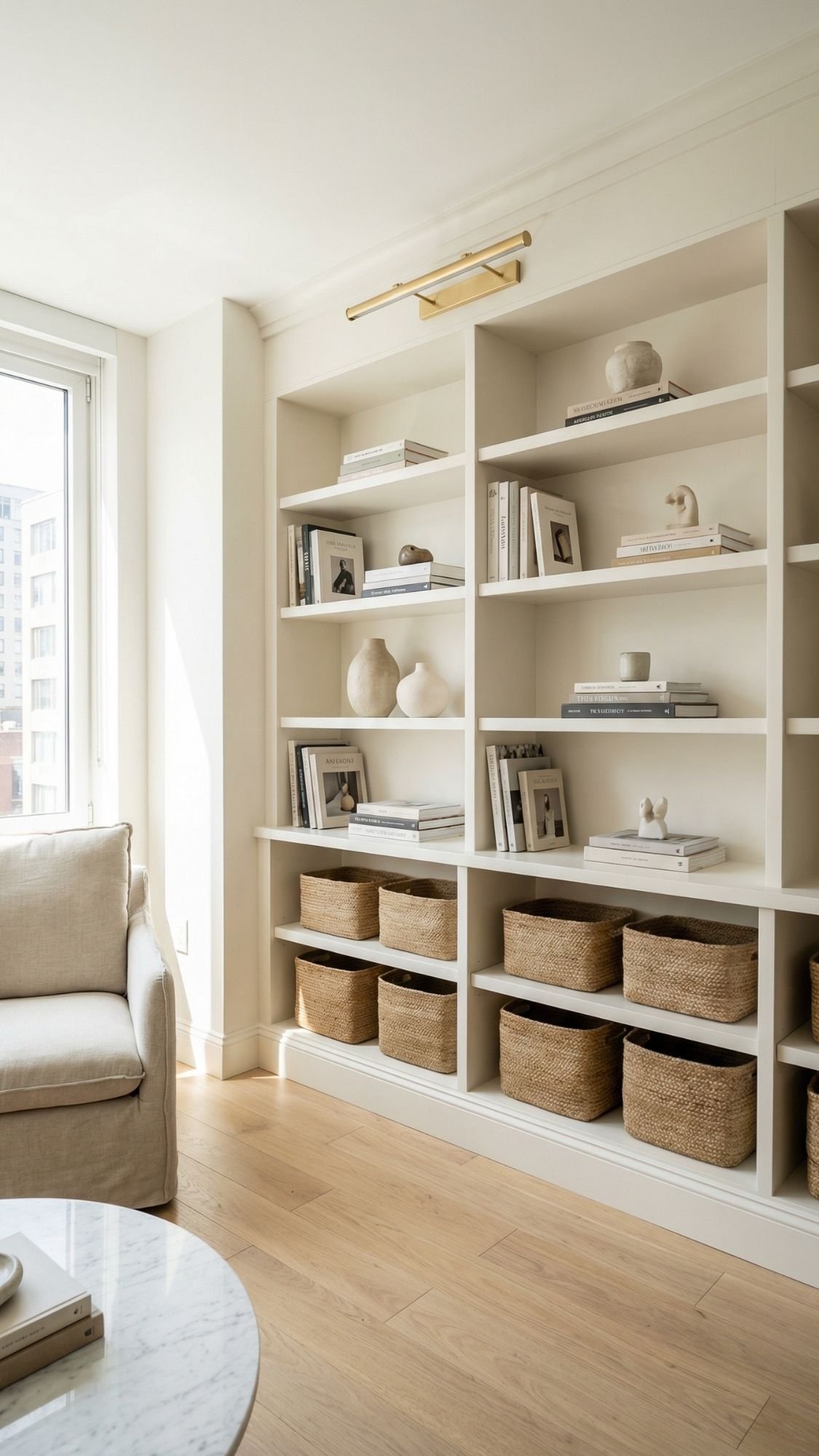
18) Go Vertical With Shelves That Reach the Ceiling
Short shelves waste prime wall space in a small apartment, and they also make walls look shorter. When shelving runs close to the ceiling, it pulls the eye upward and makes the room feel taller and more custom. This trick also gives storage without taking up more floor space, which matters when every square foot already works overtime.
Keep the look airy so it feels spacious, not stuffed:
- Use the lower shelves for everyday items and bins
- Leave the top shelf mostly open with a few styled pieces
- Stick to a tight color palette so the wall reads calm
- Mix books with a few sculptural objects to avoid “library overload”
Key takeaway:Ceiling-height shelving makes small apartments feel taller and keeps clutter off the floor.
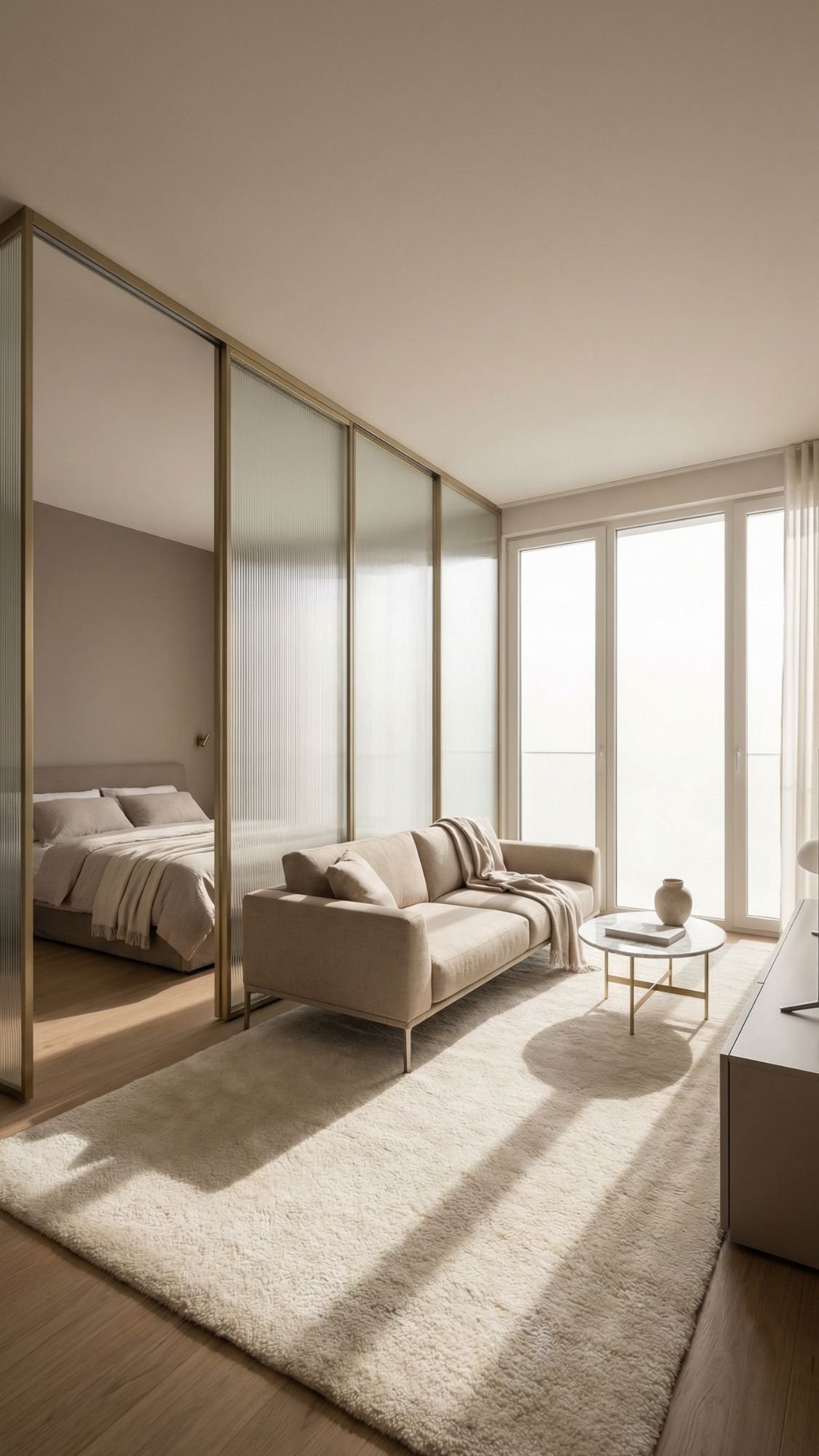
19) Use Fluted Glass to Divide Space Without Blocking Light
Studios and small one-bedrooms often need “zones,” but solid dividers can make the place feel smaller fast. Fluted glass solves that problem because it gives separation and privacy while still letting light move through the space.
You can bring fluted glass in without building anything wild:
- A fluted glass room divider panel
- A cabinet with fluted glass doors
- A sliding fluted glass screen between bed and living area
- A fluted glass insert on a bookcase used as a divider
It feels elevated because it looks architectural, not temporary. And it hides clutter just enough to look clean without turning your apartment into a cave.
Key takeaway:Fluted glass adds separation while keeping the space bright, so your apartment feels open and intentional.
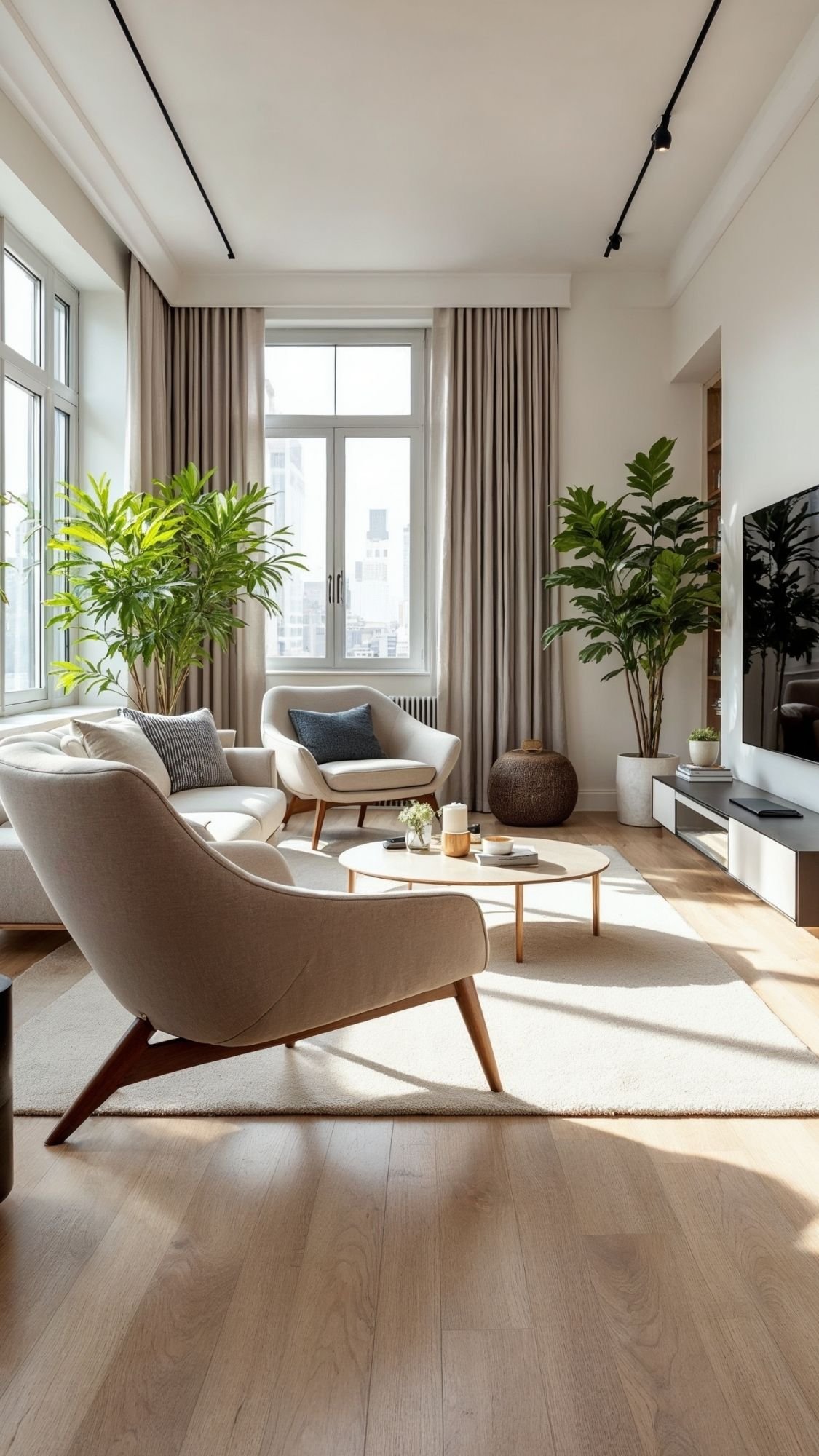
20) Choose Furniture With Exposed Legs, Always
Exposed legs are the easiest “make it feel bigger” cheat code. When you can see the floor under furniture, the room looks lighter and more open. When furniture sits flat on the ground, it blocks the visual flow and the apartment starts to feel heavier.
Pieces where this matters most:
- Sofa and chairs
- Bed frame
- Media console
- Coffee table and side tables
- Dining chairs
Even swapping one or two items can shift the whole vibe. A leggy console and a raised chair instantly read more spacious than chunky pieces that look like they came with their own gravity.
Key takeaway:Furniture with legs keeps sightlines open, so your small apartment feels airy instead of crowded.
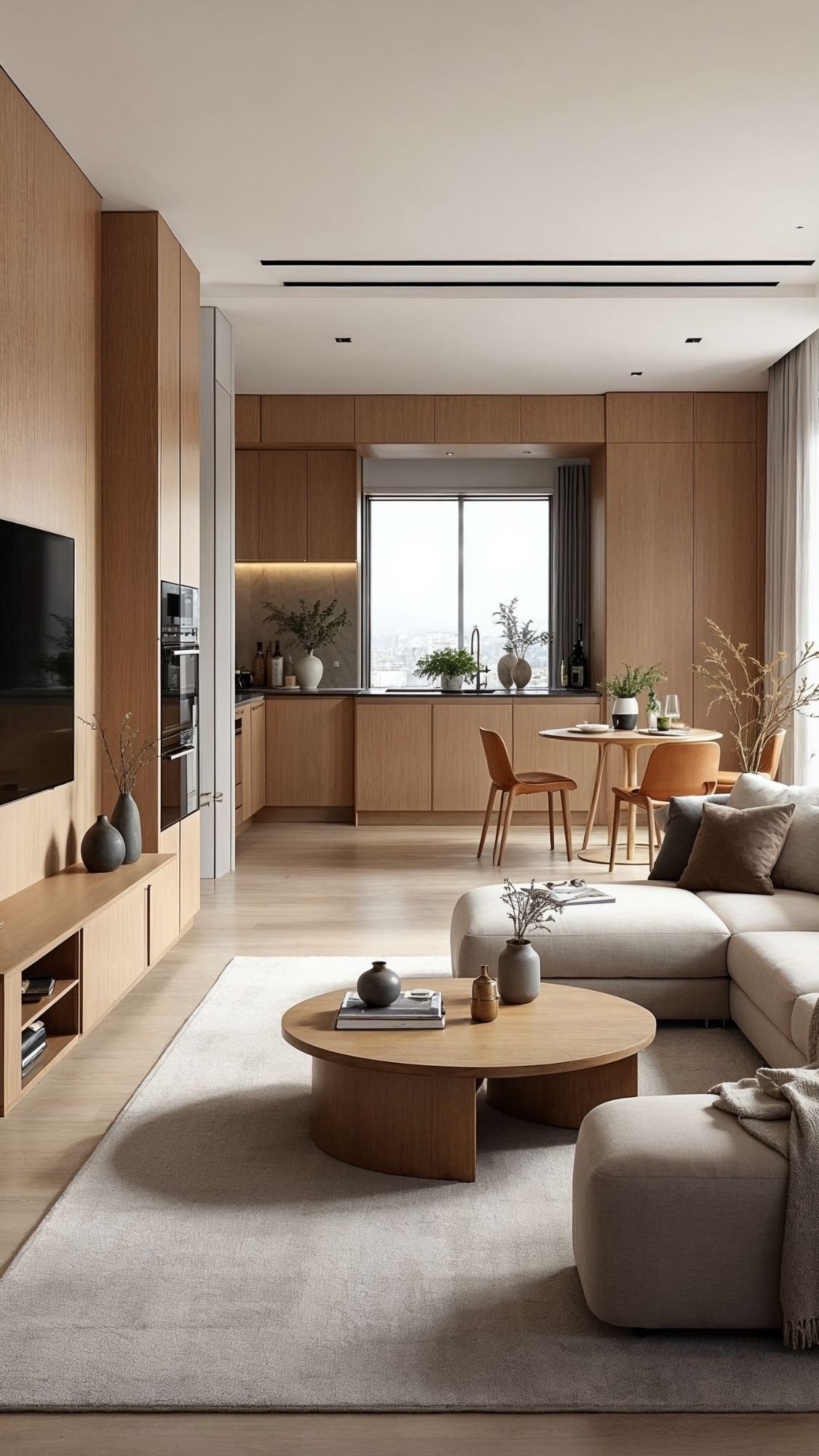
21) Keep One Consistent Wood Tone Across the Room
Mixing too many wood finishes can make a small apartment feel visually busy. Your eye keeps jumping between tones, and the space starts to feel “broken up” instead of calm and cohesive.
Pick one main wood tone for most furniture, then add one accent tone if you want contrast. That is it. No need to collect every wood stain like it is a hobby.
A simple combo that works in small spaces:
- Main tone: light oak or warm mid-tone walnut
- Accent tone: black or a darker wood in small doses
Quick places to keep the main tone consistent:
- Coffee table
- Console
- Dining table
- Shelves
- Frames
This trick makes the room feel larger because it creates one steady visual rhythm instead of a bunch of separate “moments.”
Key takeaway:Consistent wood tones make small apartments feel more cohesive and spacious
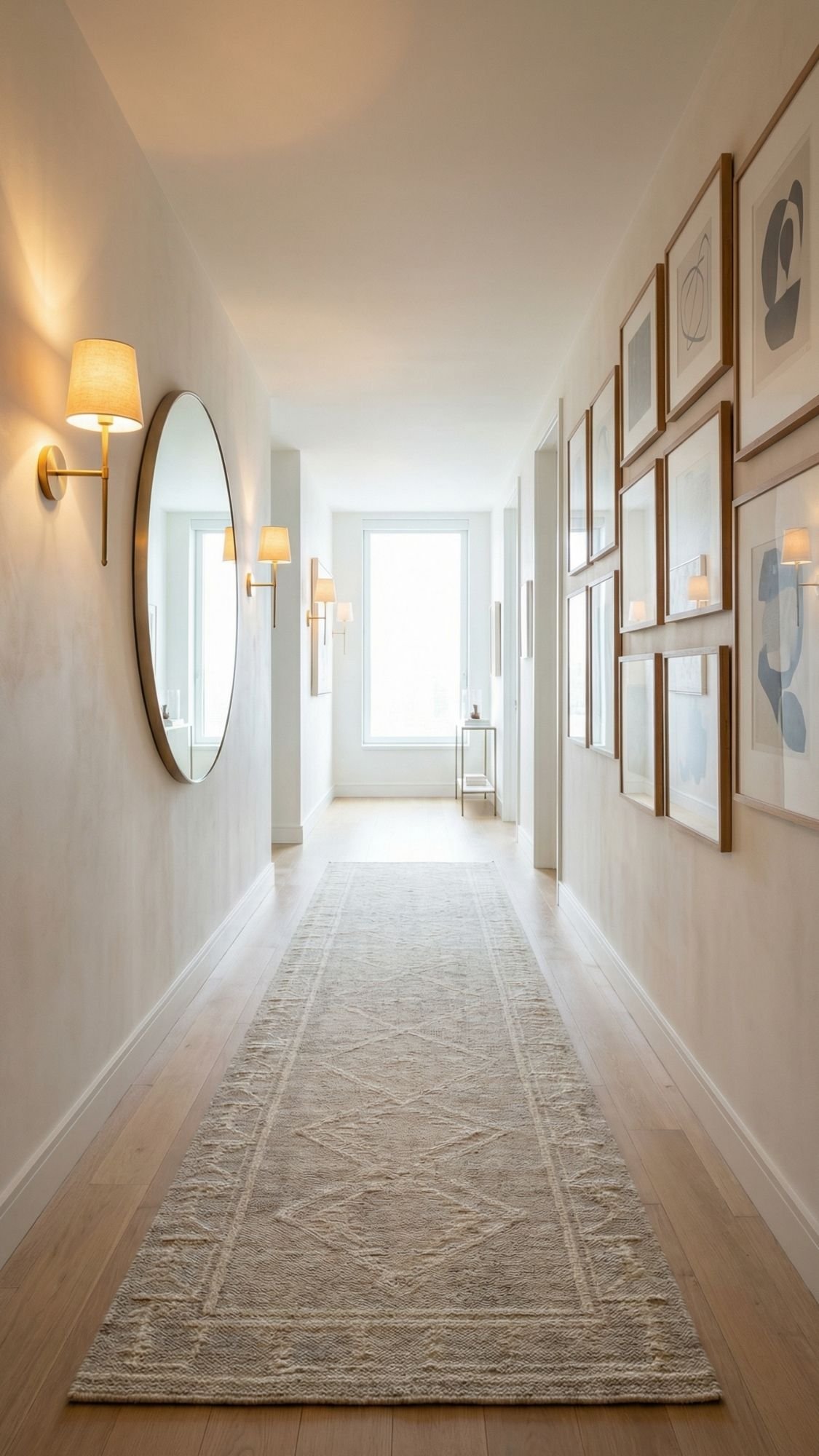
22) Use One Long Runner to Stretch Narrow Areas
Narrow hallways and galley kitchens can feel like tiny tunnels. A long runner changes that because it pulls the eye forward and visually “lengthens” the space. It also makes the area feel styled instead of forgotten.
Runner tips that keep it spacious:
- Choose a longer runner than you think you need
- Keep the pattern low-contrast so it feels calm
- Pick a thin, flat weave in kitchens so doors and stools still work
- Use a grippy pad so it stays put (nobody needs a surprise slip)
This trick works in:
- Hallways
- Narrow entry paths
- Galley kitchens
- Skinny spaces between living and dining zones
Key takeaway:A long runner makes narrow spaces feel longer and more intentional.
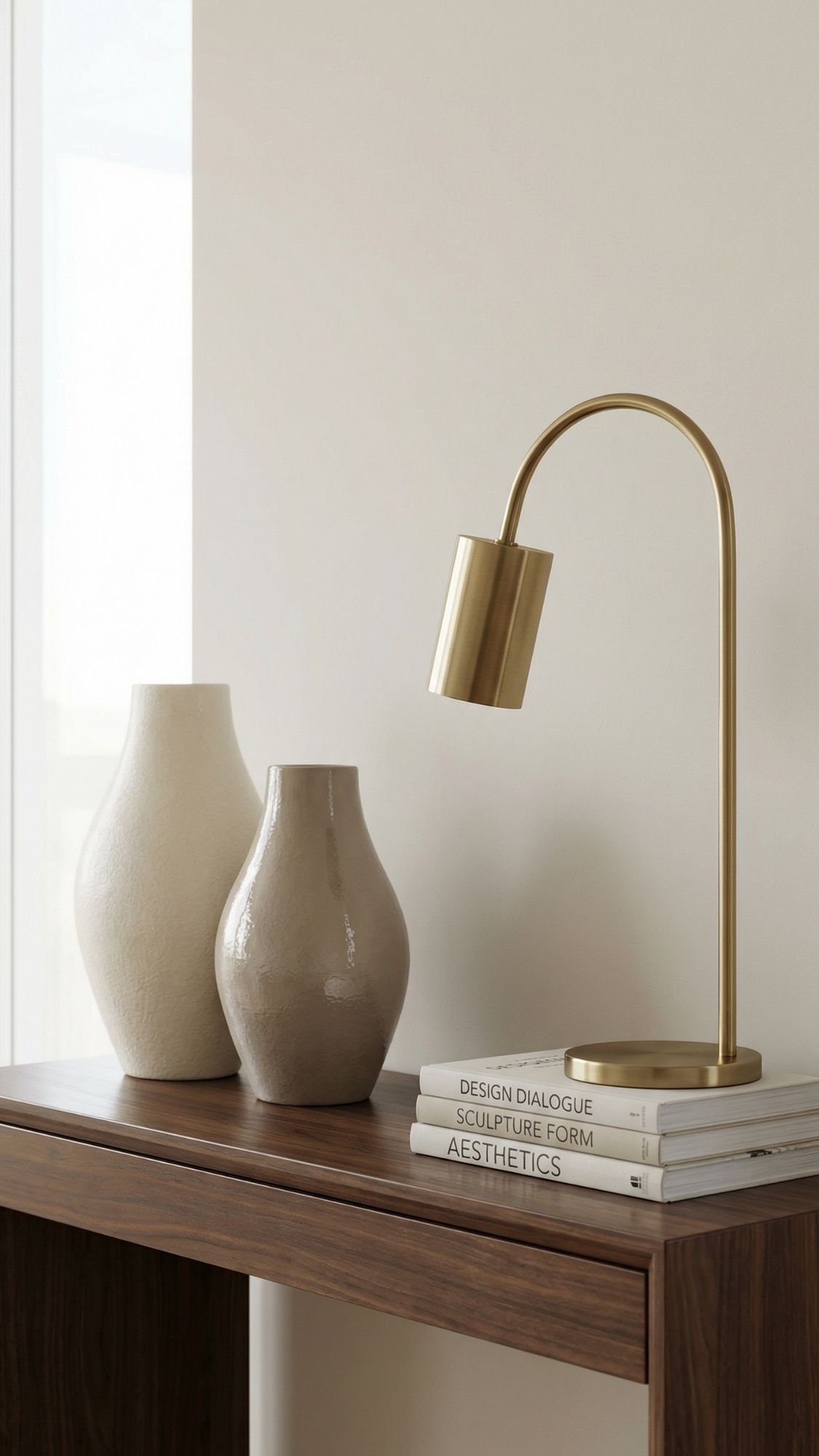
23) Style With Pairs, Not Piles
Small apartments punish messy styling. A bunch of little objects scattered everywhere makes surfaces look crowded, and crowded surfaces make the whole apartment feel smaller.
Pairs look intentional. Piles look accidental.
Easy “pair” styling that reads clean and elevated:
- Two matching candlesticks
- Two similar vases in different heights
- Two framed photos in the same frame style
- Two identical baskets on a shelf
Then balance it with one simple anchor:
- A small lamp
- A single tray
- One book stack
This is the fastest way to make a small space look styled without adding more stuff. Ever wondered why hotel rooms look so calm? They do not decorate with chaos.
Key takeaway:Pairs look curated, so your apartment feels cleaner and more spacious.
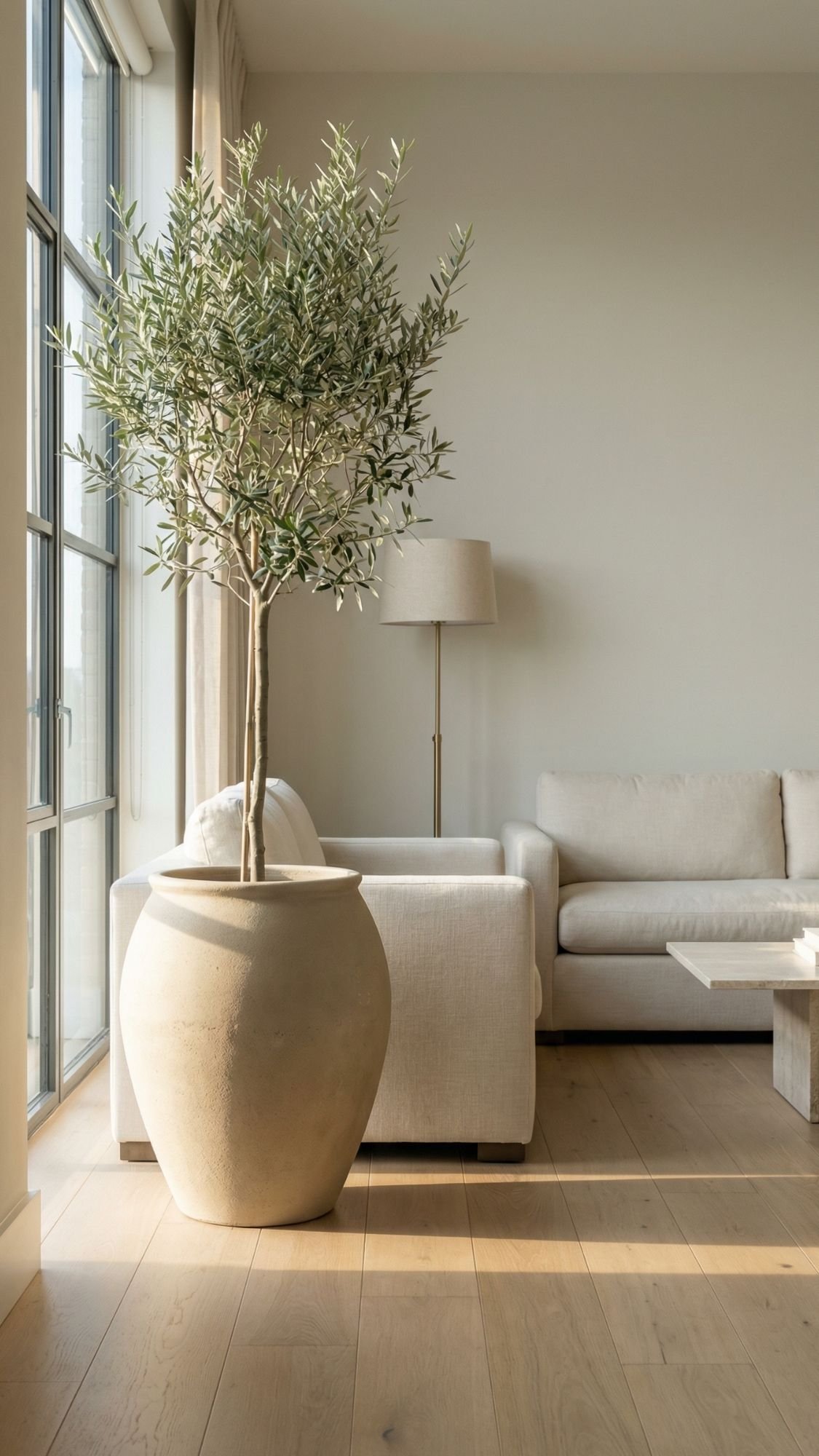
24) Use One Large Plant Instead of Five Small Ones
Multiple tiny plants can make a small apartment feel cluttered because they scatter visual attention across the room. One tall, statement plant creates height, adds softness, and looks intentional without taking over every surface.
Best statement plant placements:
- A bright corner near a window
- Next to a sofa to add vertical balance
- Beside a console or media unit to soften hard lines
Choose a planter that looks elevated:
- Matte ceramic
- Textured stone
- Minimal warm-toned clay
Keep the styling clean. One plant, one planter, done. When you keep it simple, it looks luxe instead of like a mini jungle project.
Key takeaway:One tall plant adds height and calm, which makes a small apartment feel more open.
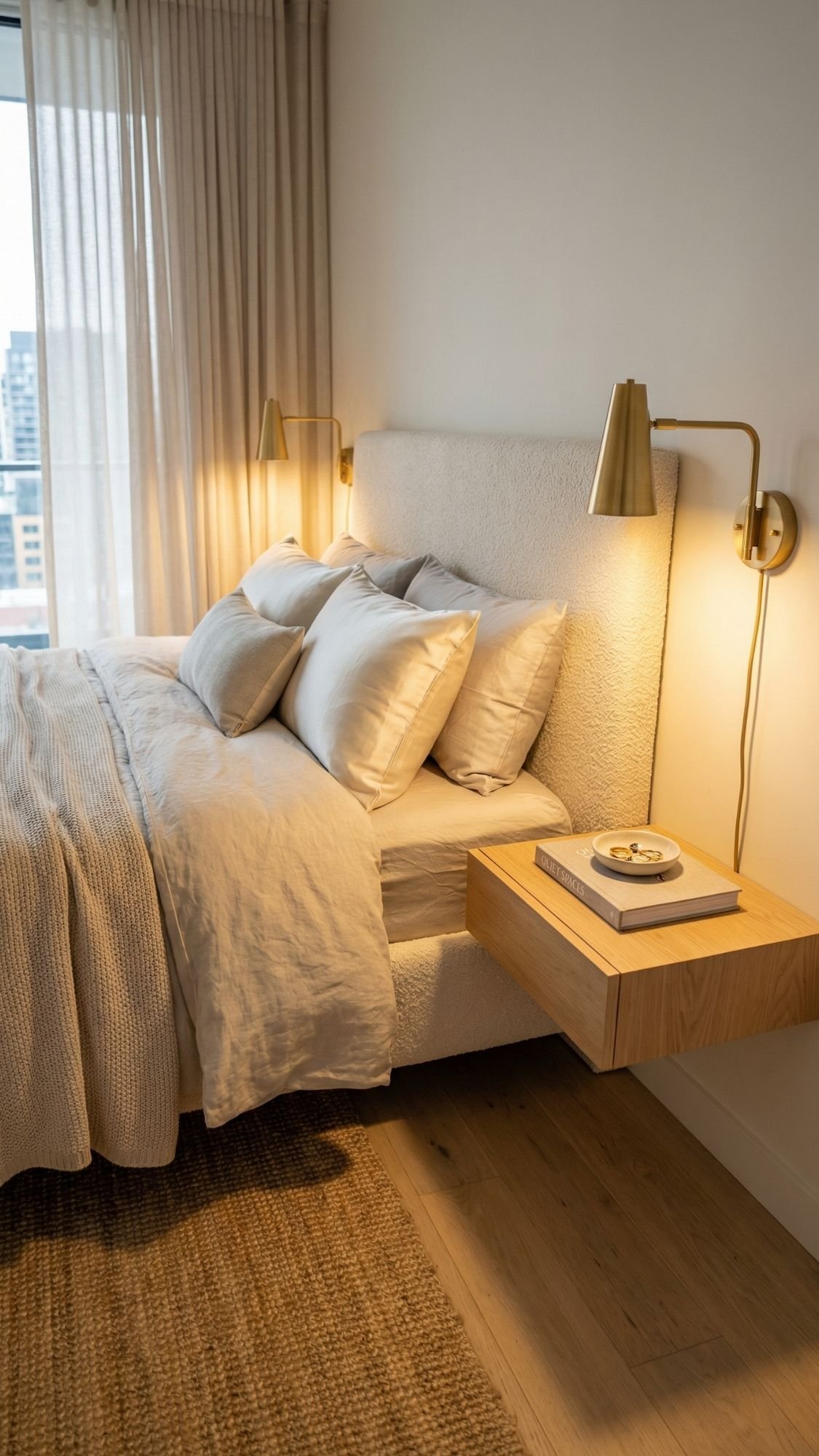
25) Swap Bulky Nightstands for Slim Floating Shelves
Nightstands can eat up a surprising amount of visual and physical space in a small bedroom. Floating shelves keep the function but remove the bulk, so the room feels lighter and more open.
What to put on a floating shelf (keep it tight):
- A small lamp or wall sconce nearby for light
- One book or a small stack
- A catchall dish for jewelry
- A glass of water, because hydration matters
If you want the cleanest look, pair floating shelves with wall lighting so you do not have cords and lamp bases taking over the only surface you have.
Rental-friendly note:
- Use strong wall anchors if you can install
- Or use a slim wall-mounted shelf system designed for apartments
Key takeaway:Floating shelves open up the floor and reduce visual bulk, so your bedroom feels more spacious.
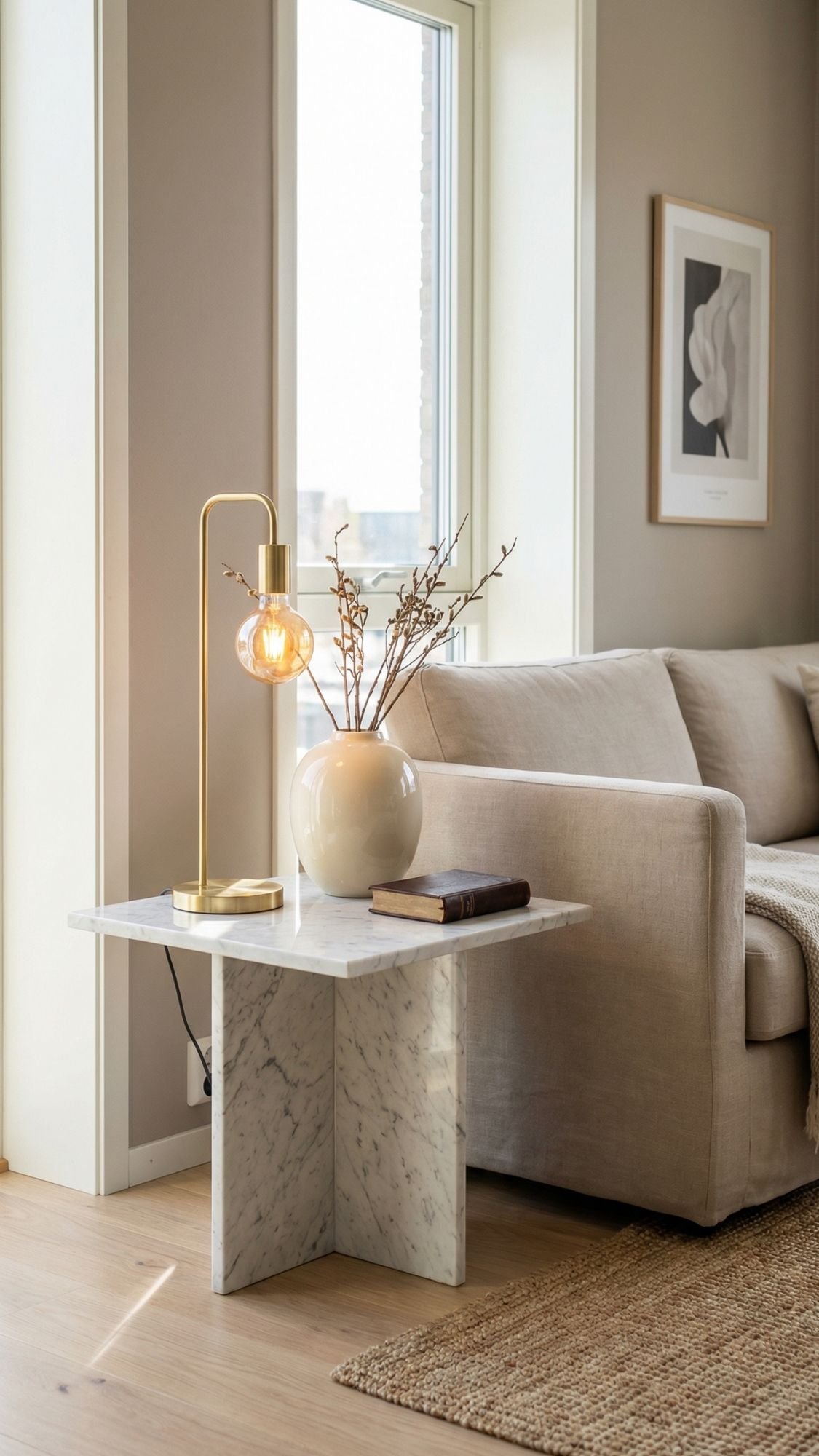
26) Add Reflective Finishes in Small Doses
Reflective surfaces bounce light around a room, which makes it feel brighter and bigger. The key is “small doses.” A little shine looks luxe. Too much shine looks like your apartment tried to become a nightclub.
Easy reflective touches that work in small spaces:
- A polished stone side table
- A glossy ceramic vase
- A slim brass lamp
- A mirror tray on a coffee table
- A glass-top table for extra lightness
Pair reflective finishes with soft textures like linen, wool, or boucle so the room stays balanced and warm.
Key takeaway:Subtle reflective finishes brighten the space, which makes a small apartment feel more open.
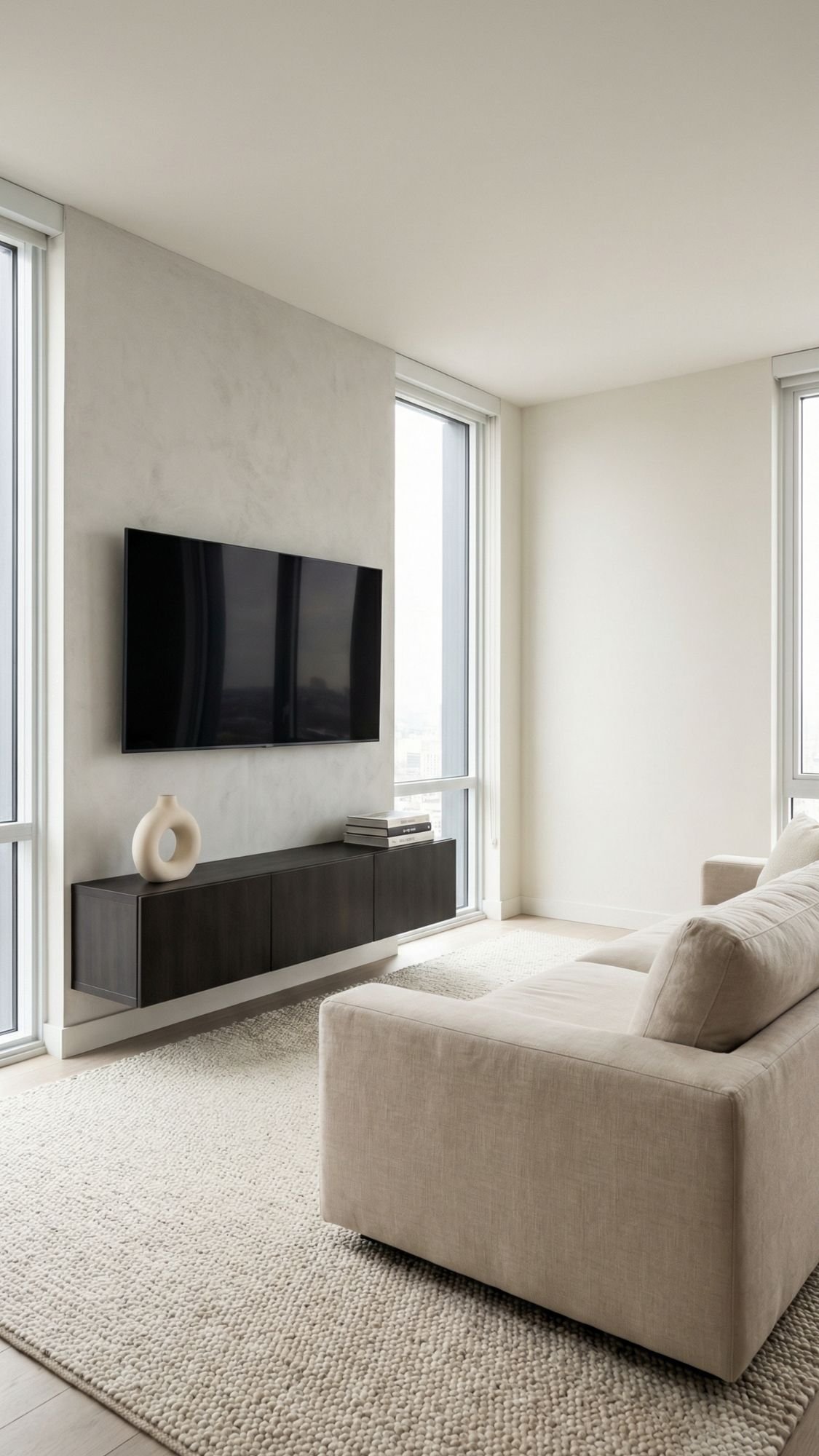
27) Follow the “One Wall, One Function” Rule
Small apartments feel chaotic when every wall tries to do everything. A TV wall plus a desk plus shelves plus random storage all fighting for attention turns the room into a visual argument.
Pick one wall and give it one clear purpose:
- The media wall
- The storage wall
- The work-from-home wall
- The dining wall
Then keep the other walls calmer with lighter decor so the room can breathe. This makes the layout feel intentional, like you planned it, not like you kept adding furniture until you ran out of floor.
Easy wins that keep it clean:
- Hide cords on the media wall
- Use one long console instead of multiple small pieces
- Keep surfaces mostly clear except for one styled moment
Key takeaway:One clear function per wall reduces visual clutter, which helps a small apartment feel bigger.
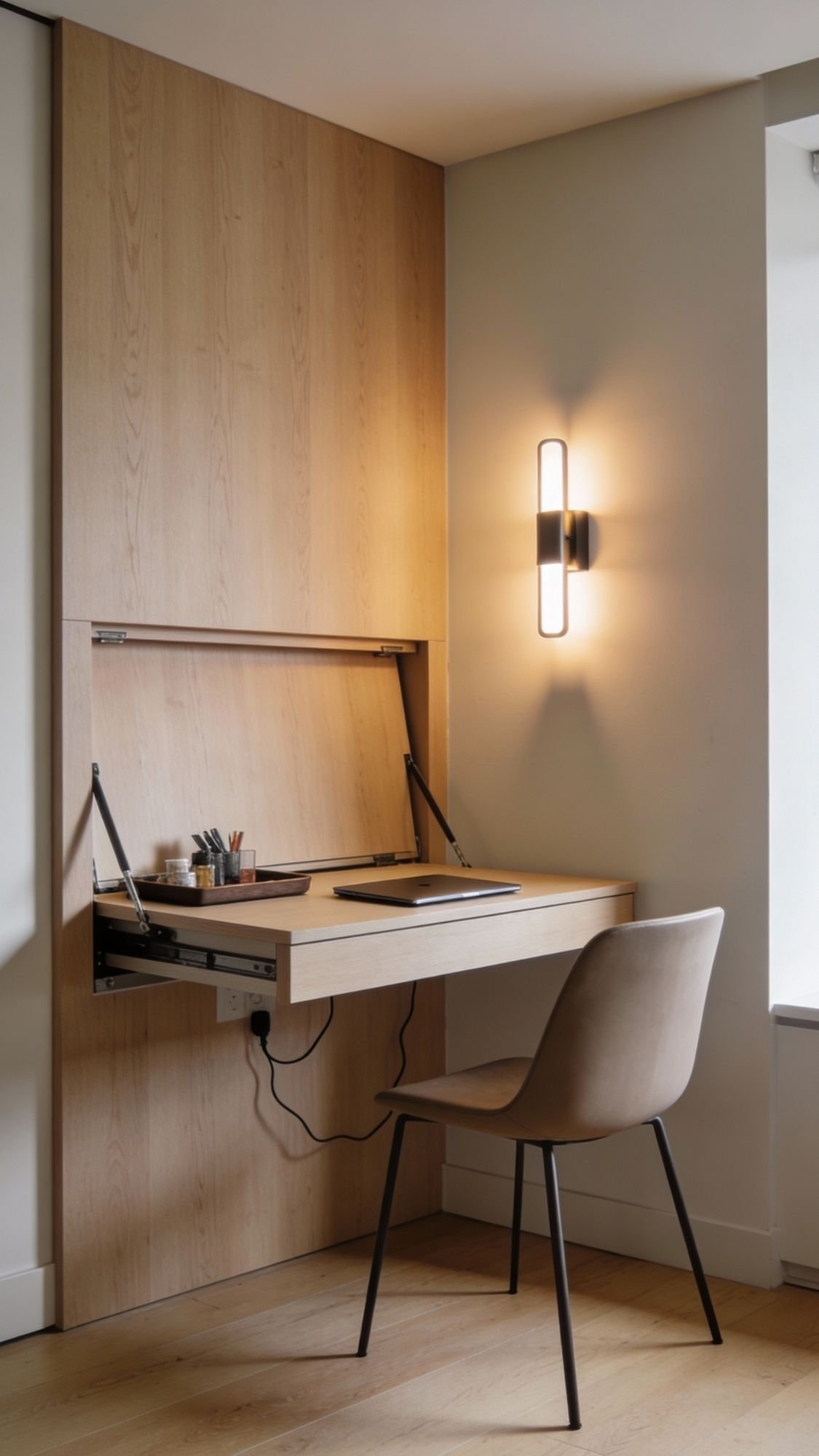
28) Use a Fold-Away Desk or Wall-Mounted Drop-Leaf
A permanent desk in a small apartment can take over the room fast. A fold-away desk gives you a work zone when you need it and disappears when you do not. That keeps your space feeling open, especially if you work from home and do not want your whole apartment screaming “office.”
Best options for small spaces:
- Wall-mounted fold-down desk
- Drop-leaf table that doubles as a desk
- Slim console that opens into a work surface
Make it feel elevated, not temporary:
- Add a sleek chair with a light silhouette
- Use one tidy tray for supplies
- Put a small task light nearby
- Keep cords hidden if possible
Key takeaway:A desk that folds away gives you function without stealing square footage.

29) Edit the Room Like You’re Styling a Photo Shoot
Small apartments look spacious when you edit hard. Not “throw everything away” hard, but “stop letting random stuff live on every surface” hard. Every extra item steals breathing room, and your eye starts feeling crowded even if the floor is clean.
Try this quick edit that works fast:
- Remove one extra chair or stool that you do not use daily
- Clear one surface completely (coffee table, console, dresser)
- Pick one decorative moment per zone, not five
- Hide anything that does not match the room’s main vibe
If you want the space to feel bigger, keep the styling intentional:
- One tray
- One book stack
- One sculptural object
- Done
This is the part where the apartment starts looking like a high-end listing photo instead of a storage unit with a cute rug.
Key takeaway:Less visual noise makes a small apartment feel bigger, instantly.
A small apartment can feel spacious when you control what the eye sees first. You keep the palette calm, you let light bounce around, you choose furniture that shows the floor, and you stop decorating every surface like it owes you money.
If you want the fastest wins, start here:
- Hang curtains high and wide
- Use one oversized rug
- Layer your lighting
- Add one large mirror that reflects a window
- Edit down the visual clutter
Then build from there. A few smart swaps can make your apartment feel brighter, taller, and way more expensive without changing the actual square footage. IMO that is the kind of math everyone can get behind.