The entryway works harder than any other spot in the house. It greets guests, catches chaos, and sets the vibe in about three seconds. No pressure, right?
The good news: an entryway does not need a mansion-sized foyer to feel welcoming. It just needs a few smart choices that make life easier and make the space look intentionally styled. Think: a place for keys, a runner that can handle real life, lighting that flatters the space, and storage that does not scream “I gave up.” FYI, small entryways actually win here because they force the setup to stay simple.
And honestly, who does not want that calm, polished “everything has a home” feeling the second the door opens? This list breaks down 26 entryway decor ideas that look luxury-level but feel easy to keep up with, even on busy weeks.
“As an Amazon Associate, I earn from qualifying purchases. If you click a link and make a purchase, I may receive a small commission at no extra cost to you. This helps keep my design guides free and honest—thank you for the support!”
1) Build a “Drop Zone” That Looks Intentional
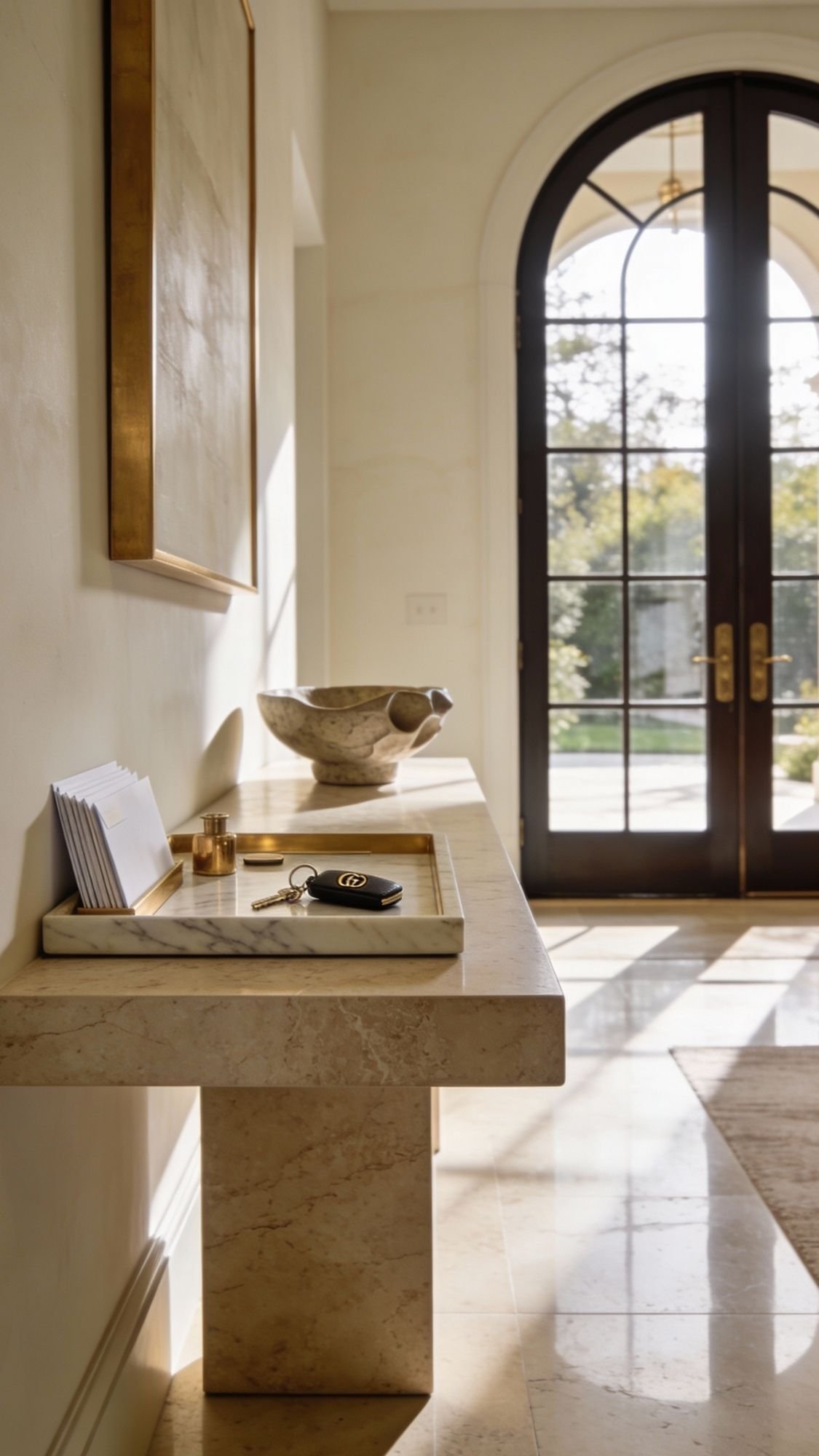
If the entryway turns into a random pile of keys, receipts, lip gloss, and mystery objects, a drop zone fixes that fast. A good drop zone gives every daily essential a clear home, so the space stays calm even when life gets hectic.
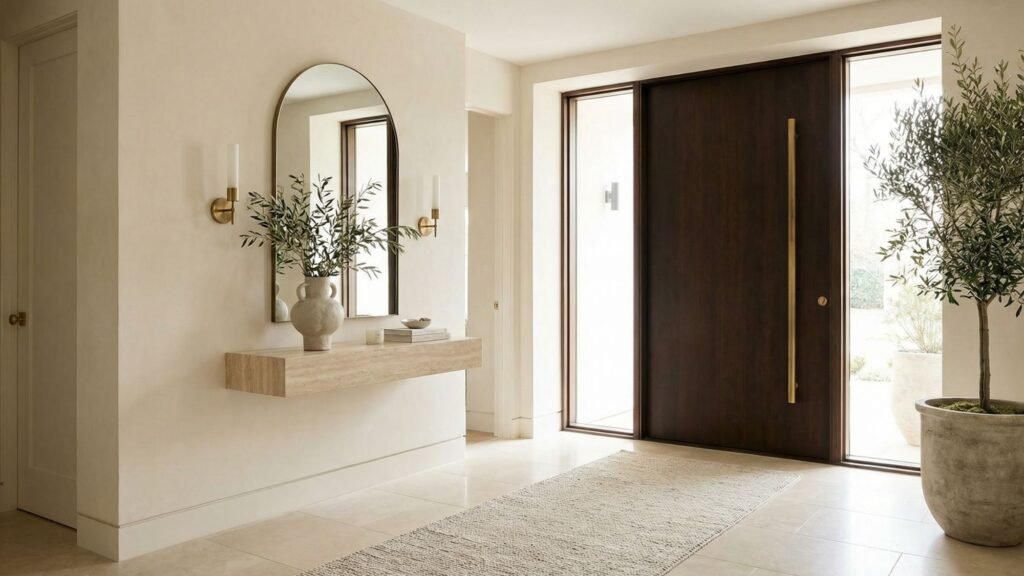
Keep it simple: choose one main landing surface and commit to it. A console table works great, but a floating shelf works even better in a tight space because it keeps the floor open. Then style it like it belongs in a luxury home, not like it belongs in a junk drawer.
Here’s the setup that makes it feel effortless:
- One tray for keys, cards, and the little things that vanish
- One bowl or catch-all dish for coins, earbuds, or rings
- One hidden solution like a lidded box or a drawer for the stuff that looks messy

- Marble Tray: A masterpiece born from nature’s artistry, Bianco Palomino stone captivates with its ethereal blend of icy …
- High Quality Marble: Karibiber marble vanity tray is carefully crafted with one-piece moulding process. Ensure that the …
- Widely Applications: The marble bathroom tray is designed in larger sizes and are suitable for holding perfumes, candles…
Want the biggest upgrade with the least effort? Add a small lamp or sconce nearby. The soft glow makes even the most basic “keys live here” setup look intentional.
2) Anchor the Space With a Statement Console Table
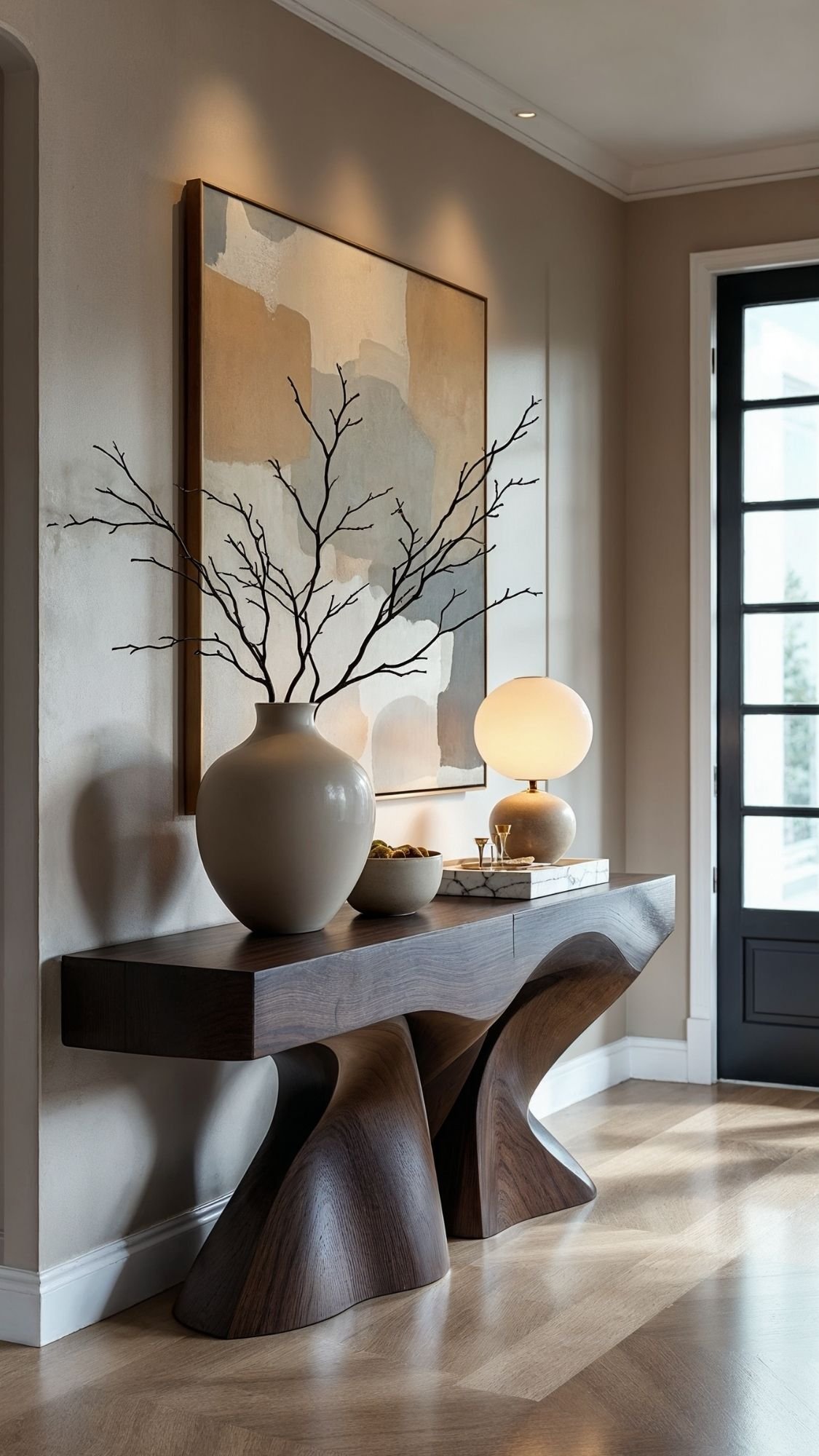
A statement console table does two jobs at once: it makes the entryway feel designed, and it gives everything a “landing strip” that keeps clutter from spreading. Even in a small entry, a slim console instantly adds structure. And yes, it also makes the space look more expensive, which feels like a win 🙂
The key is choosing a piece with presence without blocking the walkway. Look for a narrow depth and a strong silhouette, like waterfall stone, curved wood, or something with clean lines and luxe materials. Then style it with a simple formula that always works and never looks like you tried too hard.
Easy console styling formula:
- Tall: lamp or vase with branches
- Medium: framed art or a sculptural object
- Small: tray or bowl for daily essentials
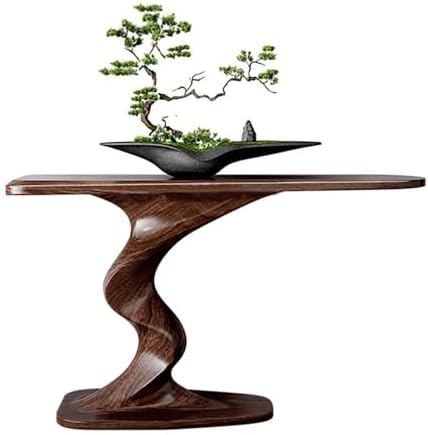
- 1. Wood Console Table: This modern console is crafted from solid wood for a beautiful look and durability.
- 2. Elegant Details: Our wood entryway table features a modern design with sleek curves and beautiful neutral finishes th…
- 3. Extra-large Storage Space: The extra-long tabletop provides ample storage space to neatly and organically place your …
If the entryway stays tight, skip bulky decor and lean into one bold piece. A console with a great finish can carry the whole look on its own. And if the table includes a drawer, even better. Drawers hide the “real life” stuff so the top stays clean.
3) Add a Runner That Handles Real Life (Without Looking Like It)
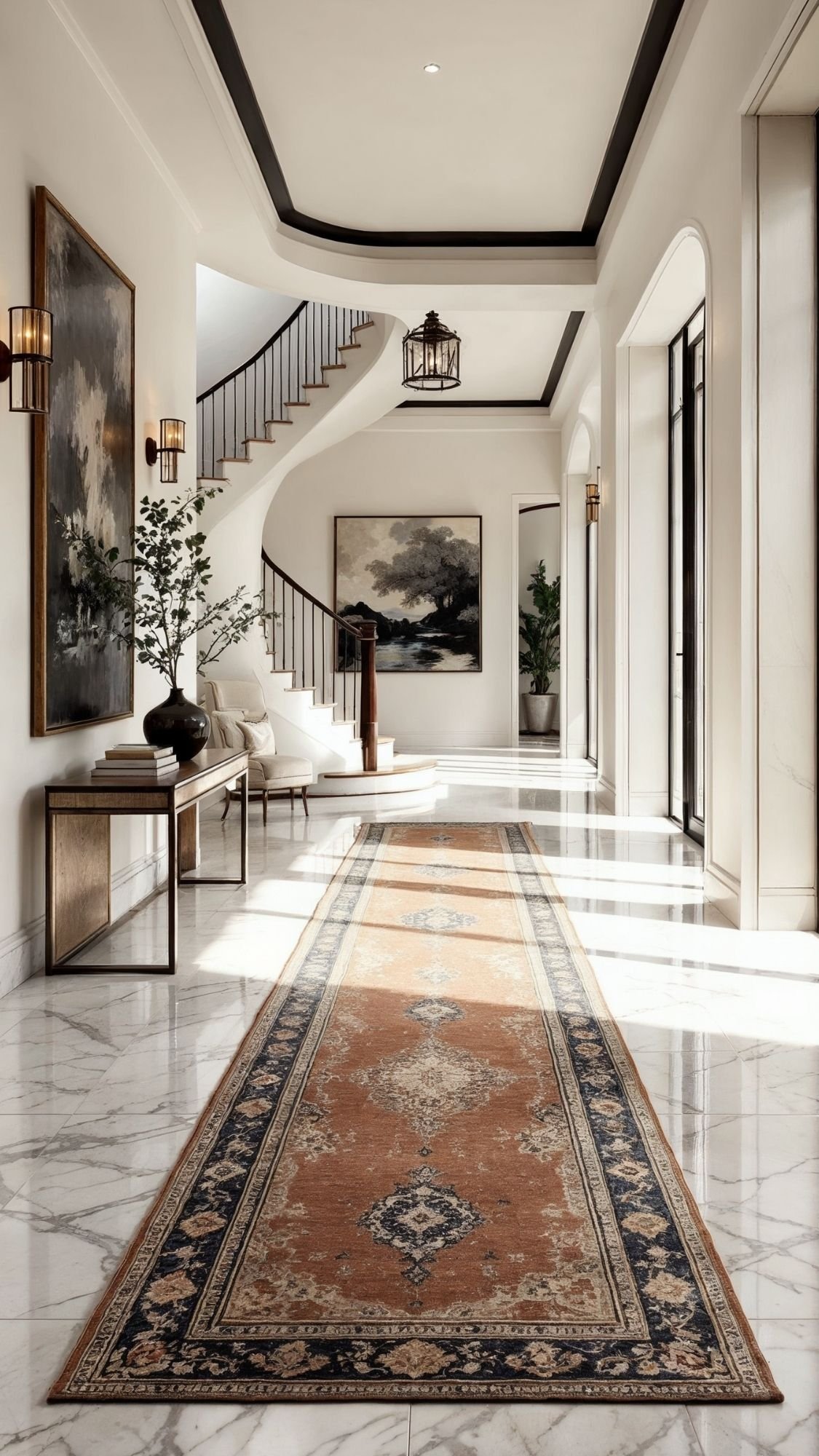
A runner might be the most underrated entryway upgrade ever. It instantly makes the space feel finished, it softens footsteps, and it quietly protects your floors from the daily parade of shoes, bags, and whatever the weather drags in.
The trick: choose a runner that looks high-end but acts like it has a job. In an entryway, durability matters more than delicate. Go for low-pile, easy-clean, and textured so it feels luxe without feeling precious. Lately, richer tones and more visible texture have been trending because they hide wear better and add that layered, designer look without extra clutter.
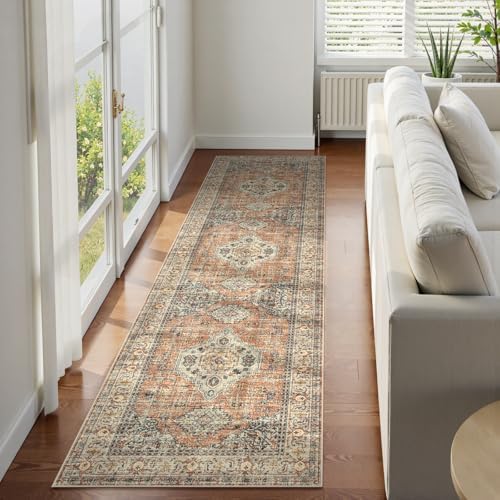
- Machine Washable: The Vintage runner rug is lightweight and easy to remove and throw in the washing machine for cleaning…
- Ultra Soft and Safe: The rug runner is soft and good to touch – walking barefoot is like stepping on clouds, keeping the…
- Kids and Pets Friendly: Skin-friendly material, comfortable and safe for kids to roll around! This Oriental bathroom run…
Runner tips that make it look custom:
- Size it so it feels intentional: long enough to “lead you in,” not a tiny strip that floats in space
- Add a rug pad so it stays put and feels thicker underfoot
- Keep the pattern subtle if the entry has bold lighting or dramatic walls
- Choose a washable option if the entry gets heavy traffic (your future self will thank you)

- Helps Prevent Rug Slippage: Designed with a unique high-density cross-bar texture and silicone backing, this carpet unde…
- Cushioning Rug Gripper with Comfort Support: Choose from 3 thickness options to add the right level of comfort underfoot…
- Protects Rugs and Floors from Damage: Works as a protective layer between carpet and floor, reducing scratches, dents, a…
Ever notice how luxury homes rarely leave the entry floor bare? A runner creates that same “this home is styled” vibe in seconds.
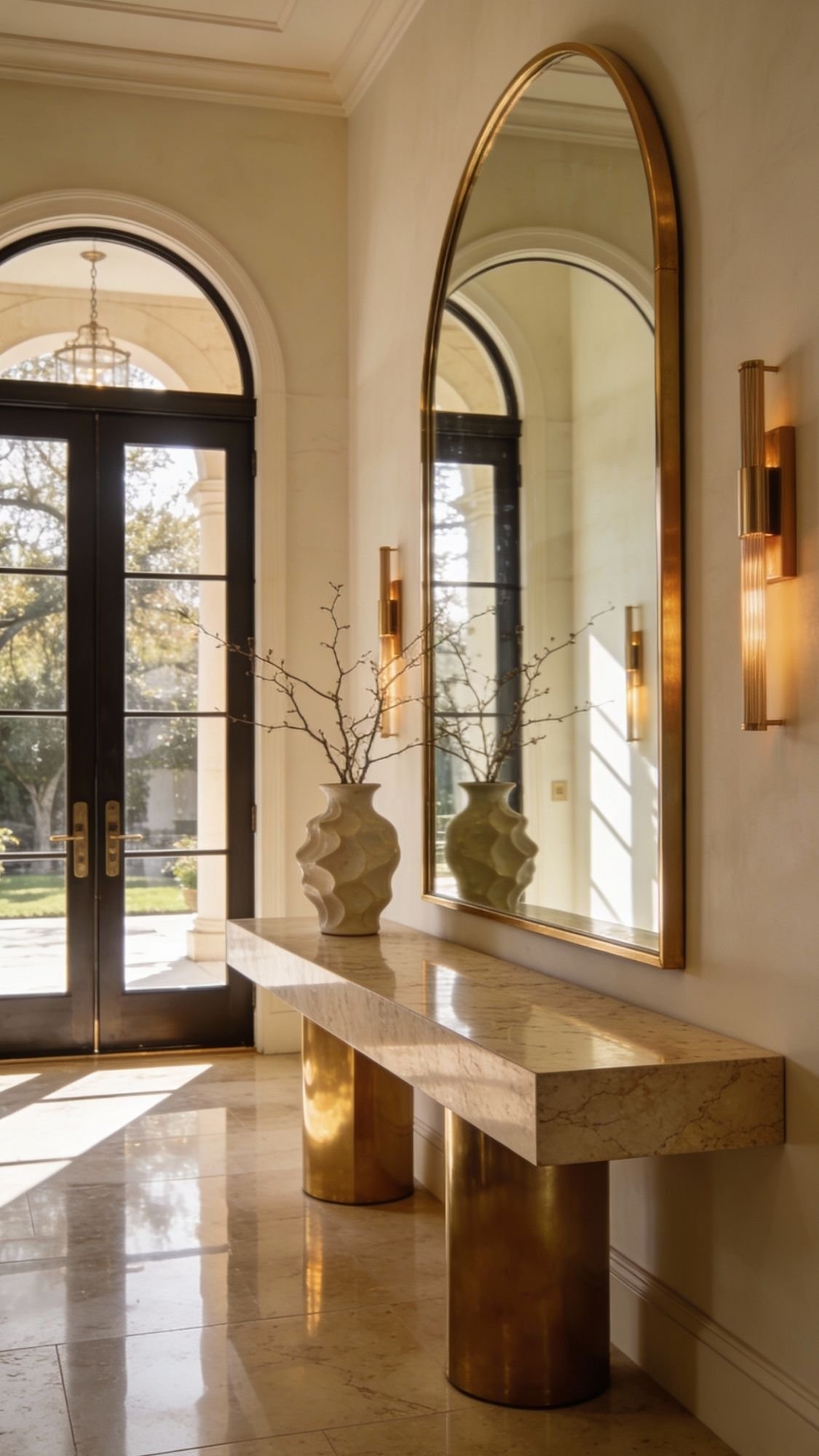
4) Hang a Mirror That Bounces Light Like Magic
A mirror in the entryway feels like cheating in the best way. It makes the space look bigger, it bounces light around, and it gives that polished “this home has it together” vibe before anyone even takes their shoes off. Plus, it helps with the classic last-second check without sprinting back to the bedroom like a cartoon character.
To keep it luxury-level, go bigger than you think. Small mirrors can look a little “builder basic,” while an oversized mirror instantly reads intentional and high-end. If the entryway stays narrow, pick a tall mirror with a slim frame so it adds drama without visual heaviness.

- Arched Design & Versitile Application: The CIRCUMI wall mirror showcases a distinctive arched design that adds a classic…
- Crystal-Clear & Distorsion-Free Glass: Our 44by22 bathroom mirror offers a distortion-free, high-definition reflection. …
- Long Lasting & Anti-Rust Frame: This Black Mirror, with its aluminum alloy frame, offers robust strength and is guarante…
Mirror styles that always look expensive:
- Arched mirror for a soft, architectural feel
- Thin brass or champagne frame for warmth and glow
- Organic or irregular shape if the space needs a modern edge
- Full-length leaner if wall space stays limited
Placement matters too. Hang the mirror where it catches real light, like across from a window or near the front door sidelights. That simple move makes the entire entry feel brighter and more welcoming.
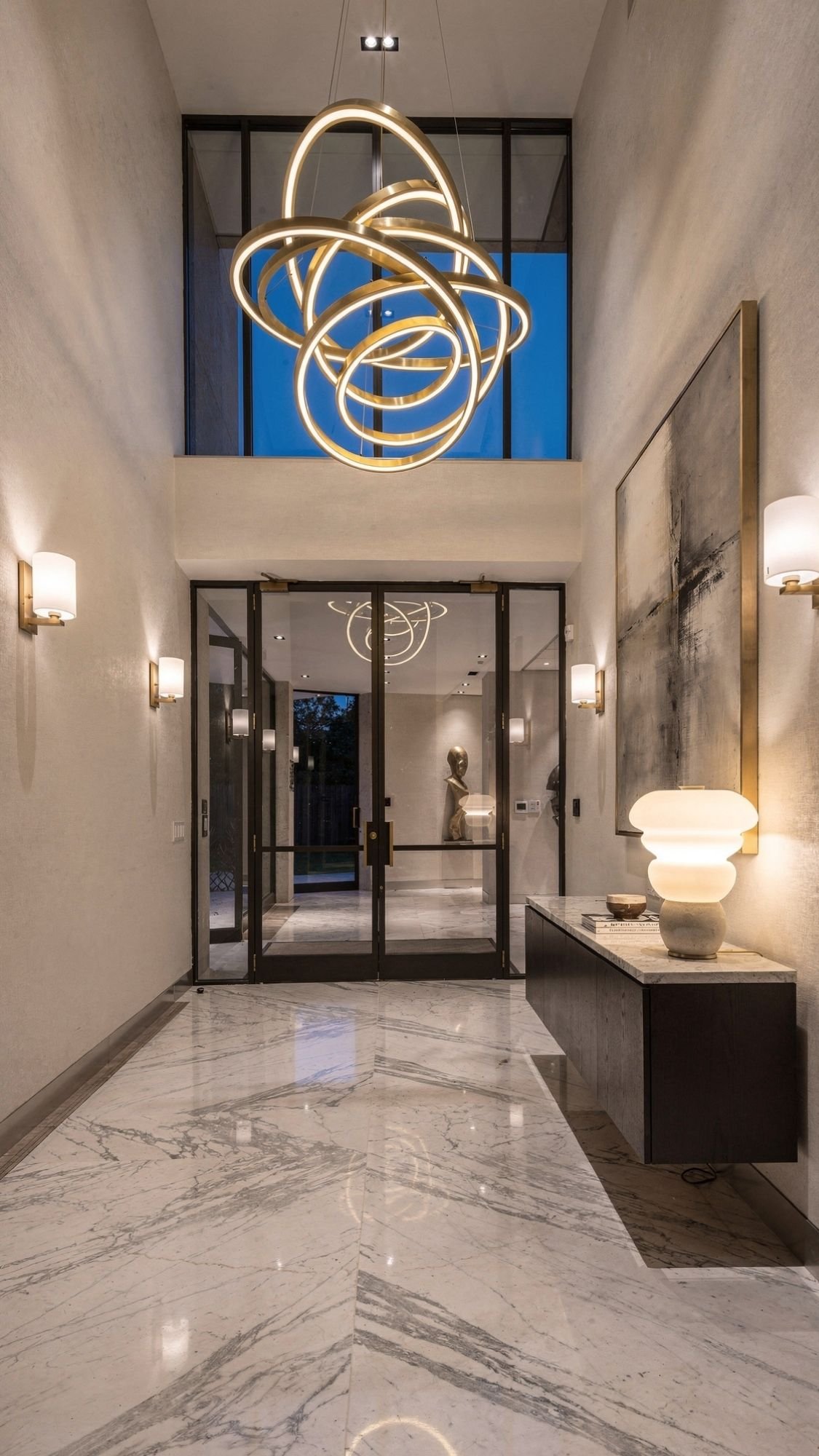
5) Layer Lighting So the Entryway Glows, Not Glares
Entryway lighting can either say “welcome home” or “hospital hallway,” and the difference usually comes down to layering. One harsh overhead light never flatters a space. Layered lighting makes the entry feel warm, expensive, and actually inviting, especially at night.
Aim for a simple three-part setup. The goal is to create glow, not spotlight interrogation vibes.

- LED Chandeliers Ring Size:D21.7”+D17.7”+D13.8”+D9.8”+D5.9”. Ceiling Canopy: 9.8″
- Crystal Ceiling Light Color:Warm White. Non-dimmable, 110V;
- Shape & Height DIY: Adjustable height and shape as you wish.Height Adjustable from 11.8” to 47.2”.
The easiest lighting trio:
- Overhead statement piece: pendant, chandelier, or semi-flush mount that fits the scale
- Wall or console lighting: sconces or a lamp to add soft, eye-level warmth
- Accent glow: picture light, LED strip inside cabinetry, or a subtle rechargeable lamp
If the entry does not have hardwired options, lean into plug-in or rechargeable solutions for that upscale look without construction drama. A cordless sconce or a petite rechargeable lamp can still create that boutique-hotel mood.
One more thing: warm bulbs matter. Choose a soft warm temperature so the space feels cozy and not blue or sterile. Ever noticed how luxury spaces feel instantly calmer at night? Lighting usually does that work.
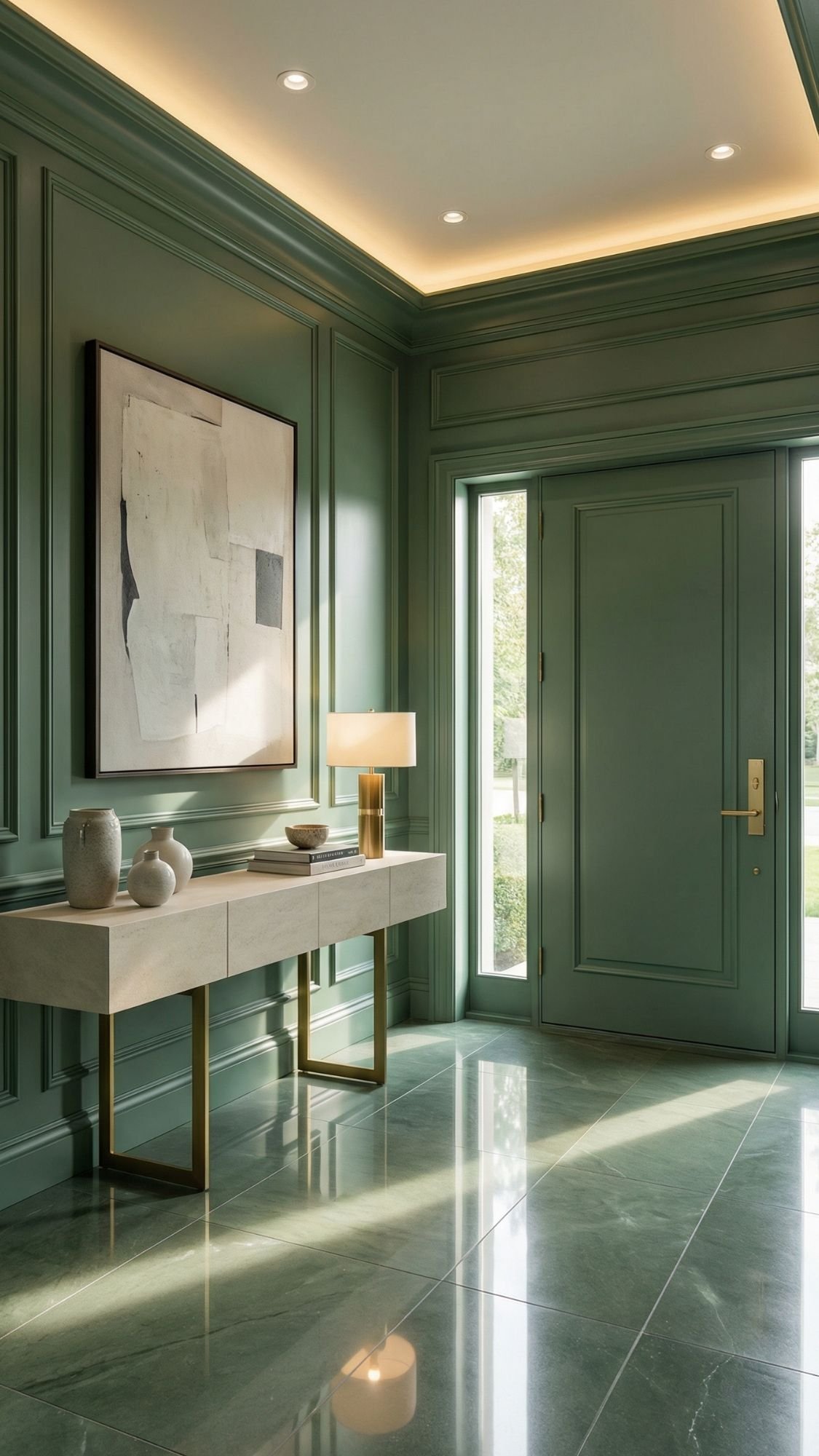
6) Try Color Drenching for Instant “Designed” Energy
Color drenching gives an entryway that polished, editorial look with basically one move: pick one color and commit. Paint the walls, trim, and door in the same shade so the whole space feels intentional instead of chopped up. This trick works especially well in entryways because the space usually stays small and contained, so the color feels bold without overwhelming the entire home.
Muted, moody shades tend to look the most expensive. Soft clay, warm taupe, smoky blue, and muted green all create that “quiet luxury” vibe without trying too hard. Want the look to feel even more high-end? Match the paint finish strategy: use matte or eggshell on walls and satin on trim and doors so light catches the details.

- Includes 30 featured and newest released color card. Sprayed on color to see our colors in your homes lighting for more …
- ALL-IN-ONE Paint – NO Sanding, NO Priming, NO Top Coat Required, Low Luster, Velvet Sheen Finish
- Interior/Exterior – Paint your whole house – Ideal for hard surfaces including walls, doors, cabinets, counters, furnitu…
Quick tips so it looks luxe, not flat:
- Choose a color with depth (skip anything that reads neon or overly bright)
- Keep hardware consistent, like warm brass or polished nickel
- Add one contrasting texture, like a stone console or a woven runner
- Use a warm light source so the color stays rich at night
Ever notice how a bold entryway makes the whole house feel more “done”? Color drenching pulls that off fast.
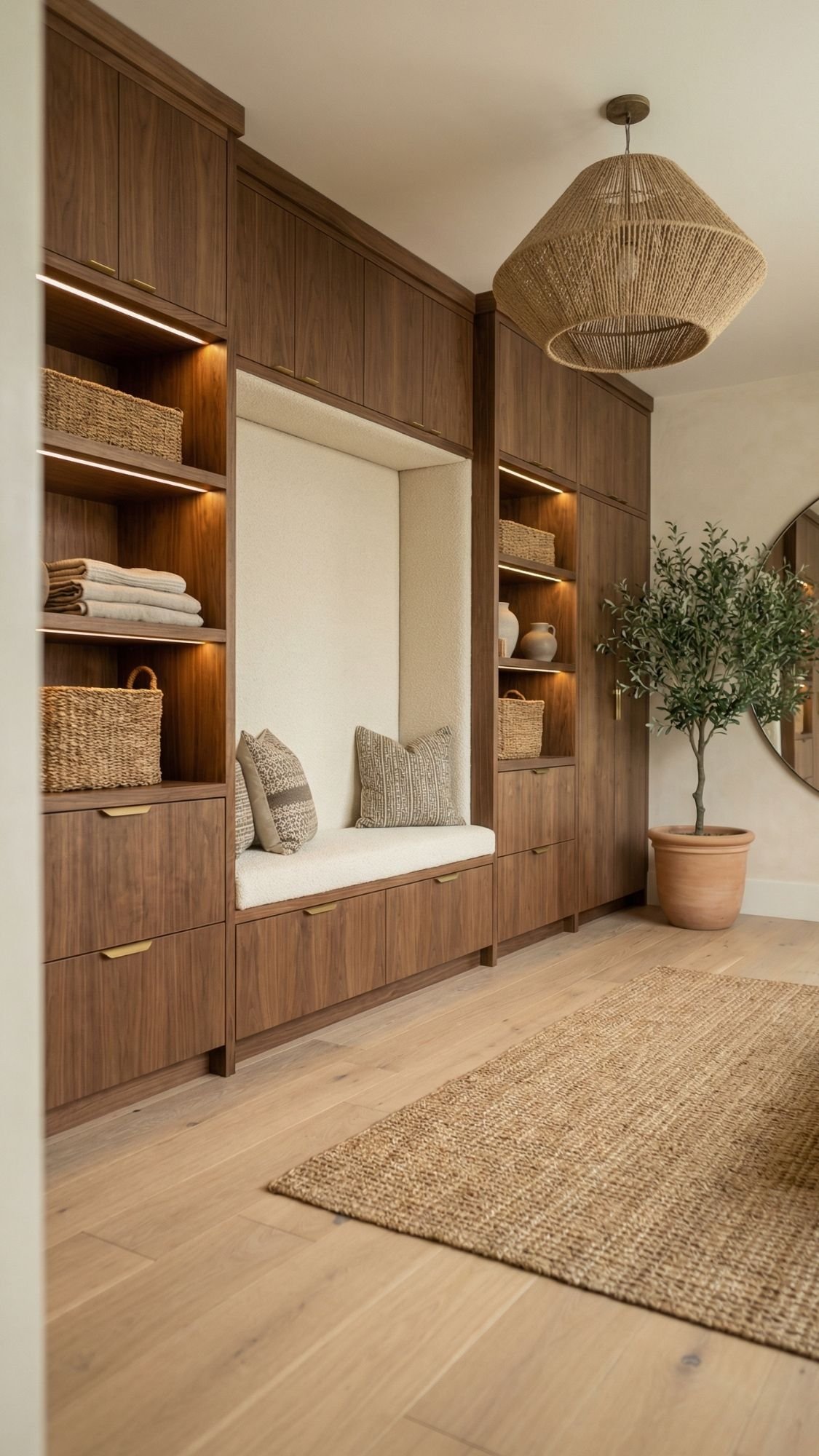
7) Use Moody Built-Ins for a Boutique-Hotel Vibe
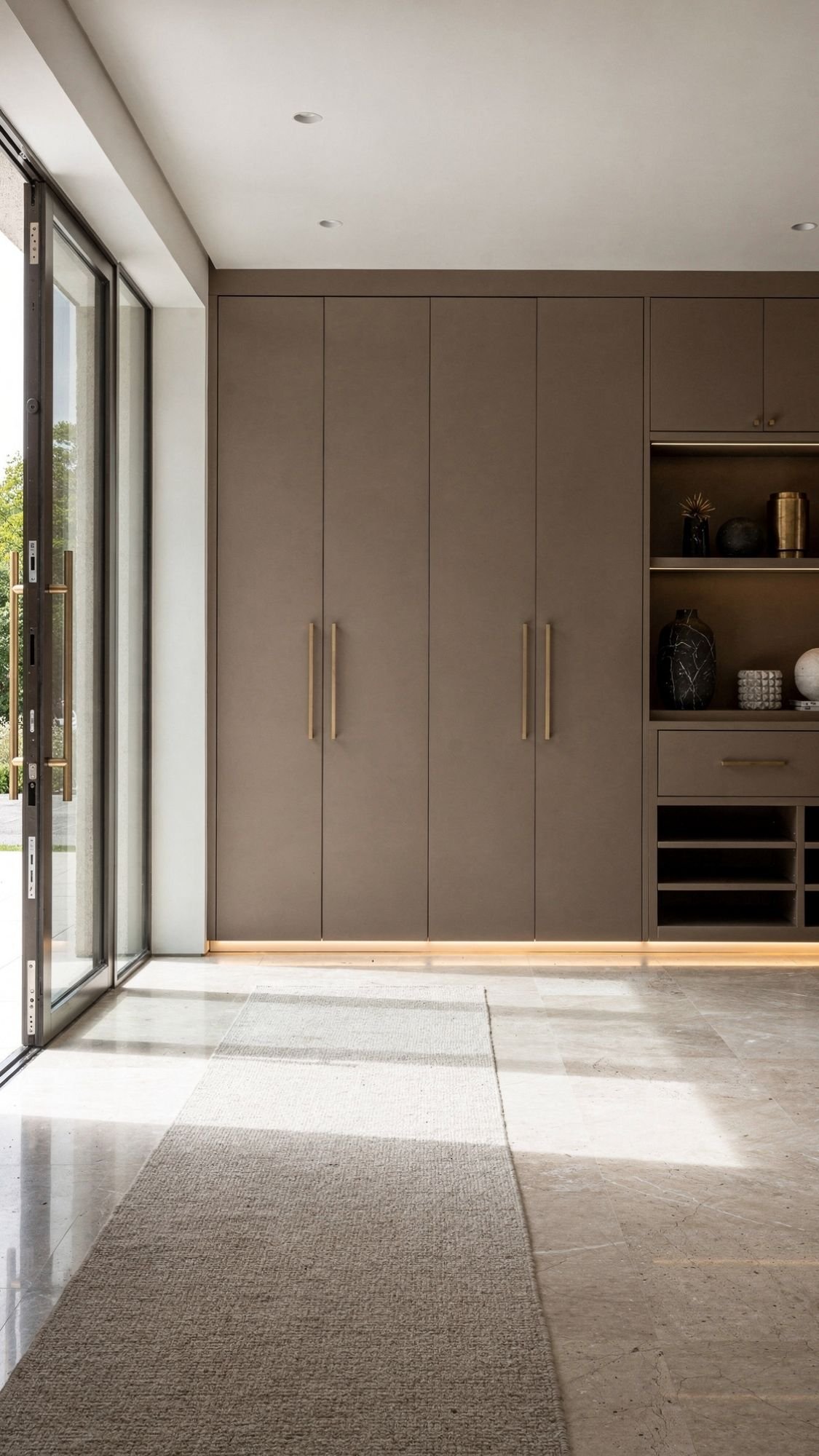
Built-ins make an entryway feel custom, and custom always reads expensive. Even a simple wall of cabinetry can turn the space from “where do I put this?” to “wow, this home is organized.” The best part? Built-ins let the entryway look clean because they hide the daily mess behind doors.
For that boutique-hotel vibe, go a little moody. Deep walnut, charcoal paint, or a rich taupe instantly adds drama without making the space feel dark if the lighting stays warm. Built-ins also work in small entryways because they create vertical storage, which frees up floor space.

- Finished in Drifted Gray Laminate
- ASSEMBLED DIMENSIONS & WEIGHT- Coat Rack Freestanding 15.5″ D x 60″ W x 77″ H, Total weight- 128 lbs., All pieces arrive…
- CLEAR CLUTTER WITH ENTRY WAY HOME ORGANIZER: Transform cluttered mudrooms and hallways with this tall storage cabinet th…
Built-in features that make life easier:
- Closed cabinets for shoes, bags, and the stuff that clutters fast
- Open cubbies for grab-and-go items like hats and gloves
- A bench niche so people can actually sit to put shoes on
- Hidden drawers for keys, dog leashes, and chargers
If the entryway does not have room for full cabinetry, mimic the look with a tall storage unit plus matching baskets. It still gives that streamlined, “everything belongs” energy.
8) Add a Bench That Makes Shoes Feel Less Annoying
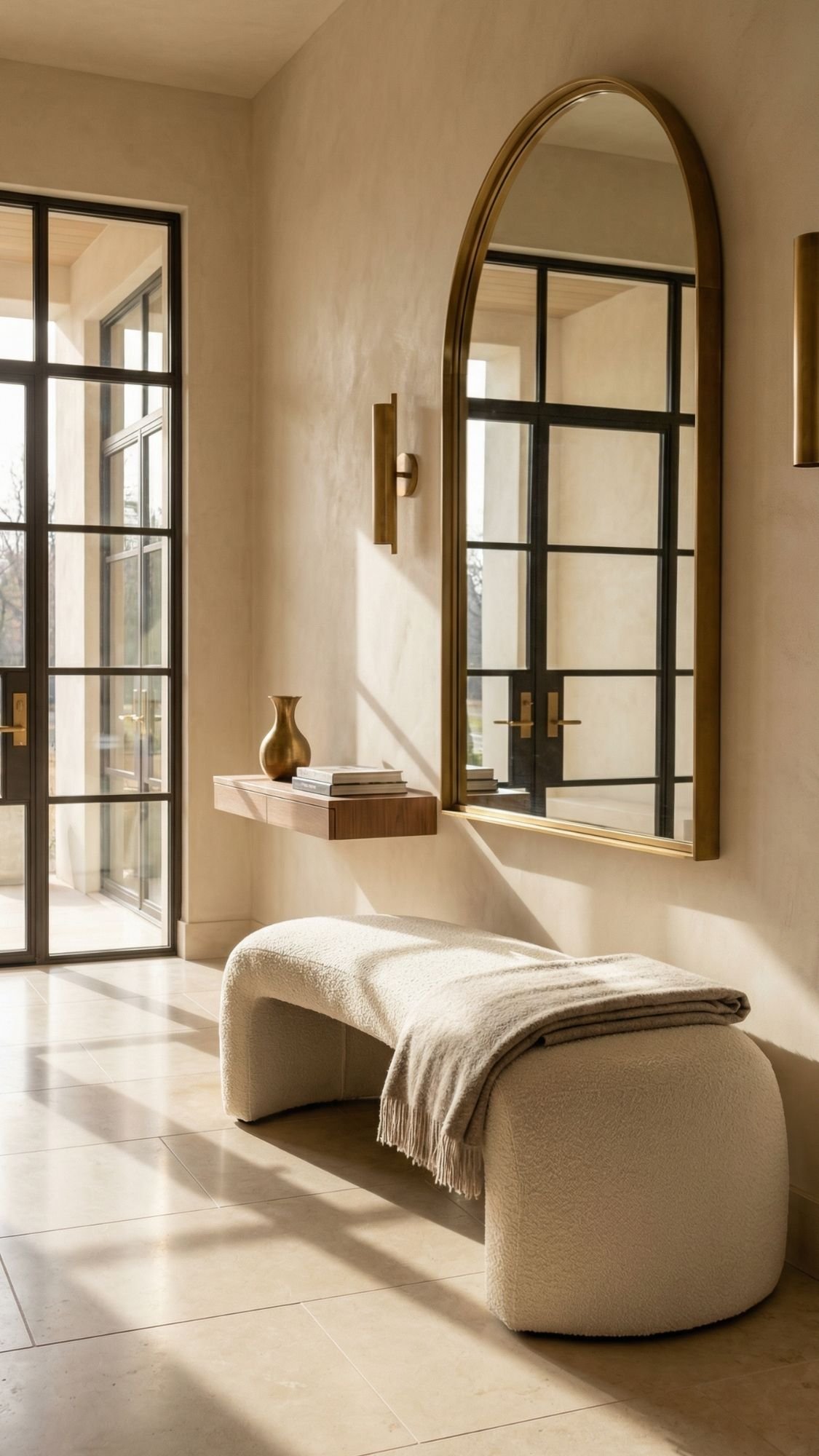
A bench turns the entryway into a space people actually use instead of a space they rush through. It makes shoes easier, bags easier, and honestly, life easier. It also adds that “this home feels considered” vibe because it looks like someone planned for real humans to walk in the door.
To keep it looking high-end, choose a bench with a strong silhouette and luxe texture. Upholstery instantly softens the entry and makes it feel warmer. Performance fabric helps if the space gets heavy traffic, because no one wants to stress about a bench like it’s a museum exhibit.

- Enhanced Safety with Dual Hinges: Our storage bench for bedroom is equipped with dual safety hinges; Allowing the lid to…
- Button Tufting with Diamond Stitching: Our versatile ottoman bench with storage features high-quality, soft and breathab…
- Powerful and Versatile: This bench with storage and seating offers ample storage space. This storage ottoman bench for b…
Bench styles that feel luxury-level:
- Curved or sculptural bench for a designer look
- Boucle or textured upholstery for softness and depth
- Leather or faux leather for a clean, polished finish
- Bench with hidden storage if shoes and bags need a place to disappear
Style it lightly so it stays functional. One pillow or one folded throw works. Anything more starts to feel like the bench exists for vibes only, and that never ends well.
9) Hide Shoes Like a Person With a Plan
Nothing kills a “welcome with ease” entryway faster than a shoe pile. Shoes deserve a real system, not a corner where they slowly multiply like they pay rent. The best entryways look calm because they keep the floor mostly clear, and hidden shoe storage does that work quietly.
The easiest win: choose a storage piece that closes. Closed storage instantly makes the space feel more expensive because it removes visual clutter. If the entryway stays small, go vertical with a tall cabinet, or use slim solutions that tuck right against the wall.
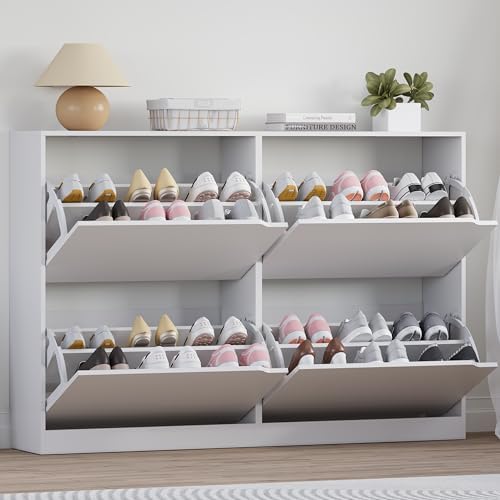
- 4 Drawer Shoe Cabinet for Entryway or Hallway: This BORNOON modern shoe cabinet features a sleek hidden design with 4 fl…
- Customizable Storage with Adjustable & Removable Panels: Each of the four flip-out drawers includes a 2-tier shoe organi…
- Stable Structure with Anti-Tip Safety Feature: Made from high-quality engineered wood, the 4-drawer shoe storage cabinet…
Shoe storage ideas that actually look good:
- Tilt-out shoe cabinet for narrow entryways
- Bench with hidden storage so function stays built-in
- Closed baskets on a lower shelf for quick hiding
- Built-in or modular drawers if the entryway has cabinetry
If the household needs “daily shoes” accessible, set a limit. A simple rule works: keep only the current week’s most-used pairs in the entry, and store the rest elsewhere. That one habit keeps the space from drifting back into chaos.
10) Install Hooks at Two Heights (Yes, Two)
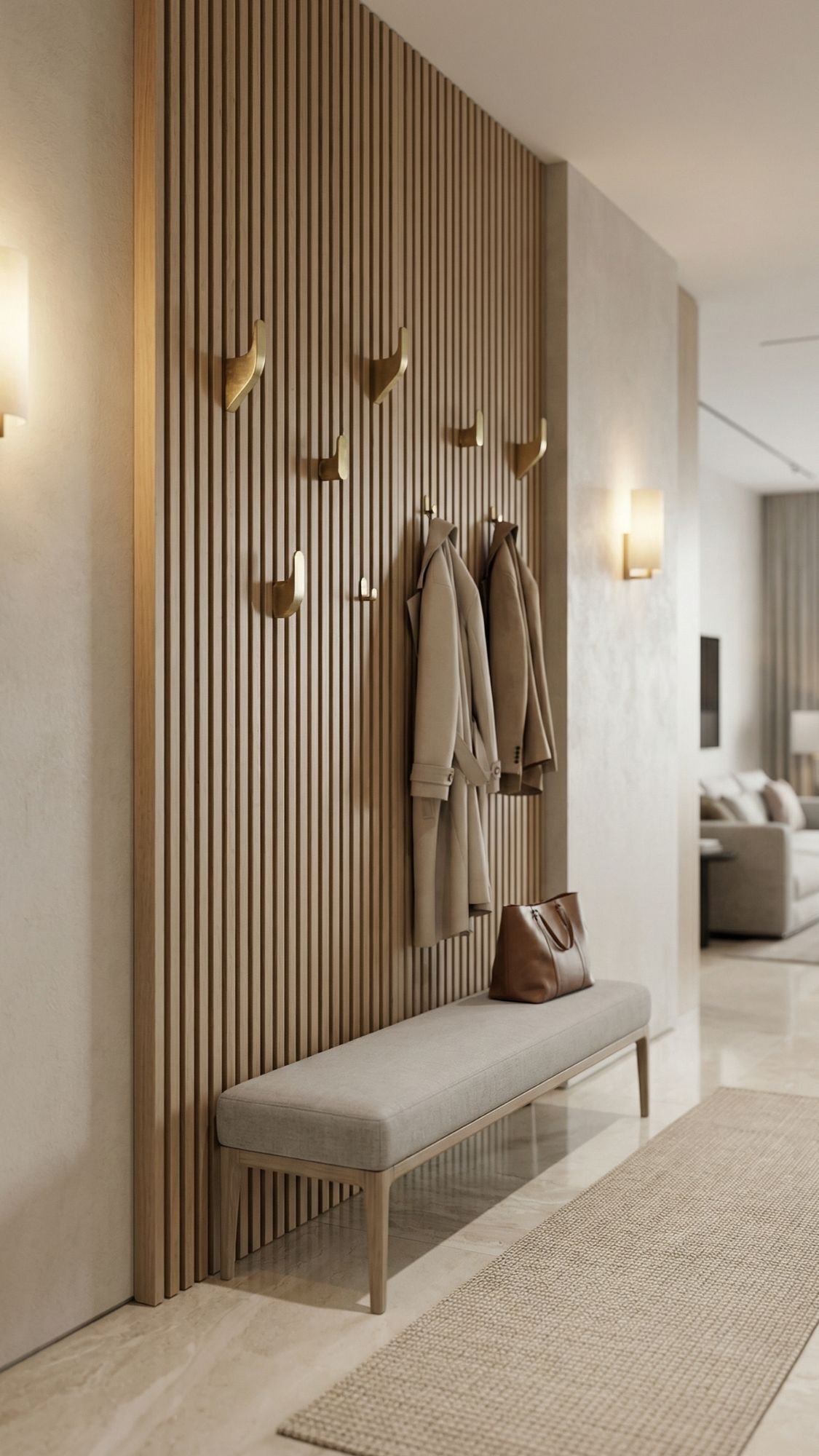
Hooks fix one of the most annoying entryway problems: stuff that should hang up ends up on the floor. A hook wall keeps bags, coats, hats, and dog leashes off furniture and out of the walkway. It also makes the entryway feel more functional without adding bulky furniture.
The two-height trick matters because it makes the system work for everyone. Adults get their hooks higher, kids get theirs lower, and suddenly the entryway stops turning into a jacket graveyard.

- Multi-Purpose Wall Mounted Hanger: More than just a coat rack, Umbra Flip is a unique wall mounted rail that features re…
- Modern Space Saving Design: Unlike traditional coat racks that eat up valuable floor space, Flip is a wall-mounted solut…
- Attractive & Versatile Solution: Available in a variety of stylish finishes to match your existing decor, Flip is versat…
How to make hook storage look high-end:
- Choose matching hooks in a luxe finish like brass, matte black, or polished nickel
- Space them evenly so it looks intentional, not random
- Add a back panel like wood slats, fluting, or painted trim for that custom look
- Keep the hanging items curated so it stays clean (too many coats ruins the vibe fast)
If the entryway needs extra polish, place a bench or slim console under the hooks. That combo reads like a designed mudroom moment, even if the space stays small.
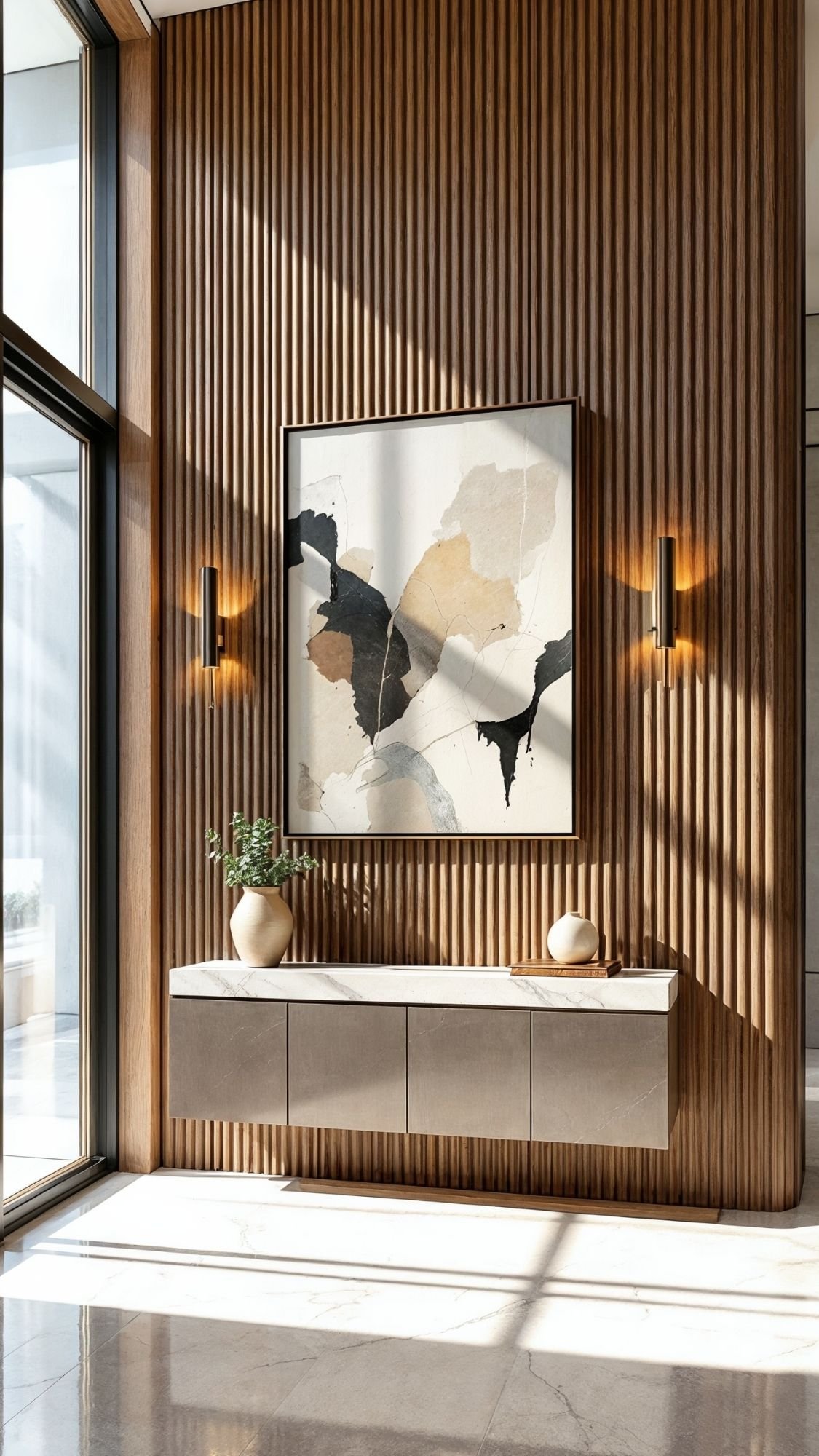
11) Turn a Blank Wall Into a Fluted or Slatted Feature
If an entryway feels a little flat, add texture. A fluted or slatted feature wall brings that designer depth that luxury homes always have, and it does it without needing a bunch of decor. It also makes the entry feel more intentional because the wall becomes the statement.
This works especially well behind a console, a bench, or a hook setup. The texture frames the area like a built-in moment, even if it technically isn’t built-in. Keep the styling minimal so the wall stays the star.
Feature wall options that look expensive fast:
- Fluted panels for a soft, architectural vibe
- Vertical wood slats for modern warmth
- Painted trim grids for a clean, tailored look
- Microcement or plaster finish for a luxe, organic feel

- Superior Acoustic Performance: It is designed to provide excellent noise-cancellation capabilities, making it ideal for …
- Aesthetically Pleasing: It is not only functional but also visually appealing. The wooden slats create a natural and war…
- Easy to Install: Installing is quick and easy. The panel can be mounted on walls and ceilings with basic tools in short …
If the entryway stays small, go lighter on the wood tone or paint the feature wall to match the space. That keeps it elevated instead of heavy. IMO, texture beats extra decor every time because it adds interest without adding clutter.
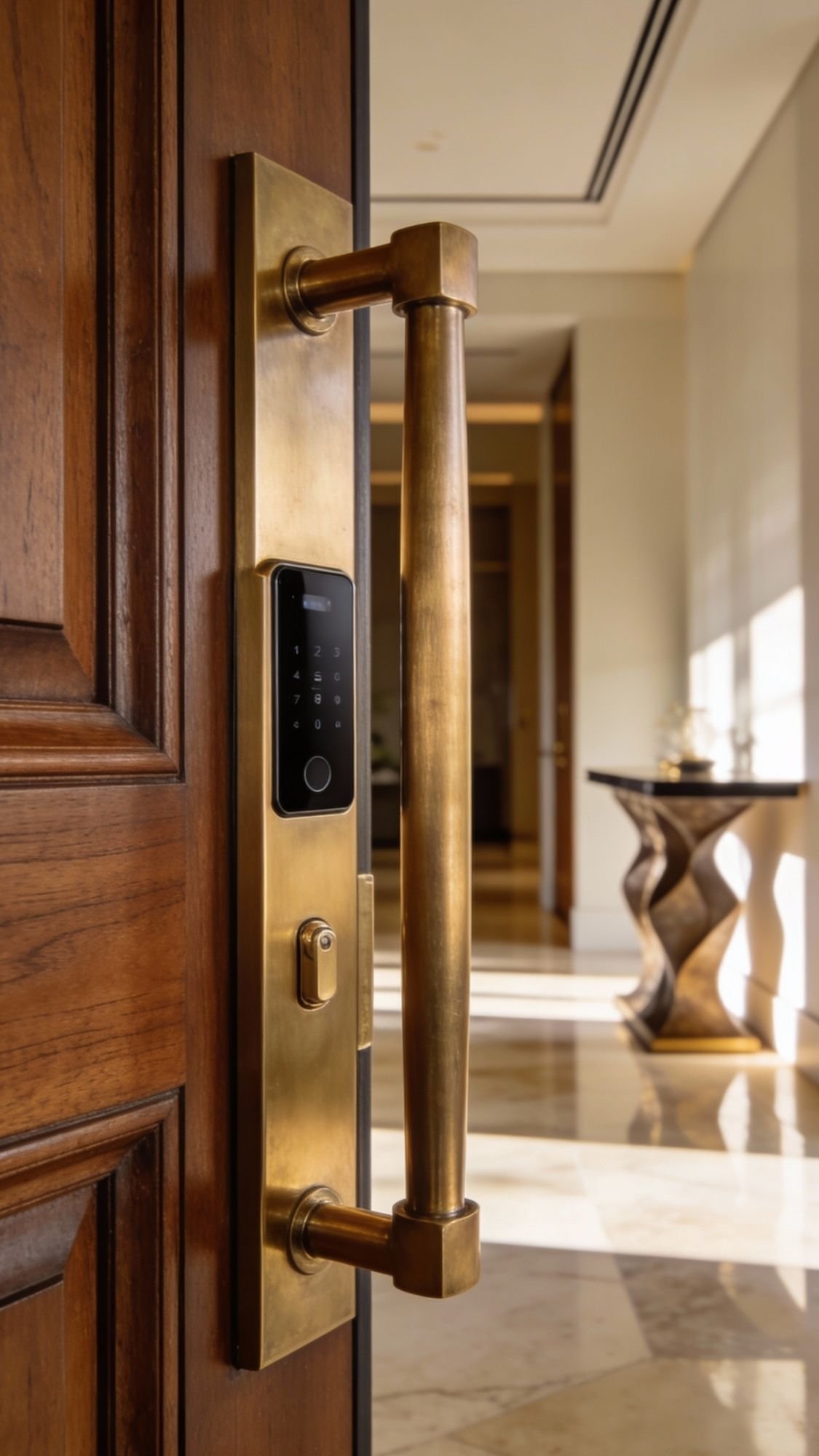
12) Upgrade Door Hardware for Instant “Luxury Entry” Points
Door hardware feels small until it changes everything. A high-end handle set or a sleek modern lever instantly makes the entryway feel more expensive because it’s the first thing people touch. It also signals “this home is finished,” even if the rest of the space stays simple.
To keep it looking cohesive, pick one metal finish and repeat it in the entryway. That means the door hardware matches or complements the console legs, hooks, lighting, or mirror frame. Consistency always reads intentional.

- 𝐊𝐞𝐲𝐩𝐚𝐝 𝐃𝐨𝐨𝐫 𝐋𝐨𝐜𝐤 𝐰𝐢𝐭𝐡 𝐇𝐚𝐧𝐝𝐥𝐞𝐬: Upgrade your home with Philips keyless entry door lock with handles, which enhances both …
- 𝐂𝐨𝐧𝐭𝐫𝐨𝐥 𝐘𝐨𝐮𝐫 𝐃𝐨𝐨𝐫 𝐀𝐧𝐲𝐭𝐢𝐦𝐞, 𝐀𝐧𝐲𝐰𝐡𝐞𝐫𝐞: Stay in control no matter where you are. With our Wi-Fi Smart Lock, you can remotel…
- 𝐌𝐮𝐥𝐭𝐢 𝐔𝐧𝐥𝐨𝐜𝐤𝐢𝐧𝐠 𝐎𝐩𝐭𝐢𝐨𝐧𝐬 𝐟𝐨𝐫 𝐌𝐨𝐫𝐞 𝐅𝐥𝐞𝐱𝐢𝐛𝐢𝐥𝐢𝐭𝐲: Philips offers ultimate convenience with five unlocking methods: App, Fing…
Hardware upgrades that look instantly elevated:
- Oversized pull handle for a dramatic modern door moment
- Solid lever set with weight and clean lines
- Matching deadbolt or smart lock with a streamlined design
- Coordinated hinges in the same finish for that custom look
If the entryway has mixed metals already, choose one “hero finish” and let everything else play a supporting role. Ever notice how luxury homes rarely mix five finishes in one view? That calm, cohesive look starts right at the door.
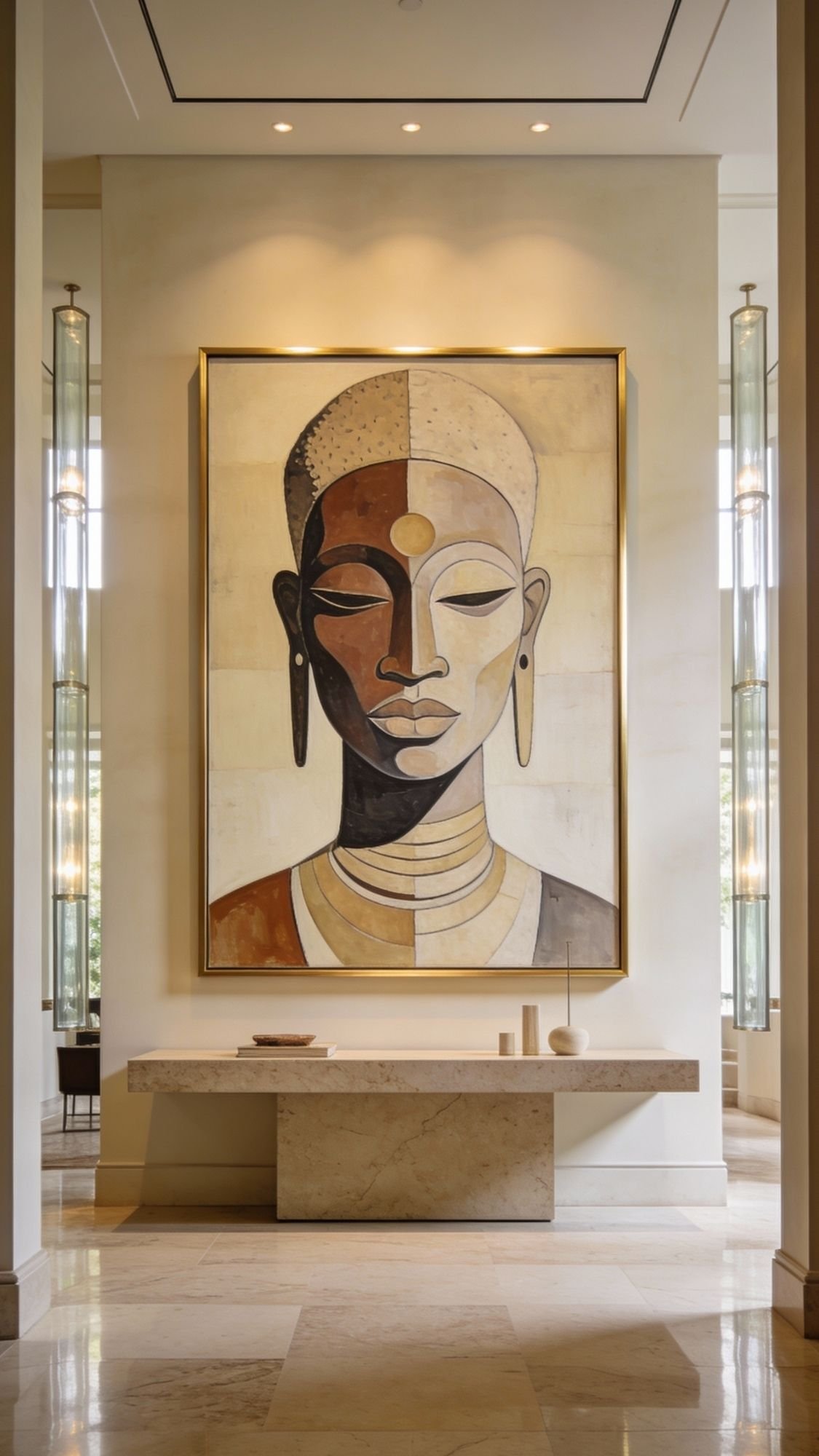
13) Add One Oversized Art Piece (Stop Overthinking It)
One big art piece can do more for an entryway than a whole collection of tiny decor. It makes the space feel curated, it sets the mood, and it creates an instant focal point so the entry reads “designed” instead of “unfinished.”
Oversized art also helps a lot in small entryways because it simplifies the visual story. Instead of scattering attention across a bunch of little items, one piece pulls everything together. Keep the frame and matting clean so it looks high-end.
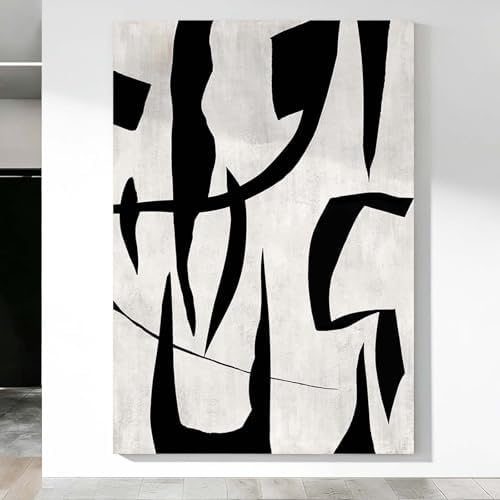
- Canvas: High quality canvas with handmade textured, vivid color.
- Frame: Come with assembly wooden frame, easy to install, enjoy the fun of DIY.
- Elongated forms create a graceful vertical rhythm.
How to pick art that works in an entryway:
- Choose a piece that matches the vibe: soft and calm, bold and graphic, or moody and dramatic
- Go bigger than expected for impact (the entry can handle it)
- Stick to a simple frame finish that ties into the hardware or lighting
- Hang it at eye level and center it with the console or bench below
If the entryway has a statement mirror already, place the oversized art on the adjacent wall so the space feels balanced. Ever walked into a home and instantly felt like it belonged in a magazine? Big art usually plays a part in that.
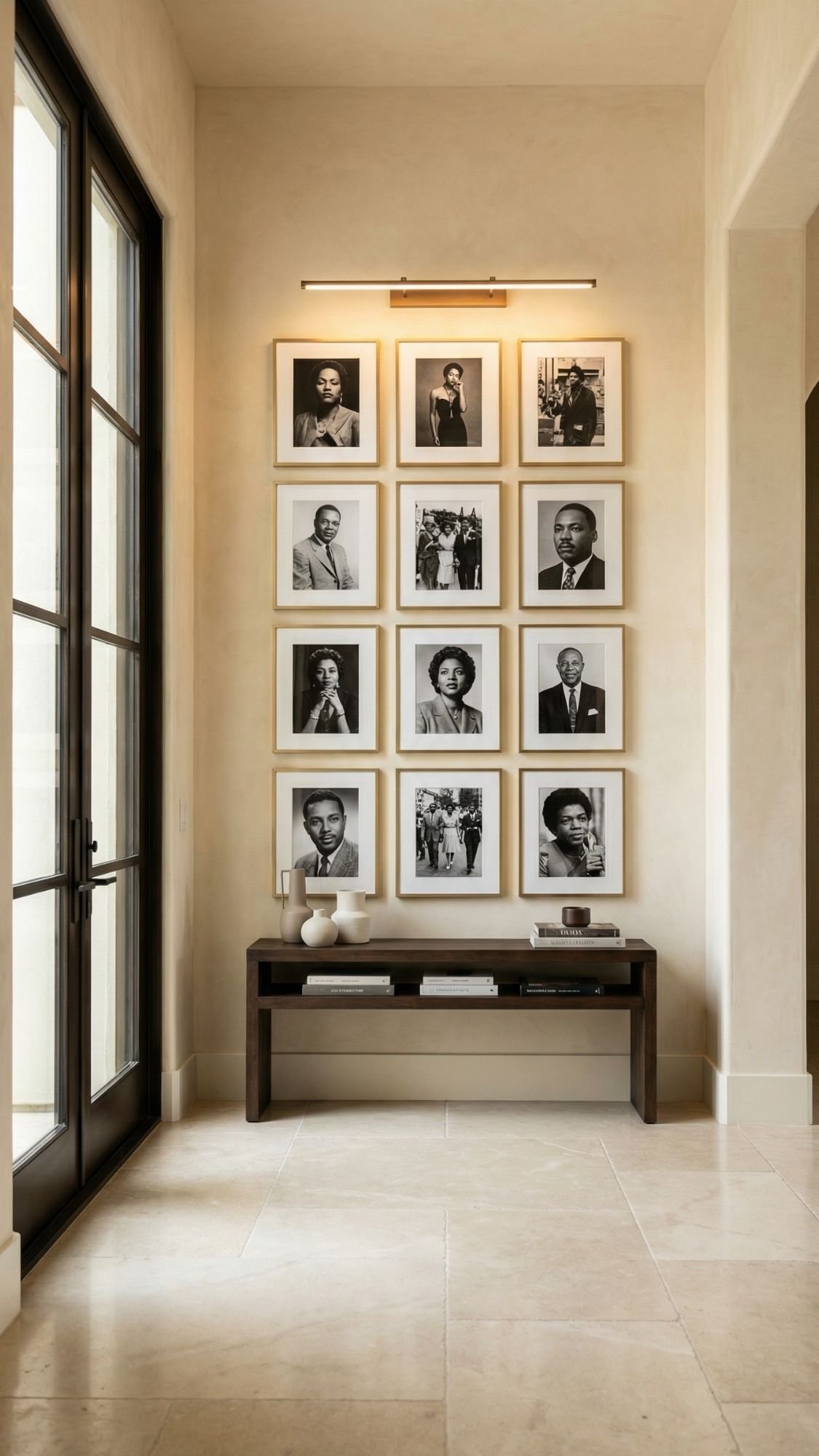
14) Create a Mini Gallery Wall With Matching Frames
A gallery wall can look chic or chaotic, and the difference usually comes down to one thing: consistency. If the entryway needs personality, a mini gallery wall adds it without taking up floor space. It also makes the entry feel layered and lived-in, but still polished.
To keep it luxury-level, choose one frame style and repeat it. Matching frames give that curated “collected art” feel instead of the “I hung whatever I had” look. Stick to a tight color palette so the wall feels calm, especially in a smaller space.
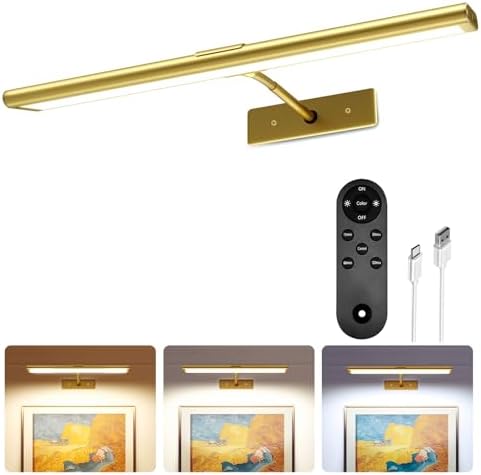
- Powerful 4800mAh Rechargeable Battery: Say goodbye to battery swaps and messy cords! Built-in 4800mAh battery offers 13 …
- Full Coverage Cordless Wall Light: Compared with others our 16” picture lights for wall designed specifically for you c…
- 3 Color Temperatures & 5 Brightness: This magnetic gold painting light with 3 color adjustable lighting temperatures and…
Gallery wall rules that keep it looking expensive:
- Use matching frames in one finish (black, brass, or natural wood)
- Keep spacing even (a consistent gap makes it look intentional)
- Choose a theme: black-and-white photos, soft landscapes, or modern abstracts
- Add one small “anchor” piece that’s slightly larger so the layout feels grounded
If the entryway feels dark, add a picture light above the gallery wall for that subtle museum glow. It makes the wall feel elevated without adding clutter.
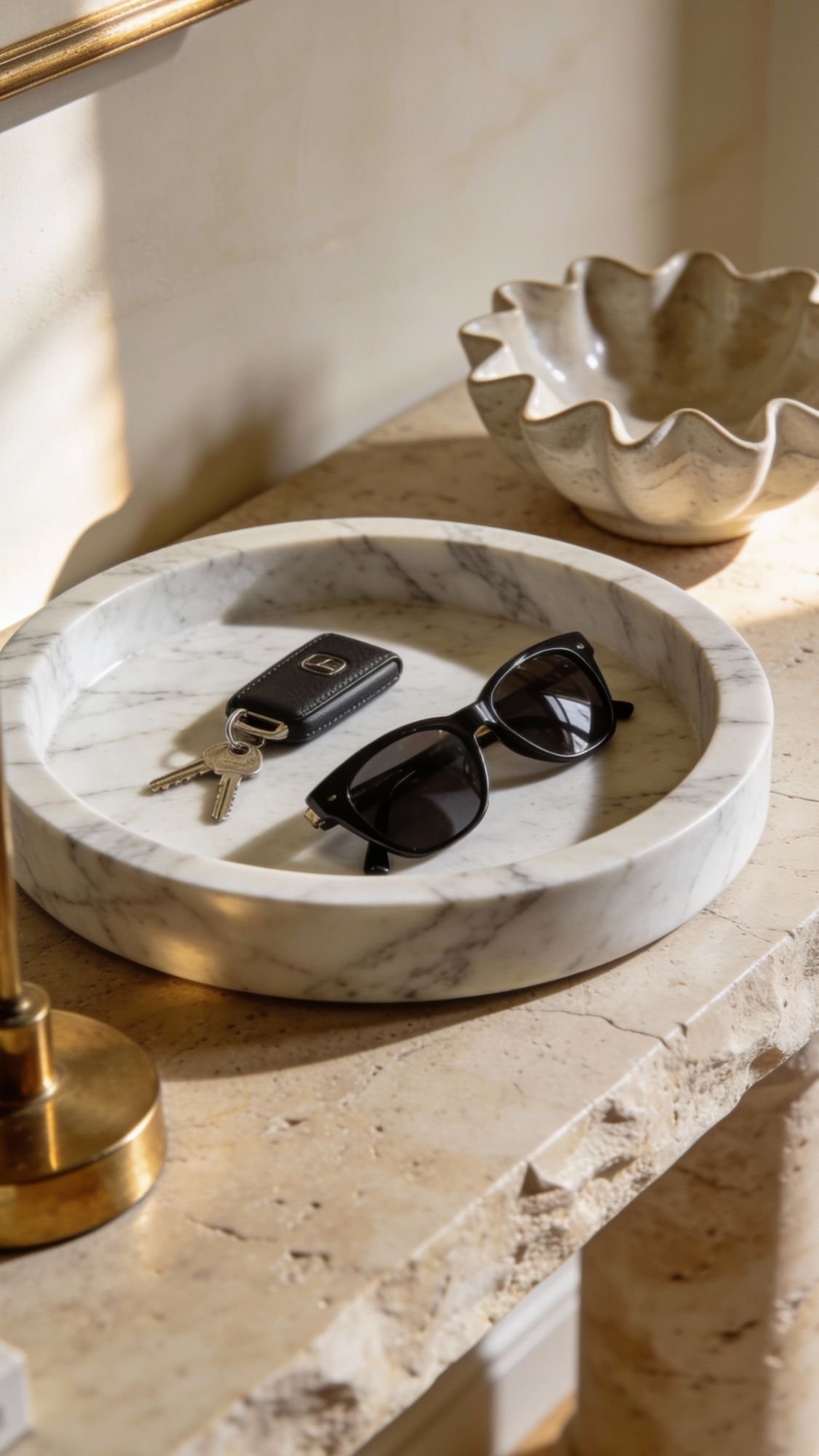
15) Style a Large Bowl or Tray Like It’s a Design Object
A big, beautiful tray or bowl makes the entryway look styled while quietly doing the boring job of catching all the tiny stuff. It creates a “home base” for keys, sunglasses, and whatever else always shows up in your hands the second you walk in.
The reason this works so well is simple: it contains clutter. Instead of a messy scatter across the console, everything lands in one intentional spot. That single detail makes the whole entryway feel calmer and more expensive.

- This stoneware bowl adds a bit of color and style to any kitchen counter, shelf, or within a tablescape.
- Made of stoneware
- White reactive glaze finish, each piece will vary
What to look for so it feels luxe:
- Stone or marble tray for a sleek, high-end look
- Ceramic bowl with a sculptural shape for softness
- Leather catch-all for a tailored, polished vibe
- Oversized scale so it feels deliberate, not tiny and fussy
Keep the contents minimal. A tray looks best when it holds just a few essentials, not a whole life story. Ever notice how luxury spaces look tidy even when they’re functional? They use containment like a secret weapon.
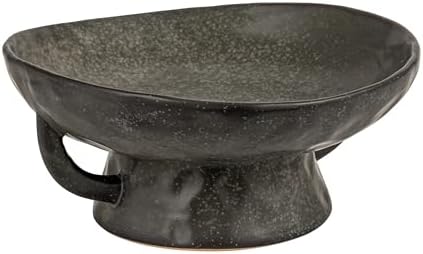
- This stoneware bowl adds a bit of color and style to any kitchen counter, shelf, or within a tablescape.
- Made of stoneware
- Black reactive glaze finish, each piece will vary

16) Add an Umbrella Stand That Looks Like Decor
An umbrella stand feels like one of those “extra” things until the first rainy week hits and suddenly umbrellas lean everywhere like they’re auditioning for a clutter documentary. A good stand keeps the entryway tidy and makes the space feel prepared, which reads polished and high-end.
Go for something that looks like a design piece even when it’s empty. Tall, sculptural shapes work best because they add height and balance next to a bench or console. Materials matter here too. A beautiful finish turns a practical item into an intentional styling moment.

- Porcelain
- Elegant Blue and White Floral Design: A captivating blend of serene blue and antique white, this traditional Ming vine a…
- Porcelain Umbrella Stand: A functional and stylish solution for keeping your entryway or hallway organized and tidy. Thi…
Umbrella stand styles that look expensive:
- Tall ceramic vessel with a matte or stone-like finish
- Slim metal stand with clean lines in brass or black
- Woven leather or rattan for warm texture in a neutral entry
- Stone-look planter-style stand for a modern organic vibe
Place it near the door but slightly tucked to the side, so it stays easy to grab without interrupting the flow. Ever walked into a home and felt like everything had a “place”? This tiny detail helps create that vibe.
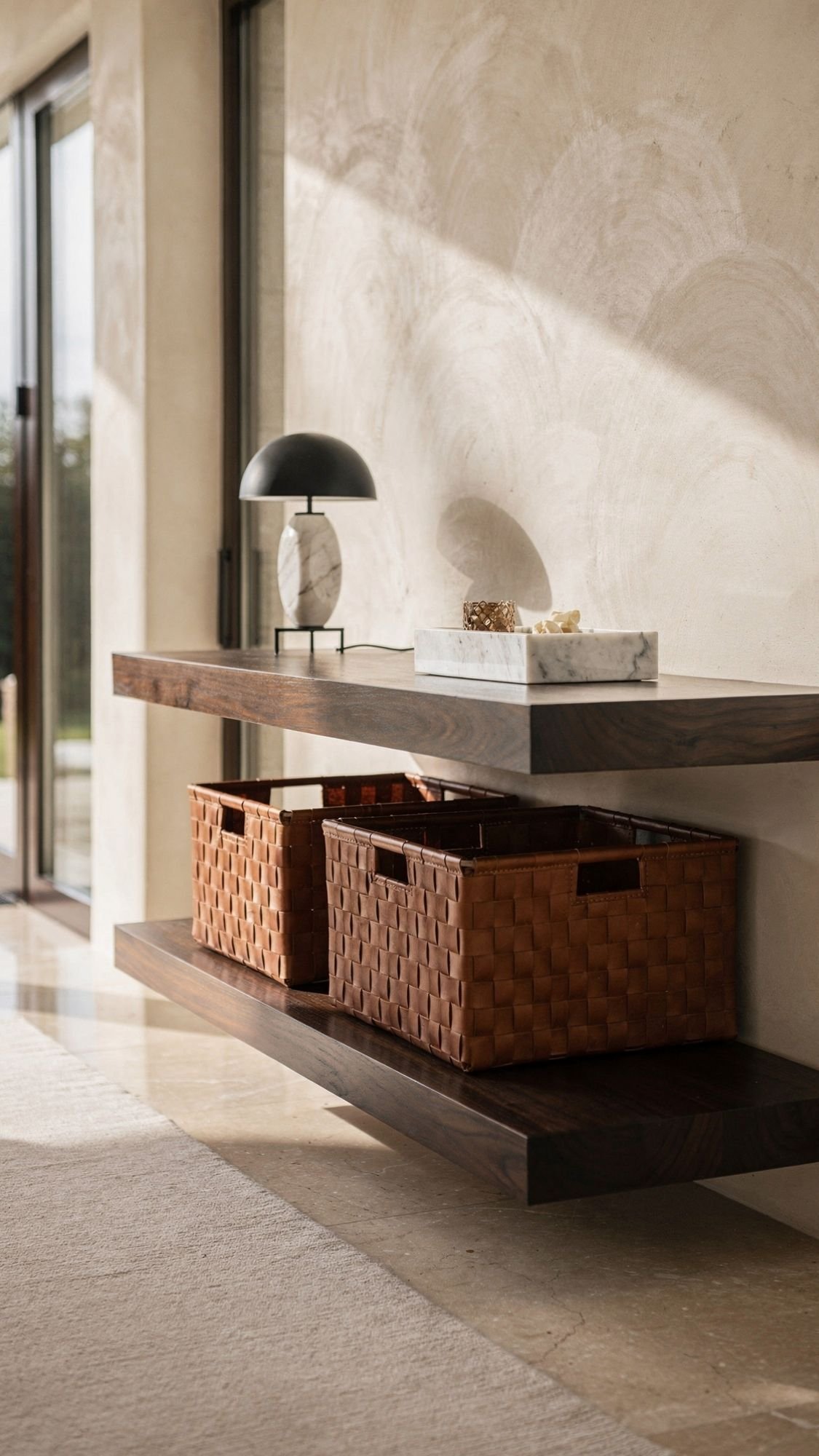
17) Use Baskets Under the Console for “Hidden Easy”
If the entryway needs to look clean without actually being high-maintenance, baskets do the job. They hide the awkward stuff like gloves, scarves, dog leashes, and random “I’ll deal with this later” items, but they still feel styled because they look intentional.
This works best under a console table or a lower shelf where clutter usually tries to live. Use two matching baskets if possible. Symmetry makes the entryway look more expensive without adding more decor.

- Set of 5 Baskets for Organizing: Multiple sizes of storage bins for different items, perfect storage cubes for closets a…
- Soft Material & Strong Frame: Woven basket is hand-woven with polypropylene yarn. The material of wicker basket has a sh…
- Stackable Design: Wicker Storage baskets feature a space-saving stackable design, making them ideal for organizing any r…
Basket tips that keep it luxury-level:
- Pick matching shapes and sizes so it looks curated
- Choose materials that feel elevated: woven leather, structured seagrass, or thick rattan
- Go for lidded baskets if the contents tend to look chaotic
- Label the inside sections mentally, so items actually go back where they belong
Keep the top of the console simple while the baskets handle the messy reality below. It’s the perfect “looks calm, functions hard” setup.
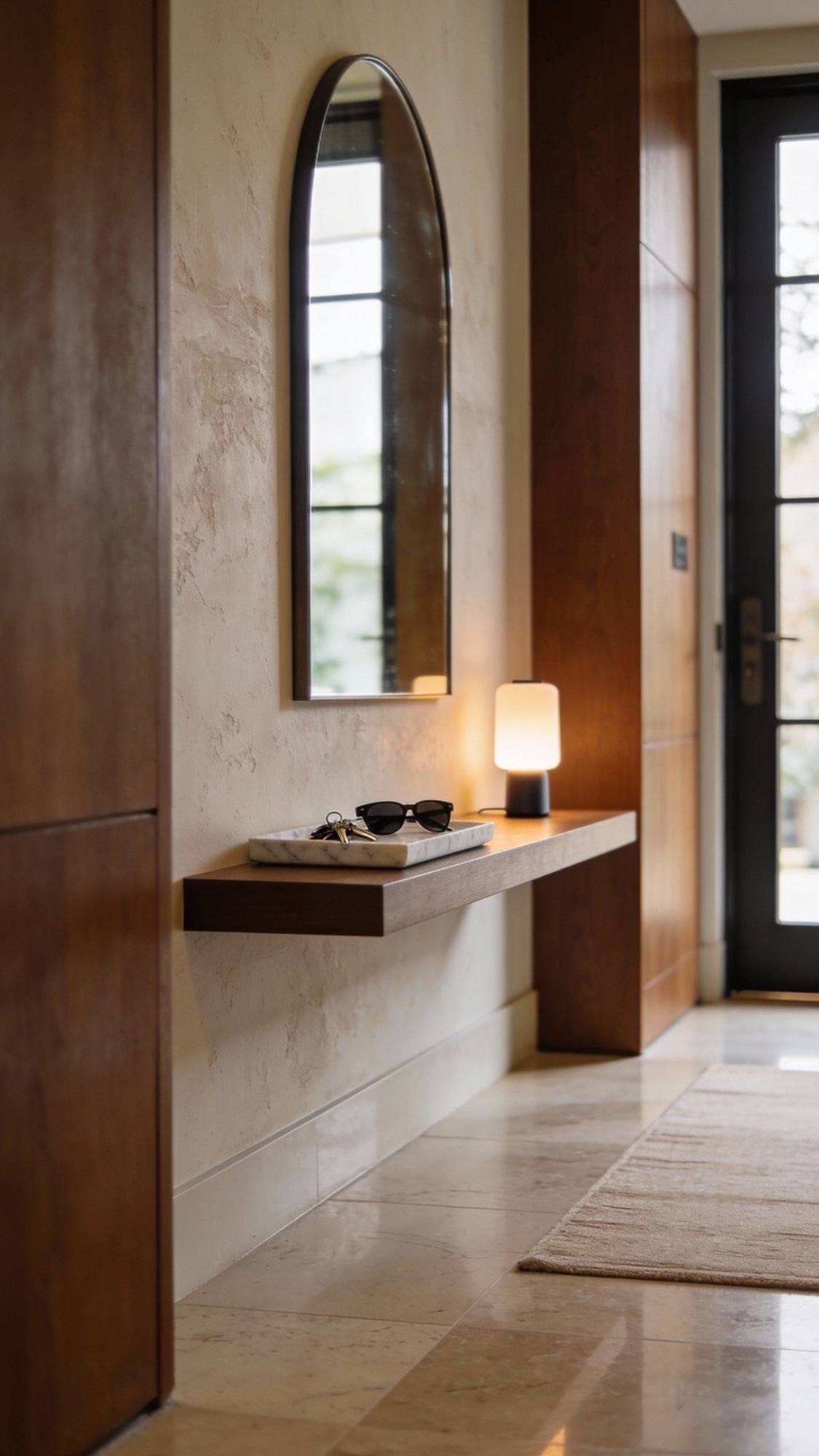
18) Make a Tiny Entry Feel Bigger With a Narrow Floating Shelf
A floating shelf gives an entryway a clean landing spot without eating up precious floor space. It works especially well in narrow hallways where a console table would block traffic and make the whole space feel cramped. The shelf keeps the look light, modern, and intentional, which instantly boosts the “this home feels expensive” factor.
Keep the shelf slim and choose a luxe finish like warm wood, stone, or a high-quality lacquer. Then style it with restraint so it stays functional and not fussy. Ever noticed how luxury spaces leave room to breathe? This move does exactly that.
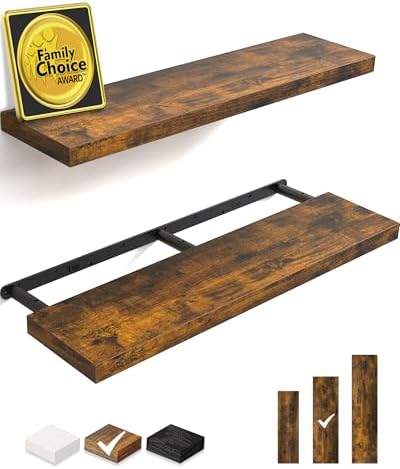
- 𝐌𝐨𝐝𝐞𝐫𝐧 & 𝐌𝐢𝐧𝐢𝐦𝐚𝐥𝐢𝐬𝐭 𝐒𝐭𝐲𝐥𝐞 – Featuring clean lines and a rustic finish, these wall-mounted shelves 𝐚𝐝𝐝 𝐚 𝐦𝐨𝐝𝐞𝐫𝐧 𝐭𝐨𝐮𝐜𝐡 to …
- 𝐒𝐭𝐫𝐨𝐧𝐠 𝐋𝐨𝐚𝐝 𝐂𝐚𝐩𝐚𝐜𝐢𝐭𝐲 – Made from 𝐝𝐮𝐫𝐚𝐛𝐥𝐞 𝐞𝐧𝐠𝐢𝐧𝐞𝐞𝐫𝐞𝐝 𝐰𝐨𝐨𝐝 and reinforced with sturdy brackets, each shelf 𝐬𝐮𝐩𝐩𝐨𝐫𝐭𝐬 𝐮𝐩 𝐭𝐨 …
- 𝐏𝐫𝐨𝐭𝐞𝐜𝐭𝐢𝐨𝐧 𝐒𝐞𝐚𝐥𝐢𝐧𝐠, 𝐩𝐫𝐞𝐯𝐞𝐧𝐭 𝐰𝐚𝐫𝐩𝐢𝐧𝐠 – Each shelf is treated with a protective sealant to prevent warping or damage
Floating shelf styling that stays polished:
- One small tray for keys and daily essentials
- One mini lamp or cordless accent light for warmth
- One sculptural object like a ceramic vase or stone bowl
- One wall moment above like a mirror or a single piece of art
If the entryway needs more function, add hooks below the shelf and keep them evenly spaced. That combo looks custom and keeps bags and coats off the floor.
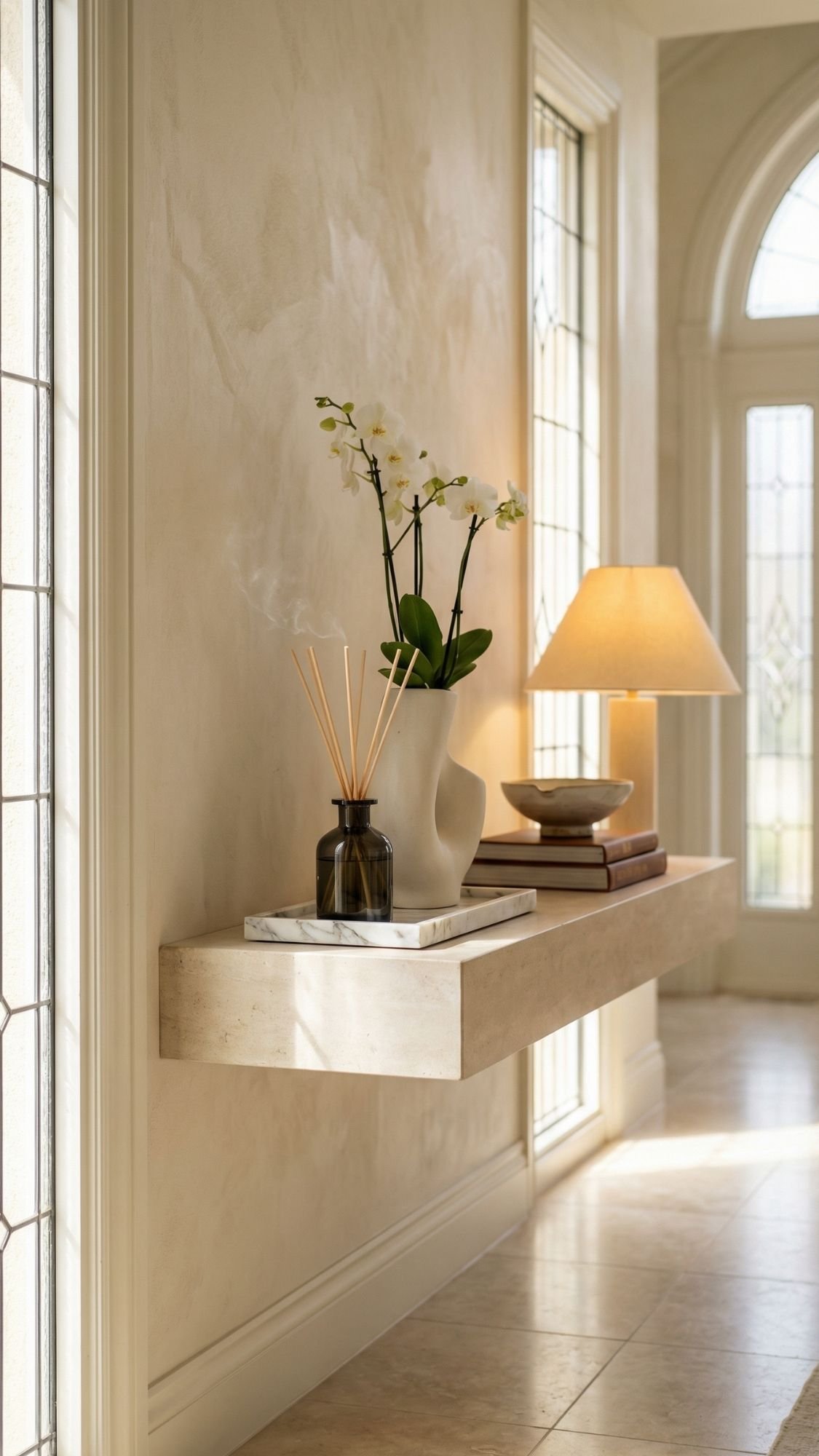
19) Add a Scent Moment That Feels Expensive
A great entryway smells like calm, not like yesterday’s takeout decided to linger. Scent sets the tone before anyone even looks around, so it deserves a spot on the styling checklist. A subtle diffuser or candle makes the whole home feel more intentional, especially when the entry stays small. Ever walked into a space and instantly felt relaxed without knowing why? Scent usually does that heavy lifting.
Keep it classy and consistent. Pick one signature scent family and stick with it, like warm woods, soft florals, clean linen, or fresh citrus. Skip anything overly sweet or overpowering because the entryway sits close to the main traffic path. A luxe scent should whisper, not yell.
Best entryway scent options (and why they work):
- Reed diffuser: steady scent, no effort, looks styled on a tray
- Candle: cozy vibe, best for evenings, doubles as decor
- Room spray: quick refresh before guests, easy to store in a drawer
- Scented sachet: great inside baskets or cabinets for quiet freshness
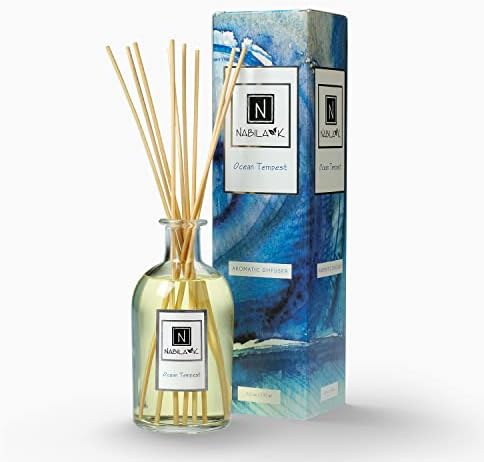
- Ocean Tempest – Floral Breeze with a Coastal Twist: Drift into a fresh, clean scent that blends rose and honeysuckle wit…
- Clean, Long-Lasting Scent Without the Flame: Enjoy a safe, flameless alternative to candles. Our reed diffuser disperses…
- Elegant, Minimalist Design for Any Room: The compact bottle and 7″ reeds blend seamlessly into any space. Place on a she…
20) Bring in Greenery for Instant Life
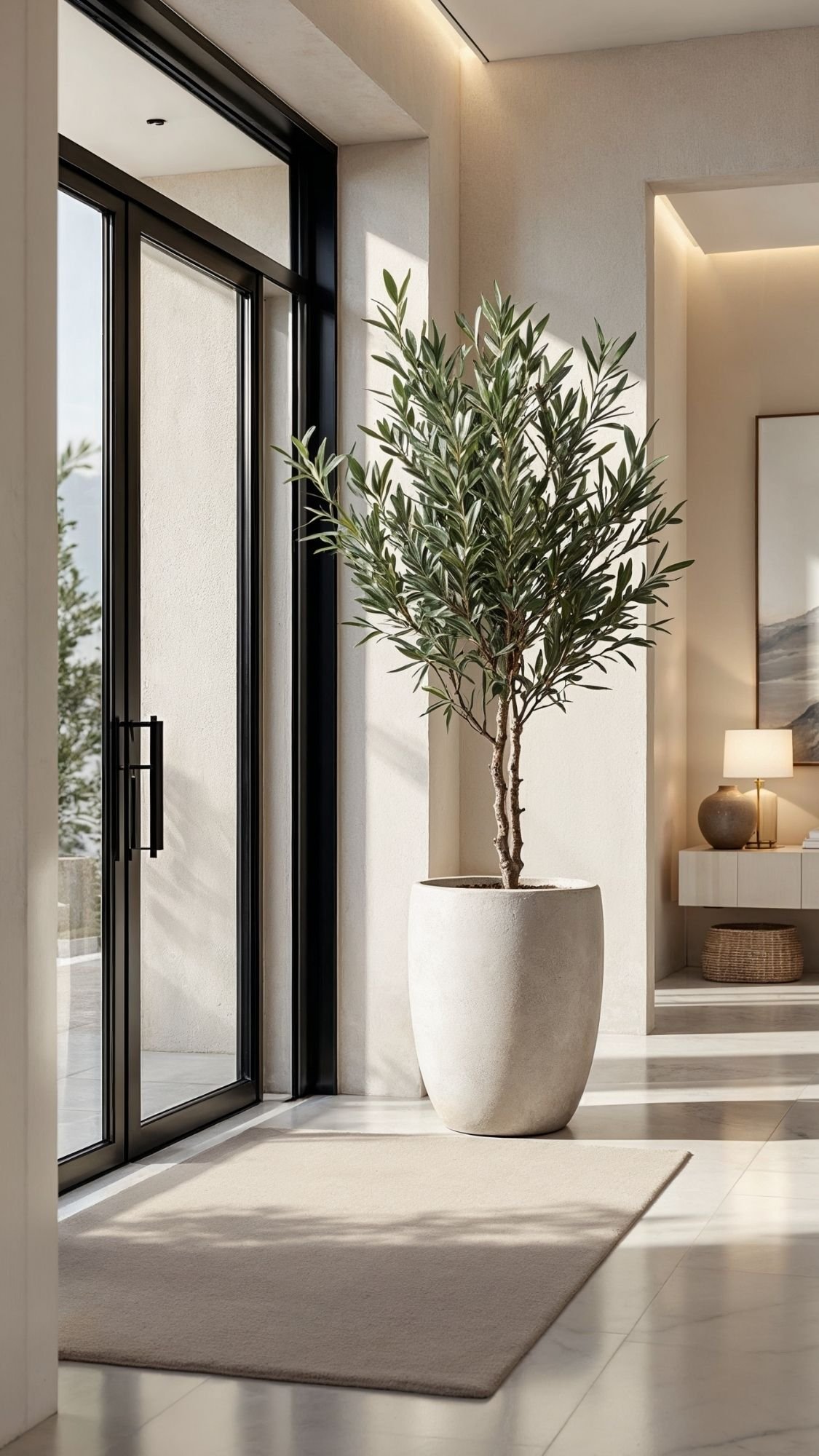
Greenery makes an entryway feel welcoming fast. It adds softness, color, and that “someone lives here and has taste” energy without adding clutter. A tall plant also fixes awkward empty corners better than another decor object ever could. The right plant creates height and balance, so the entryway feels styled from the ground up.
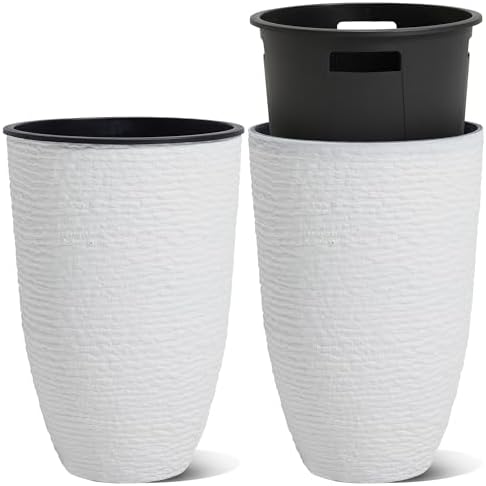
- Stylish Planters: This set includes 2 tall planters with a decorative imitation stone finish, perfect for indoor or outd…
- Convenient Set: The set includes inner pots, allowing for easy plant maintenance and transportation
- Spacious Design: Each planter measures 21 inches in height and 14 inches in diameter, providing ample space for plants a…
Pick one statement plant and keep it simple. Go tall if the ceiling has height, or go sculptural if the space stays compact. Faux plants count too, as long as they look real and the planter looks expensive.
Greenery picks that look luxe in entryways:
- Olive tree for airy, timeless polish
- Fiddle-leaf fig for modern height and drama
- Rubber plant for glossy, rich green texture
- Oversized branches in a vase for a sculptural, minimal look

- ✅ Planter Included – Our olive tree comes with a 9.45 inch White Planter ,save extra purchase of planter.The artificial …
- ✅ Easy Maintenance – No sunlight,No watering, No pruning, No fertilizer required, the faux plants tall is an ideal room …
- ✅ Lifelike Artificial Plant – Realistic looking plant with vibrant colors, and true to life texture details.The olive tr…
21) Define the Entry With a Ceiling Moment
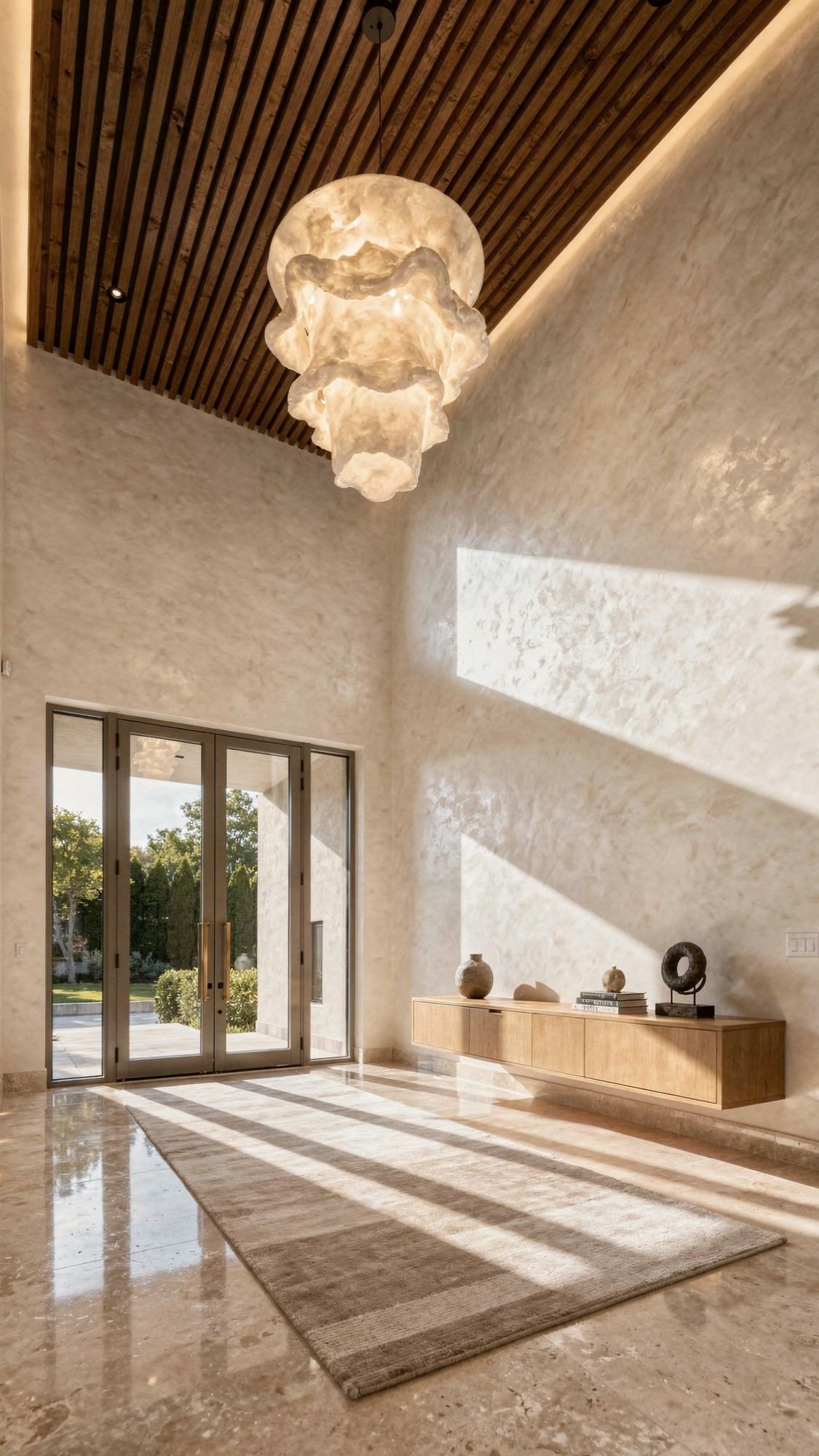
Most people ignore the ceiling in an entryway, and that’s exactly why a ceiling moment feels so designer. It creates instant impact without adding clutter, and it helps define the “entry zone” even if the front door opens right into the living space.
You don’t need anything crazy. A subtle upgrade reads just as luxe when the rest of the entry stays clean and cohesive.
Ceiling ideas that feel high-end:
- Statement pendant or chandelier that fits the scale of the space
- Wood beams or slats for warmth and architectural detail
- Paint the ceiling a slightly deeper tone than the walls for depth
- Wallpaper overhead in a quiet texture or soft pattern for boutique energy
If the ceiling goes bold, keep the walls calmer so the entry doesn’t feel busy. This move works especially well in open-concept homes because it tells the eye, “this is the entry,” without needing a wall to do it.

- 1.【Sleek and Stylish Design】 This oversized black and chrome chandelier offers a luxurious design featuring a glossy bla…
- 2.【Perfectly Sized for High Ceilings】 This large chandelier measures 52″ in diameter and 55″ in height, making it a perf…
- 3.【Sturdy Construction for Durability】 Crafted from high-quality metal and finished with a corrosion-resistant coating, …
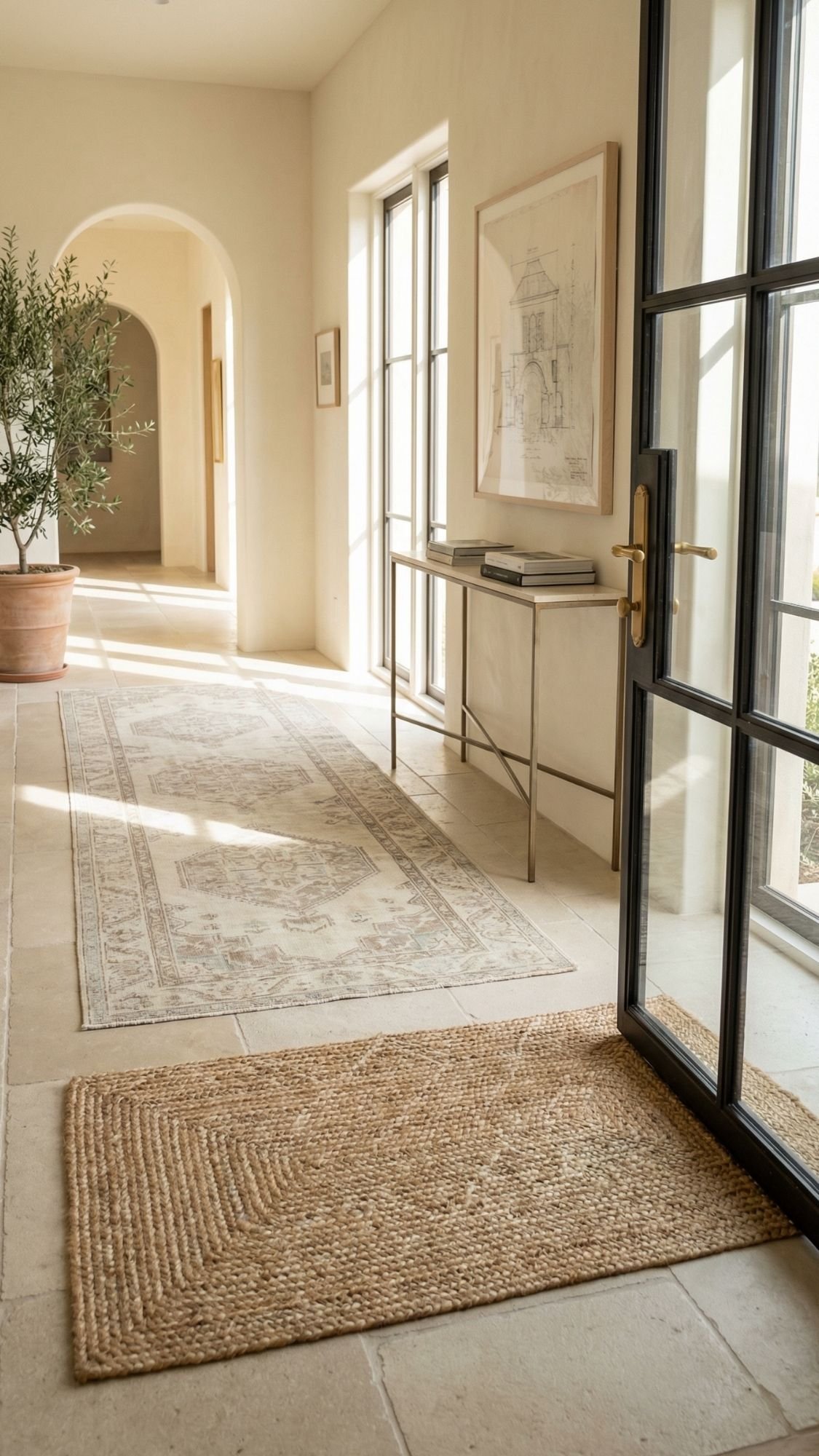
22) Use a Runner + Doormat Combo That Actually Works
A doormat alone rarely cuts it. A runner alone helps, but the real “welcome with ease” setup uses both. The doormat handles the immediate dirt and water at the door, and the runner carries the style and protects the path into the home. This combo keeps floors cleaner and makes the entryway feel more finished, especially in high-traffic homes.
- Machine Washable: The Vintage runner rug is lightweight and easy to remove and throw in the washing machine for cleaning…
- Ultra Soft and Safe: The rug runner is soft and good to touch – walking barefoot is like stepping on clouds, keeping the…
- Kids and Pets Friendly: Skin-friendly material, comfortable and safe for kids to roll around! This Oriental bathroom run…
The trick is making them look coordinated, not random. Choose tones that relate, even if the patterns differ. Keep the doormat simple and textured, then let the runner bring in the design.
Runner + doormat rules that keep it polished:
- Use a low-profile doormat so the door clears it easily
- Pick a durable, easy-clean runner that can handle daily wear
- Keep colors in the same family so the setup feels intentional
- Add a rug pad under the runner so it stays secure and looks thicker
Ever notice how the best-styled homes still plan for weather? This is that plan, but make it pretty.
- Helps Prevent Rug Slippage: Designed with a unique high-density cross-bar texture and silicone backing, this carpet unde…
- Cushioning Rug Gripper with Comfort Support: Choose from 3 thickness options to add the right level of comfort underfoot…
- Protects Rugs and Floors from Damage: Works as a protective layer between carpet and floor, reducing scratches, dents, a…
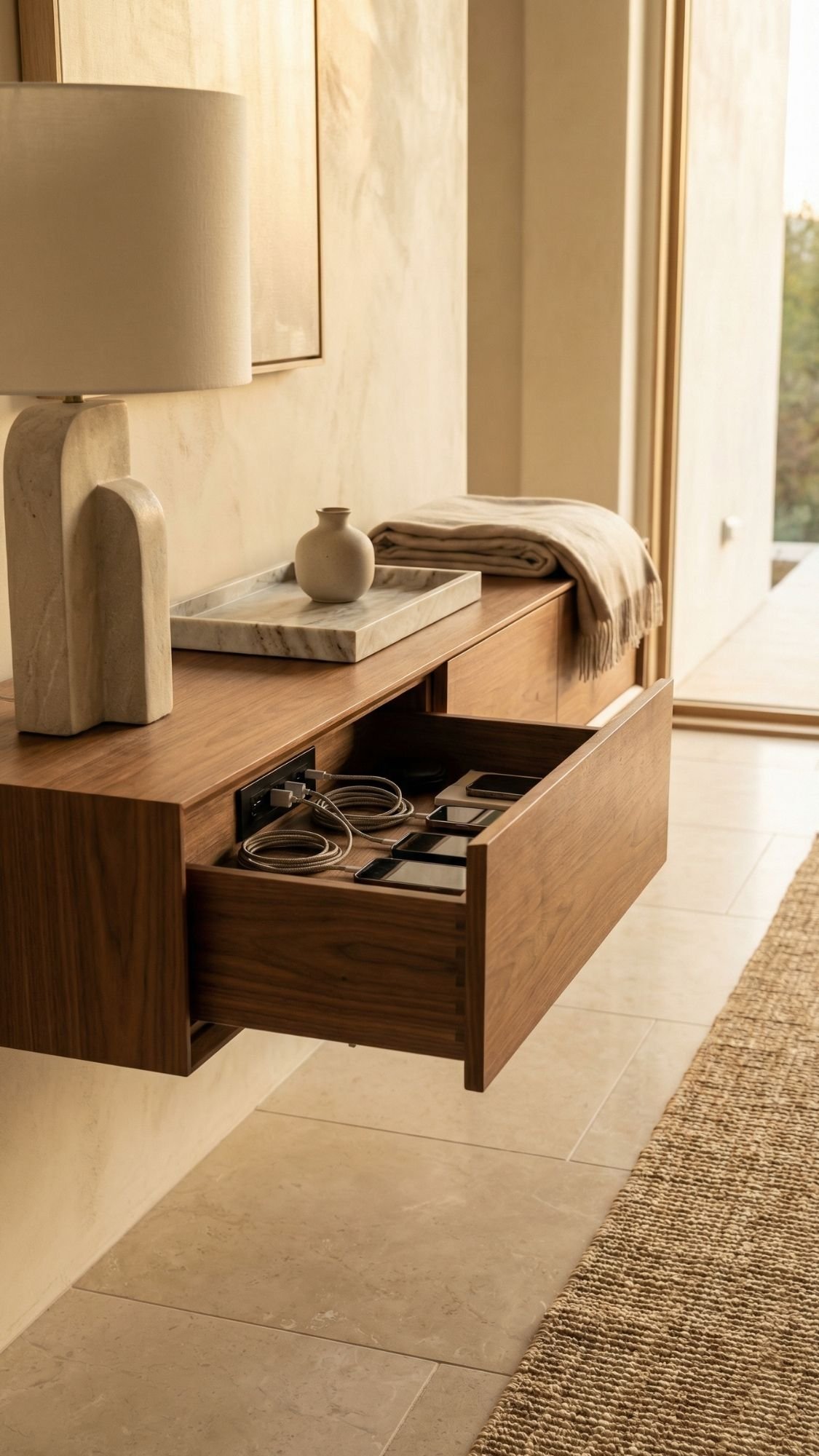
23) Add a Charging Drawer or Hidden Tech Spot
Nothing ruins a clean entryway faster than cords. Phones, earbuds, smart keys, and random chargers pile up fast, and the visual clutter makes the whole space feel messy even when everything else looks styled. A hidden tech spot fixes that by keeping the entry functional while the surfaces stay calm.
The luxury move is simple: hide the charging station inside a drawer, cabinet, or lidded box. That way, the entryway still works as a true drop zone, but it never looks like an electronics store display.

- 20W Fast Charging & Versatile Ports: Equipped with 3 AC outlets, 2x 20W USB-C and 1x 18W USB-A ports. Delivers efficient…
- Flush Drawer & Desk Integration: Designed specifically for hidden installation in drawers and standing desks. Requires j…
- Durable Spring Cord & Tangle Free: Engineered with a robust spring power cord that extends and retracts smoothly. Mainta…
Hidden tech ideas that feel seamless:
- Drawer charging station with a power strip tucked inside
- Console cabinet that hides a charging shelf behind doors
- Lidded storage box that conceals cords while devices charge
- Cable management clips so cords stay organized and invisible
Keep one rule: only charge the everyday essentials here. If the entryway starts charging tablets, cameras, and every device known to man, the calm vibe disappears immediately.
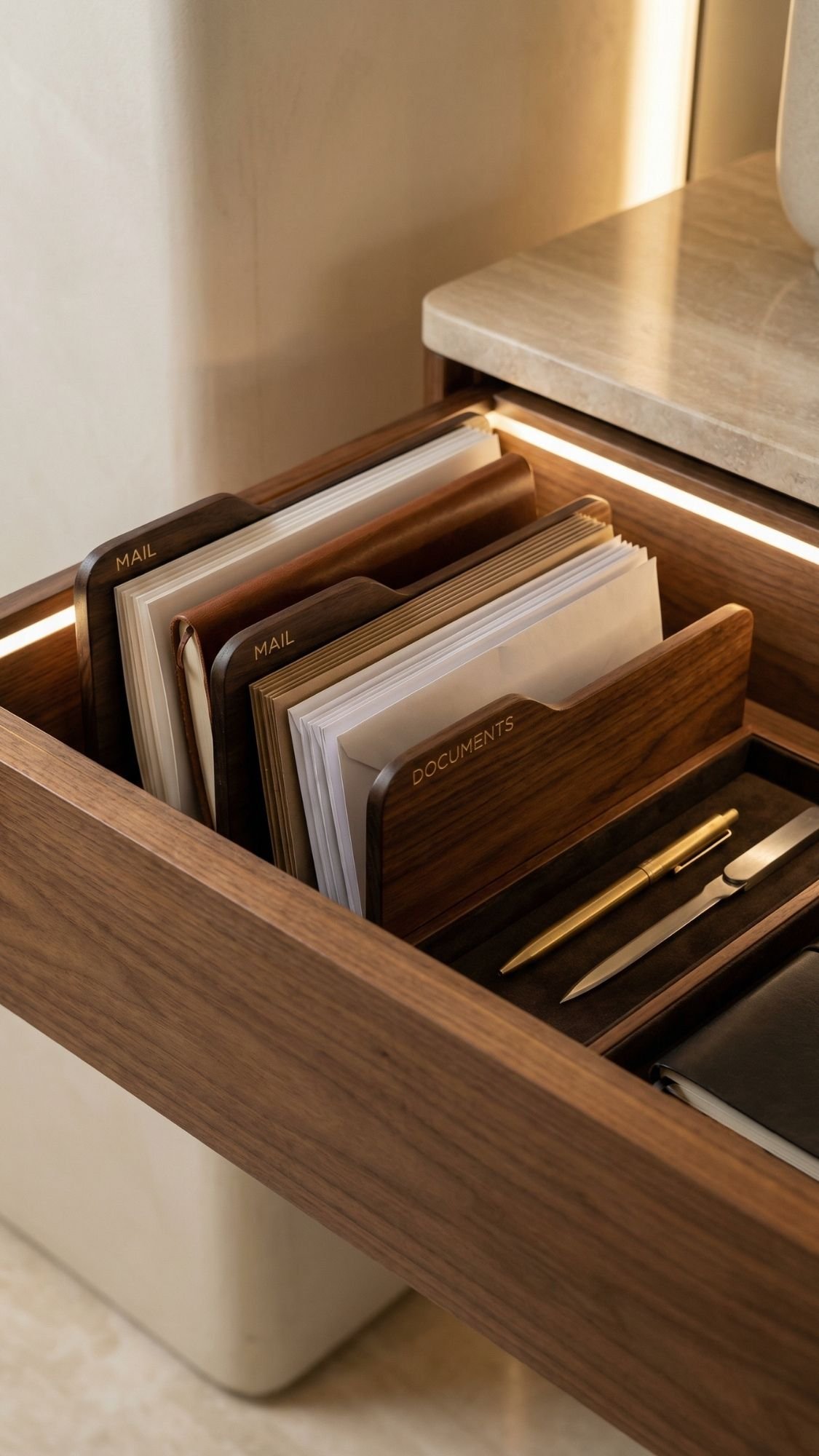
24) Create a “One-Spot” Mail System (So It Stops Migrating)
Mail has a weird talent for traveling. It lands on the console, then it slides to the kitchen counter, then it somehow ends up on a chair like it’s taking a break. A one-spot mail system stops that mess by giving papers a clear home the second they enter the house.
The key is choosing a system that matches how life actually works. If the household needs quick access, use an open organizer. If visuals stress you out, hide the mail in a drawer or a lidded box and keep the entryway looking calm.

- ORGANIZE STYLISHLY using our charming mail holder with key hooks. With a shelf for sunglasses or wallet and hooks for co…
- RUGGED PAULOWNIA WOOD is thick-cut for superb strength-to-weight ratio. The Lwenki Hanging Mail Organizer and Key Holder…
- 3 UPGRADED HOOKS allow our wall mail organizer to hold heavy objects such as winter coats, bags, umbrellas and dog leash…
Mail systems that keep the entry polished:
- Drawer dividers inside a console so everything disappears
- Wall file holder in a matching metal finish for a clean vertical look
- Lidded box labeled “Sort” so papers stay contained
- Two-bin method: “To do” and “To file” so it stays simple
Set a quick habit: sort once or twice a week so the system stays easy. Do bills deserve to live on the counter forever? Absolutely not.
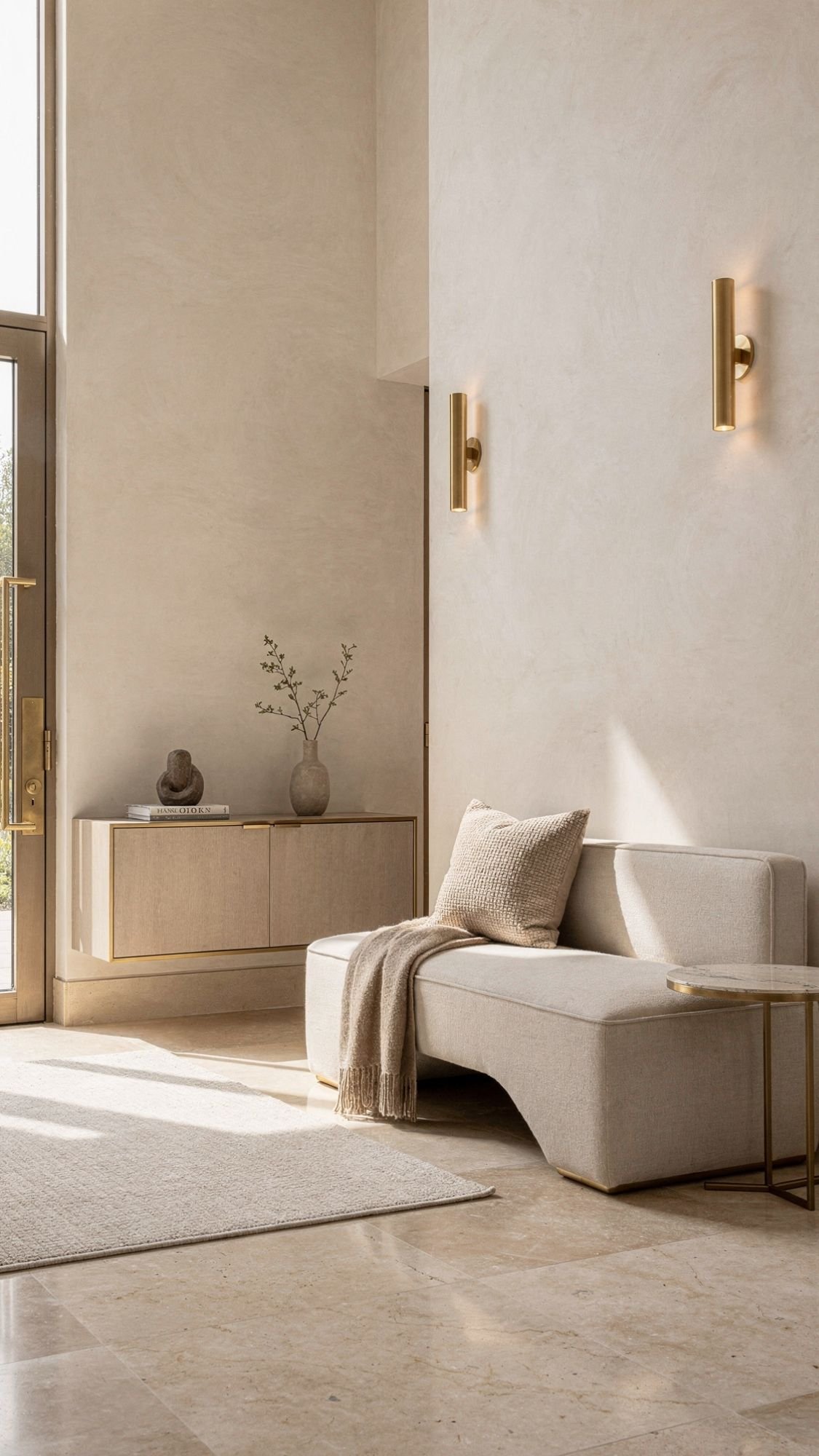
25) Add a Soft Textile Touch So the Entry Feels Warm
Entryways can feel a little “hard” because they often include stone, tile, glass, and lots of straight lines. A small textile moment softens all of that and makes the space feel welcoming instead of sterile. This is one of those details that quietly makes a home feel more expensive because it adds texture and comfort without adding clutter.
Keep it minimal. One luxe textile accent looks intentional. Five starts looking like the entryway turned into a linen closet.
Easy textile upgrades that look high-end:
- One structured pillow on a bench in a rich neutral texture
- One folded throw in cashmere-look or chunky weave (clean and simple)
- A woven wall piece if the entry needs softness without taking up space
- Textured runner if the floor needs warmth and grip
Stick to a tight color palette so the textiles feel cohesive with the rest of the entryway. This is the “quiet luxury” version of cozy, and it works in every style.

- 100% Polyester
- Thicker & Softer: We’ve upgraded our classic flannel fleece blanket to be softer and warmer than ever, now featuring enh…
- Lightweight & Airy: The upgraded materials of this flannel fleece blanket maintain the ideal balance between weight and …
26) Match the Entry to the Rest of the Home With One Repeat Element
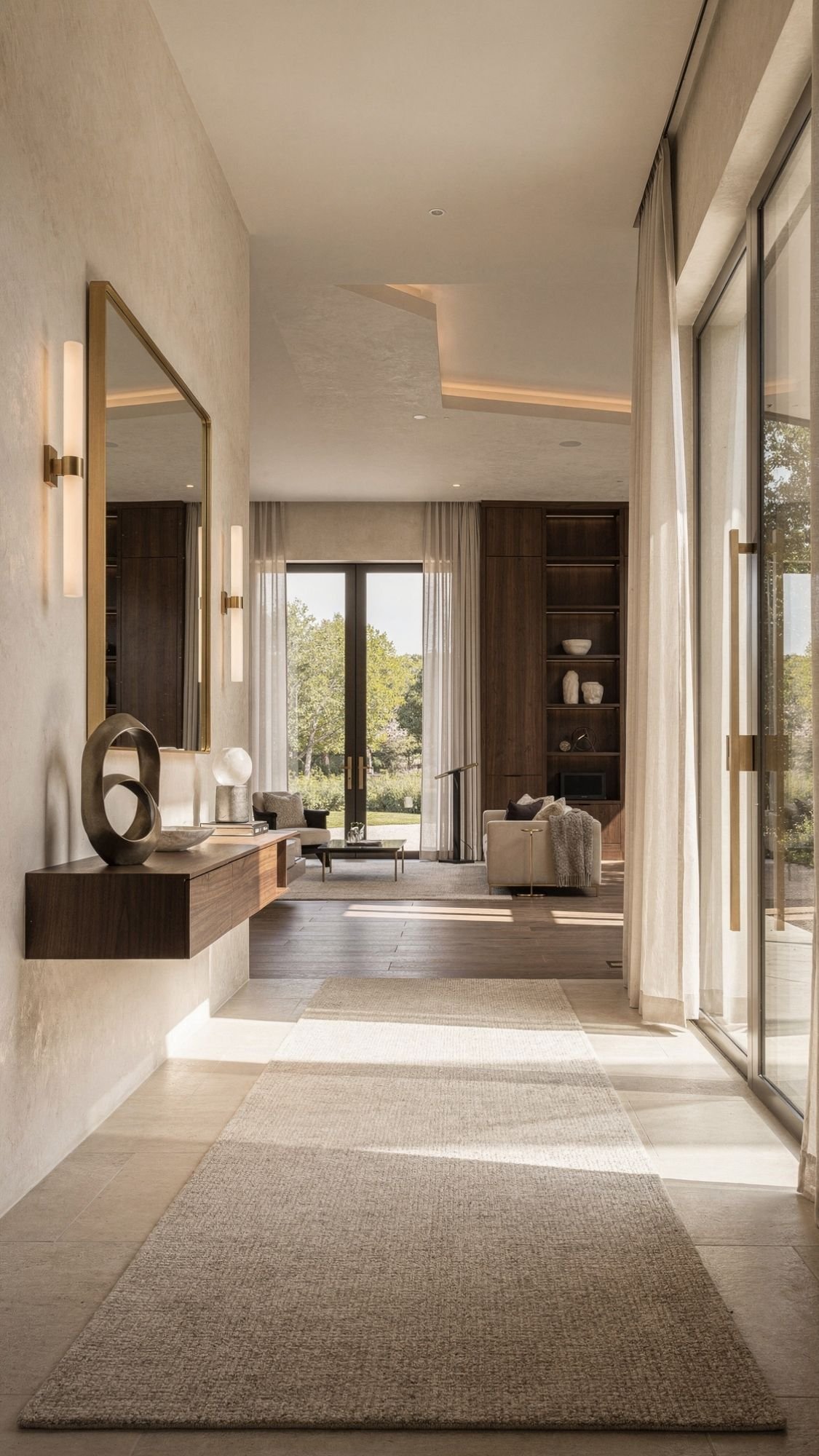
This is the secret sauce that makes an entryway feel expensive: it connects to the rest of the home instead of feeling like a random “front door area.” When the entry repeats one element from nearby spaces, everything feels cohesive and intentional, even if the decor stays simple.
Pick one thing to repeat and commit to it. That’s it. This is not the moment to mix every finish, every style, and every trend in one tiny space.
Easy elements to repeat for a cohesive look:
- Metal finish: match brass, black, or nickel across hardware, lighting, and frames
- Wood tone: repeat the same warmth in the console, shelf, or bench
- Shape theme: arches, curves, or clean rectangles repeated in mirrors and furniture
- Color accent: one paint color or textile tone echoed in the runner or artwork
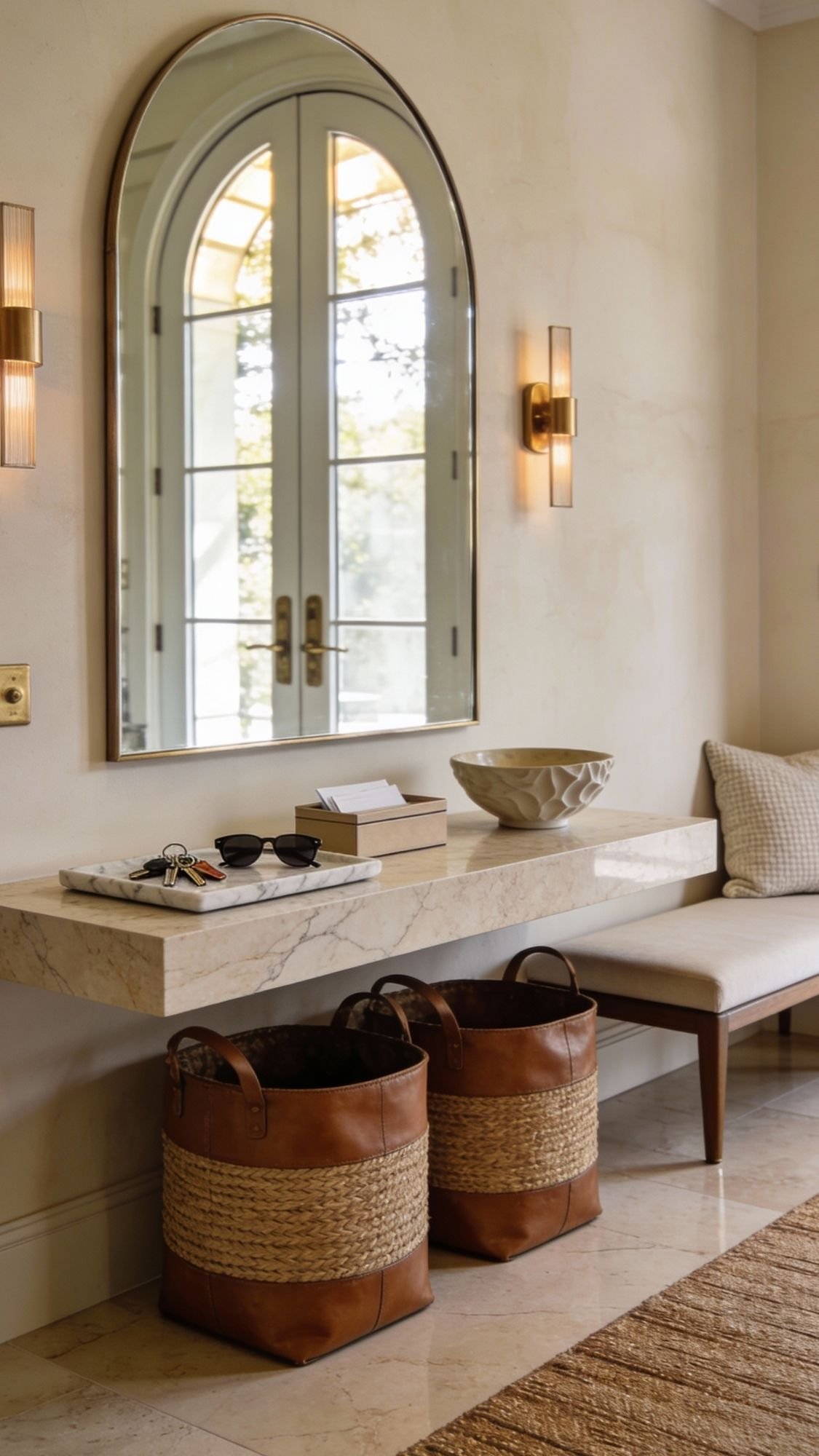
When the entry matches the home’s overall vibe, the whole place feels calmer. It also makes the transition from door to living space feel smooth, which is basically the definition of “welcome with ease.”
FAQ
How do you decorate a small entryway with no closet?
Start by treating the wall like your storage unit. Use hooks for coats and bags, then add a slim shoe cabinet or bench with hidden storage so the floor stays clear. A floating shelf also helps because it creates a drop zone without taking up walking space. Finish it off with a mirror to bounce light and make the entry feel bigger. If the space feels tight, keep the palette simple and repeat one finish, like brass or black, so it looks cohesive instead of cluttered.
What is the best entryway storage for shoes?
Closed storage wins for both function and looks. A tilt-out shoe cabinet works best in narrow spaces because it stays slim but holds a lot. If the entryway has room for a bench, choose a storage bench so shoes disappear while people still get a seat. For bigger households, add a rule: keep only the most-used pairs in the entry so the system stays easy and does not overflow.
What size rug works best for an entryway runner?
Pick a runner that feels like a path, not a postage stamp. In most entryways, a runner around 2′ to 3′ wide works well, with enough length to guide you into the home. Leave a little visible flooring on each side so it looks intentional. Add a rug pad so it stays secure, feels thicker, and does not slide every time someone walks in with groceries.
How do you make an entryway look expensive on a budget?
Focus on the upgrades that create the biggest visual payoff: good lighting, a large mirror, and a cohesive finish. One oversized art piece can also fake that high-end “curated” feel fast. Contain clutter with a tray and baskets, then keep surfaces mostly clear. A budget entryway looks expensive when it looks intentional, not when it looks full.
How do you create a drop zone that stays tidy?
Make it obvious and easy. Use one tray, one bowl, and one hidden spot like a drawer or lidded box. Set a simple limit: only daily essentials belong there. Then pick one day each week to reset it in two minutes. The system works when it stays realistic, not perfect.
A welcoming entryway doesn’t need a huge footprint. It needs a few smart moves that make life easier and make the space feel intentional. Start with the basics: a drop zone, a runner, and lighting that actually feels warm. Then level it up with hidden storage, one strong statement piece, and a little texture so it feels inviting instead of stiff.
If doing all 26 ideas sounds like a lot, pick two. A console plus a mirror changes the whole vibe fast. Hooks plus a shoe cabinet can save a space that feels chaotic. Small upgrades stack up, and the entryway starts working like it should.
Now the fun part: which idea sounds like the easiest win to try first?