

What if you could turn a regular celebration into an interactive adventure that sparks joy for kids and adults alike? Imagine laughter echoing through your home as teams decode clever clues leading to hidden treasures. That’s the magic of a well-planned scavenger hunt—it transforms ordinary moments into lifelong memories.
You’ll discover why these creative adventures have become a favorite for parents seeking unique ways to celebrate. Modern versions go beyond basic checklists—think customizable clues that adapt to any space, age group, or time of day. Whether you’re surprising a 7-year-old before school or hosting an after-dinner challenge for teens, the flexibility keeps everyone engaged.
One parent recently shared how they expanded their hunt from four to eight clues—doubling the excitement without complicating setup. The best part? Clues use common household spots (think fridge or mailbox), making preparation stress-free. Printable templates in gender-neutral colors ensure inclusivity, while timed challenges add playful competition.
Ready to create your own? We’ll walk through setup tips, clue customization, and ways to balance structure with creative freedom. Because the real treasure isn’t just the final prize—it’s the shared joy of the journey itself.
Planning Your Birthday Scavenger Hunt
Great adventures begin with smart preparation. Whether you’re surprising a family member or hosting a group, thoughtful planning ensures smooth sailing. Let’s break down the essentials for crafting an experience that feels magical—without the stress.
Smart Budgeting & Time Management
Start by deciding your investment level. Free printable clue cards work beautifully for last-minute setups. Want extra sparkle? Add dollar-store trinkets or homemade coupons for special privileges. Here’s a quick comparison:
| Budget Level | Features | Setup Time |
|---|---|---|
| Free | Digital clues, household items | 15-30 minutes |
| Budget-Friendly | Printable kits + 3-5 small prizes | 1 hour |
| Premium | Themed decorations + wrapped gifts | 2+ hours |
Timing matters. Early risers? Hide clues before bedtime. After-school surprises? Use their classroom hours to set up. For group events, schedule hunts before cake time when energy levels peak.
Themes & Space Strategy
Match the adventure to their passions. A dinosaur fan might follow “fossil clues” leading to a chocolate egg stash. Book lovers could solve library-themed riddles. Use what you’ve got—most homes offer 6-8 perfect spots:
- Laundry room (sock puppet clue?)
- Kitchen fridge (magnetic puzzle)
- Backyard tree (weatherproof envelope)
Balance movement between areas. Younger kids thrive with visible hiding places, while teens enjoy clever camouflage. Remember—the journey matters more than perfection!
Essential Materials and Printables
Transform ordinary paper into treasure maps with the right tools. Whether you’re designing your first adventure or refining a signature style, strategic resources save time while boosting creativity. Let’s explore how professional-grade materials can elevate your game—without draining your wallet.
Finding Free Printable Clue Cards
Quality printables turn basic ideas into polished experiences. Many kits include 13 unique cards across five pages—three per sheet for eco-friendly printing. You’ll typically find:
- A vibrant starter card announcing the adventure
- Mid-game hints wrapped in playful riddles
- A finale note celebrating completion
Smart designers offer gender-neutral options through color variations—navy blues versus coral pinks—while keeping text identical. This lets you personalize without reinventing content. Print on sturdy cardstock for durability, or laminate pages for repeat use.
Organizing Your Supplies
Chaos disappears with simple prep steps. Keep cards numbered on their backs using pencil markings (easy to erase if reordering). Store them in a labeled box alongside tape, envelopes, and small prizes. Pro tip: Print extras of pages 2-4 in case clues get misplaced during the action.
For multi-location hunts, seal each card in a weatherproof baggie. This protects against spills or surprise rain showers. Remember—neat organization means more time for laughter and less for troubleshooting!
Step-by-Step Birthday Scavenger Hunt Setup
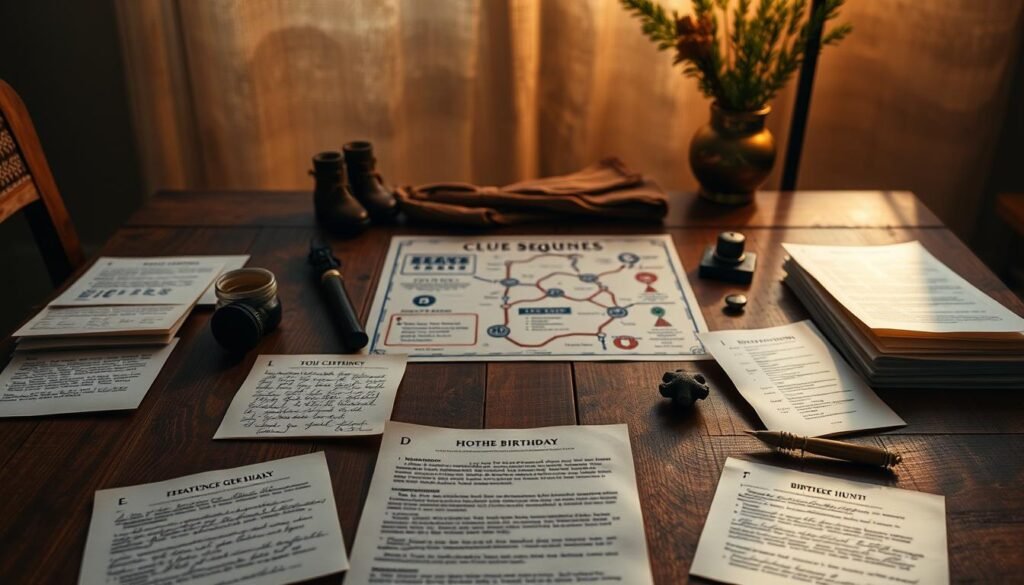
Your adventure’s success hinges on smart preparation—think of it as building a treasure map where every fold matters. Let’s transform those printed cards into a seamless journey that sparks excitement from start to finish.
Organizing Clue Sequence
Unfold your printed sheets and grab scissors. Cut cards following their original layout—right to left, top to bottom. This preserves the natural flow tested by countless families. Pro tip: Label each card’s back with its hiding spot location, not the destination. For example:
| Card Position | Label Example | Purpose |
|---|---|---|
| #3 | “Under couch pillow” | Guides where to place clue |
| #5 | “Fridge door” | Prevents mix-ups during setup |
| #8 | “Backyard bench” | Ensures logical progression |
One parent shared:
“Numbering clues saved our hunt when wind scattered them—we reconstructed the path in minutes!”
Preparing the First Clue
Set aside your launch card—this kickstarts the game. Keep it separate until showtime. Popular delivery methods include:
- Taping to a breakfast plate for morning surprises
- Sliding into a backpack after school
- Mailing as a “secret mission” letter
Always print an extra copy of clue #1. Why? Eager participants sometimes misplace it before solving the riddle. With these steps, you’ll create a smooth experience where the focus stays on fun, not frantic searching.
Designing Creative and Engaging Clues
Crafting clues that spark curiosity requires equal parts poetry and practicality. Let’s explore how to weave magic into your riddles while keeping the adventure flowing smoothly.
Rhyme Time Made Simple
Rhymes turn ordinary instructions into playful puzzles. Start by listing location keywords—”fridge” or “bookshelf”—then brainstorm related action words. Stuck? Online rhyming dictionaries help bridge gaps without killing momentum. One parent shared:
“Our first clue took 20 minutes. By the fifth? Two minutes flat—rhyming becomes addictive!”
Keep sentences short for early readers. Phrases like “Where plates stay cool, your next find waits” work better than complex verses. Adjust syllable counts based on age—three to five beats per line for younger kids.
Smart Hiding Spot Strategy
Balance visibility with discovery. Easy wins build confidence early:
- Under a colorful rug corner
- Taped to a favorite storybook
- Behind a cereal box
Gradually increase challenge levels. Later clues might hide in plant pots or beneath porch steps. The goal? Keep feet moving and minds engaged without tears. Rotate spots between games to maintain surprise—even familiar spaces feel new with clever placement.
Customizing the Hunt for Kids and Adults
Tailoring clues to engage multiple generations transforms your activity into a bonding experience. The secret lies in smart adaptations that respect different skill levels while keeping the thrill alive for everyone.
Adjusting Clue Difficulty
Match riddles to reading abilities without sacrificing fun. For 8-year-olds, use short sentences with picture hints. Teens and adults thrive on wordplay that requires creative thinking. See how to scale challenges:
| Age Group | Clue Type | Example |
|---|---|---|
| 5-7 years | Rhymes + visual cues | “I’m cold inside but hold your lunch” (fridge drawing) |
| 8-12 years | Simple word puzzles | “Add ‘mail’ to ‘box’ to find me” |
| Adults | Cultural references | “Where Netflix chills” (TV stand) |
Fun Variations for Families
Mix teamwork with friendly competition. One mom created parallel paths—her son solved basic clues while her husband cracked spy-themed codes. Both routes led to the same finale.
“My husband high-fived our son when they reached the shower full of presents—it became their favorite birthday scavenger memory.”
Gender-neutral designs shine here. Swap card colors (navy for boys, mint for girls) without changing content. Try these inclusive twists:
- Pair older kids with grandparents for intergenerational teams
- Hide bonus stickers younger children can find independently
- Add timer challenges for adrenaline-seeking adults
The goal? Create moments where every family member feels challenged yet capable. That balance turns simple games into shared stories they’ll retell for years.
Integrating Surprises and Gift Elements

Transform your adventure into a treasure trove of delight by weaving surprises into every twist and turn. The magic lies in strategic reveals that elevate anticipation without overwhelming participants. Let’s explore how to balance excitement with practicality.
Including Hidden Gifts Along the Way
One family revolutionized their celebration by attaching riddles directly to wrapped boxes. “Seeing my son’s eyes light up at each colorful package kept the energy high,” the parent shared. Delayed gratification became their secret weapon—participants admired presents but saved unwrapping for the grand finale.
Consider these approaches based on your group size:
| Strategy | Best For | Impact Level |
|---|---|---|
| Single Finale Gift | Large groups | High excitement payoff |
| Mid-Hunt Treats | Small families | Sustained engagement |
| Combination | Mixed ages | Balanced experience |
For budget-friendly options, try these ideas:
- Hide handwritten coupons for extra screen time
- Tuck themed stickers into clue envelopes
- Place glow sticks near dusk hunts
“We used dollar-store puzzles as mid-game rewards—kids assembled pieces throughout the adventure. By the end, they’d earned their main present!”
Remember: The best surprises feel organic. Tape a lollipop to clue #3 or nestle a temporary tattoo under clue #5. These micro-moments create joy without derailing your carefully planned sequence.
Using Technology to Enhance the Experience

Imagine launching your adventure before the first clue is even found—technology makes it possible. Modern tools streamline setup while preserving the hands-on magic that makes these activities memorable. Let’s explore how digital solutions can simplify your planning without losing that personal spark.
Seamless Digital Delivery
Your journey begins the moment you share your email. Enter your details, and voilà—instant access to colorful PDFs with printable clue cards. One parent shared:
“We downloaded the kit during breakfast and hid clues before school—our daughter thought elves helped overnight!”
Digital formats offer three key advantages:
- Immediate access via secure links
- Email backups if devices fail
- Customizable colors to match party themes
Need last-minute adjustments? Resize elements or print extra copies in minutes. The system even sends two versions—updated designs and classic styles—for different age groups or locations.
| Version | Best For | Key Feature |
|---|---|---|
| Modern | Tech-savvy groups | QR code integration |
| Classic | Traditionalists | Timeless rhymes |
Stuck participants? Email bonus hints mid-game. Lost a clue? Reprint from your inbox. This blend of digital convenience and physical excitement creates celebrations where technology supports—never overshadows—the joy of discovery.
Organizing the Hunt at Home and Outdoors
Your living space becomes the ultimate playground when you design adventures that flow seamlessly from room to yard. The key? Creating adaptable challenges that work in any environment—whether you’re dodging rain showers or soaking up sunshine.
Indoor Versus Outdoor Setups
Indoor spaces shine for quick setups and weatherproof fun. Think clues taped to fridge handles or tucked under couch cushions. Outdoor areas add exploration energy—try hiding hints in mailbox slots or garden pots. One parent redesigned their game after realizing fireplace-specific clues excluded friends’ homes. Now they use universal spots like front doors or staircases that work everywhere.
Adapting to Various House Layouts
Small apartments? Focus on vertical spaces (think bookshelves or window sills). Multi-level homes? Create a journey that moves between floors. The best around-the-house adventures use:
- Common areas like kitchens for easy wins
- Hallways as natural progression points
- Outdoor boundaries (patios or driveways) for fresh-air breaks
Simplify planning with printable scavenger hunt lists that work in any home. Remember—great games adapt to your space, not the other way around. That’s how memories get made, one cleverly hidden clue at a time.