Your living area deserves more than cookie-cutter decor. Those weathered treasures at flea markets? They’re secret weapons for crafting rooms bursting with character and stories. Let’s talk about how timeworn pieces create spaces that feel lived-in rather than staged.
Antique versus vintage? Here’s the quick scoop: True antiques are 100+ years old, while vintage typically refers to 20-100 year-old items. Both bring history into modern settings – think grandmother’s tea cart beside your espresso machine.
Mixing eras isn’t just stylish – it’s sustainable. That mid-century lamp base? Pair it with a new linen shade. An art deco mirror? Let it anchor your entryway. The magic happens when patina meets polish.
You’ll discover how to source these gems without blowing your budget (pro tip: estate sales on Sundays often slash prices). We’ll explore room-by-room strategies – from statement furniture in living areas to delicate glassware in kitchens.
Ready to create a home that whispers your story through every curated piece? Let’s begin this journey where yesterday’s craftsmanship meets today’s design sensibilities.
Introduction: Embrace Vintage Home Decor
Your home tells a story – shouldn’t the chapters be fascinating? While Instagram-worthy trends fade faster than avocado toast, vintage home decor offers enduring magic. Think of it as curating a museum of memories where every piece sparks curiosity.
Modern mass-produced items lack personality – like generic background music. But that 1970s ceramic lamp? Its chips whisper about dinner parties past. These finds add texture you can’t buy new. They’re time travelers bridging generations in your living space.
Here’s the secret: Vintage isn’t about recreating granny’s parlor. It’s selective nostalgia. Pair a weathered farmhouse table with sleek barstools. Let an art nouveau vase hold your AirPods. This mix creates visual tension that feels uniquely yours.
Beyond aesthetics, choosing pre-loved pieces reduces landfill waste. You’re not just styling a room – you’re preserving craftsmanship. Each scratch becomes a badge of honor, proving objects can outlive fast fashion’s 15-minute fame.
Start small. That tarnished silver tray? Perfect for displaying succulents. Those retro postcards? Frame them as a gallery wall. Before long, your space will hum with character no showroom could replicate.
Understanding the Difference: Antique vs. Vintage
Ever wonder why some old pieces feel timeless while others scream retro? Knowing the antique vintage distinction transforms how you shop – and value what you find. Let’s crack the code on age-related terms that shape pricing and authenticity.
Defining Antique and Vintage
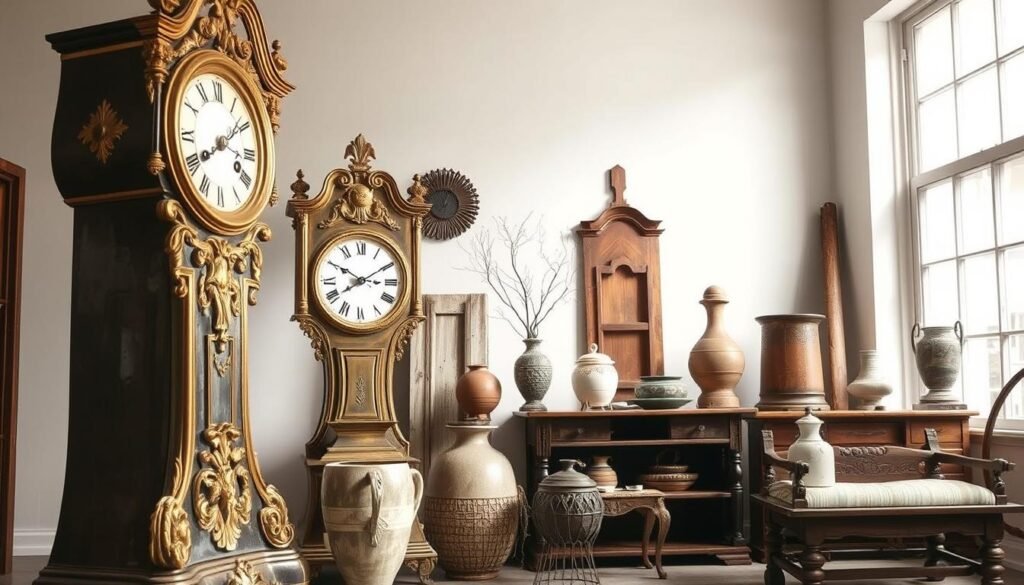
Antique isn’t just a fancy word for old. By definition, it describes items hitting the 100-year mark or older. That 1920s walnut chair? Officially antique next decade. Vintage covers younger treasures – anything from 20 to 99 years old. Your mom’s 1980s lava lamp? Now vintage.
| Category | Age | Value Factors |
|---|---|---|
| Antique | 100+ years | Rarity, craftsmanship, historical events |
| Vintage | 20-99 years | Design trends, pop culture relevance |
Historical Significance and Age Cutoffs
Age matters because it reveals context. True antique pieces often showcase lost skills – hand-cut dovetail joints or leaded glass. Vintage items reflect recent eras’ mass production while retaining nostalgic charm.
Why the 20-year rule? It takes two decades for styles to cycle from “dated” to “desirable.” That 2003 iPod? Now vintage tech. As pieces near 100 years old, their value often spikes – if they survive intact.
Exploring Iconic Vintage Furniture Pieces
Great rooms become unforgettable through conversation-starting elements. The right vintage furniture acts like a time capsule – it carries history while shaping your space’s personality. Let’s uncover how these treasures become the backbone of distinctive interiors.
Statement Furniture and Unique Pieces
Mid-century coffee tables work magic in modern spaces. Their clean lines balance plush sectionals, while rustic farmhouse styles add earthy charm. These surfaces become natural gathering spots – perfect for board games or art books.
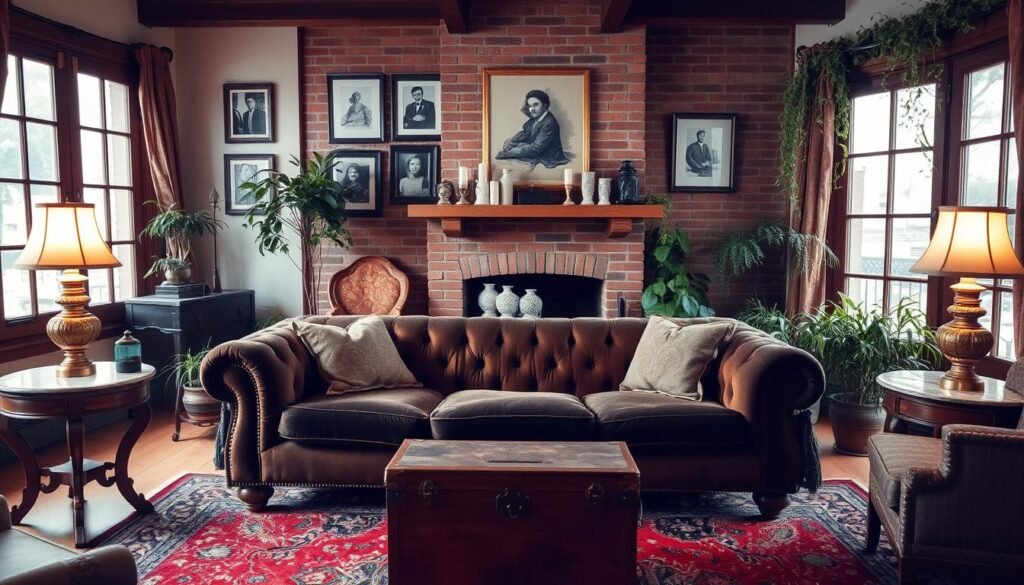
Don’t overlook seating with character. A 1960s velvet sofa in emerald green makes bolder statements than any new model. Its slightly worn arms whisper, “I’ve hosted generations of stories.” Pair it with minimalist chairs to let it shine.
Storage solutions double as art. An oak hutch displays heirloom dishes while hiding clutter. Industrial metal shelves from old factories? They turn books into museum exhibits. “Good storage should earn its keep visually,” says interior designer Margo Walsh.
Lighting transforms moods instantly. That 1940s chandelier above your dining table? It casts patterns no modern fixture can replicate. Salvaged factory pendants add gritty contrast to sleek kitchens.
Remember: The best vintage pieces feel inevitable in your space. They shouldn’t match perfectly – they should make everything else look intentional. When your eyes land on that carved chest or mercury glass lamp, your room suddenly makes sense.
Tips for Decorating with Vintage Items
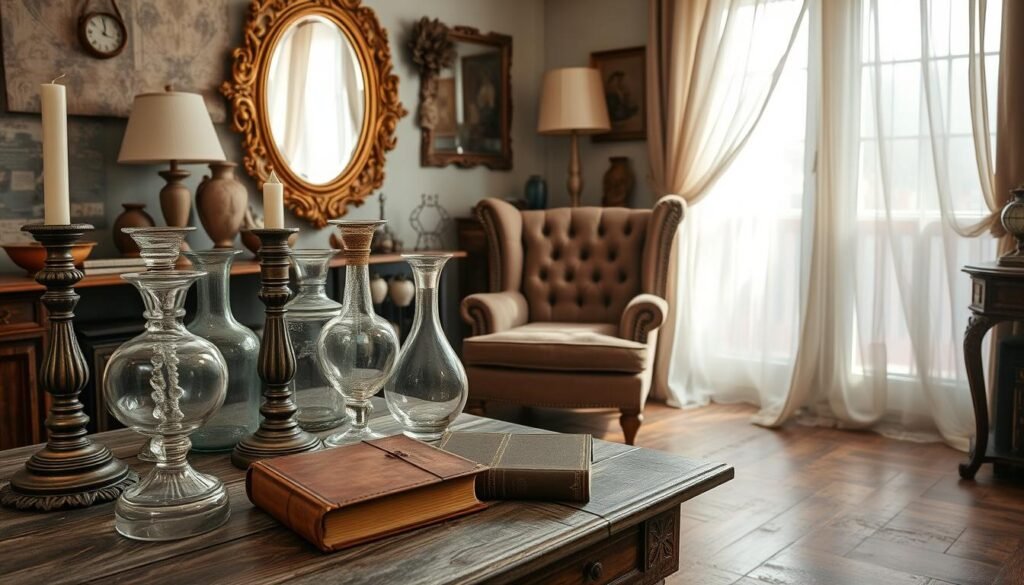
Think of your space as a time capsule – not frozen in one era, but sparking conversations across decades. The sweet spot? Blending weathered finds with crisp modern lines. Vintage items shine brightest when they’re unexpected guests at a contemporary party.
Start with the golden ratio: 50% storied pieces, 50% fresh elements. A mid-century credenza becomes a showstopper against white walls. Pair it with abstract art and a neon floor lamp. The clash? That’s where personality blooms.
Create harmony through subtle threads:
- Match wood tones between old chairs and new shelves
- Repeat geometric patterns in rugs and throw pillows
- Use metallic finishes as visual glue (brass handles ↔ gold frames)
Size matters. Oversized armoires swallow small rooms – try petite sideboards instead. Cluster smaller treasures in groups: porcelain vases on a floating shelf, retro cameras atop a minimalist console.
Build your collection slowly. Live with each piece before committing. That art deco mirror might feel perfect above your desk… or better suited flanking the bathroom vanity. “Good design evolves,” notes LA stylist Tara Gibson. Add vintage elements where they solve problems – a worn leather ottoman doubles as extra seating and a coffee table.
Remember: Your home isn’t a period film set. Let that 1930s typewriter cozy up to your MacBook. When generations collide gracefully, every corner tells your unique story.
Mixing Old and New: Achieving a Historic-Modern Aesthetic
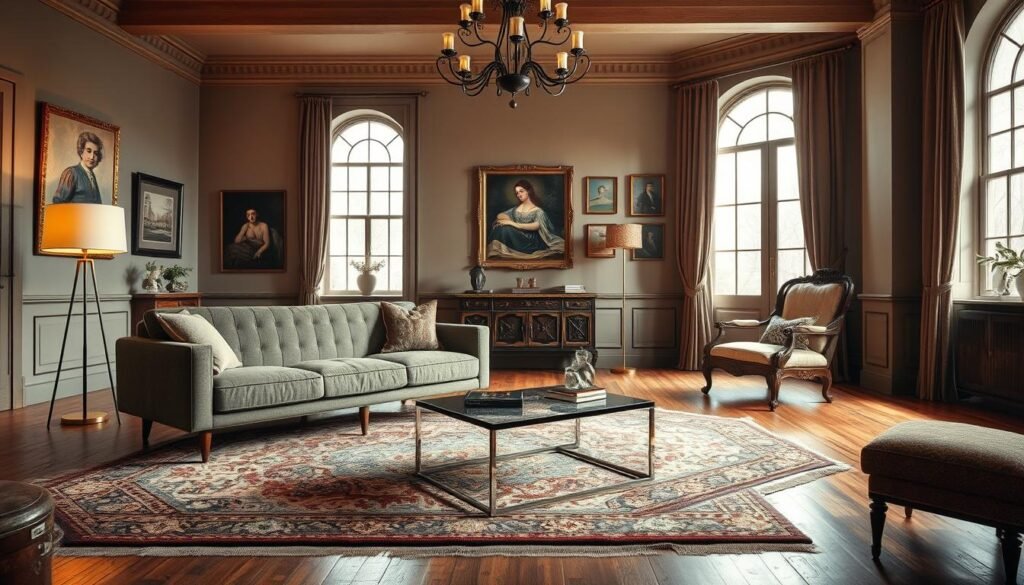
The magic happens when eras collide – a 1920s pharmacy lamp illuminates your Zoom calls, while a concrete side table holds vintage poetry books. This historic-modern aesthetic thrives on contrast, creating spaces that feel curated rather than contrived.
Start with your new home’s blank canvas. Layer in weathered treasures like oxidized brass bookends or a mid-century planter. These pieces add character through natural wear – think of cracks in ceramic vases as beauty marks, not flaws.
Material pairings tell compelling stories. Try these combinations:
- Hand-blown 1970s glass beside matte black fixtures
- Distressed leather chairs under geometric light installations
- Wrought iron candleholders flanking digital art frames
“Treat your space like a collage,” advises designer Elena Moss. Vintage elements become focal points when balanced with minimalist backdrops. That chipped enamel bread box? Let it anchor your sleek kitchen island as a fruit bowl.
First-time collectors should follow the 30/70 rule: 30% aged pieces to 70% contemporary foundations. This way maintains freshness while honoring history. Swap items seasonally – summer might showcase rattan trays, while winter calls for velvet-upholstered stools.
Remember: A home layered across decades feels lived-in yet intentional. Your great-grandmother’s lace tablecloth becomes edgy draped over a acrylic desk. When generations coexist harmoniously, every corner whispers, “This couldn’t exist anywhere else.”
Room-Specific Inspiration: Living Room, Bedroom, Kitchen, and Home Office
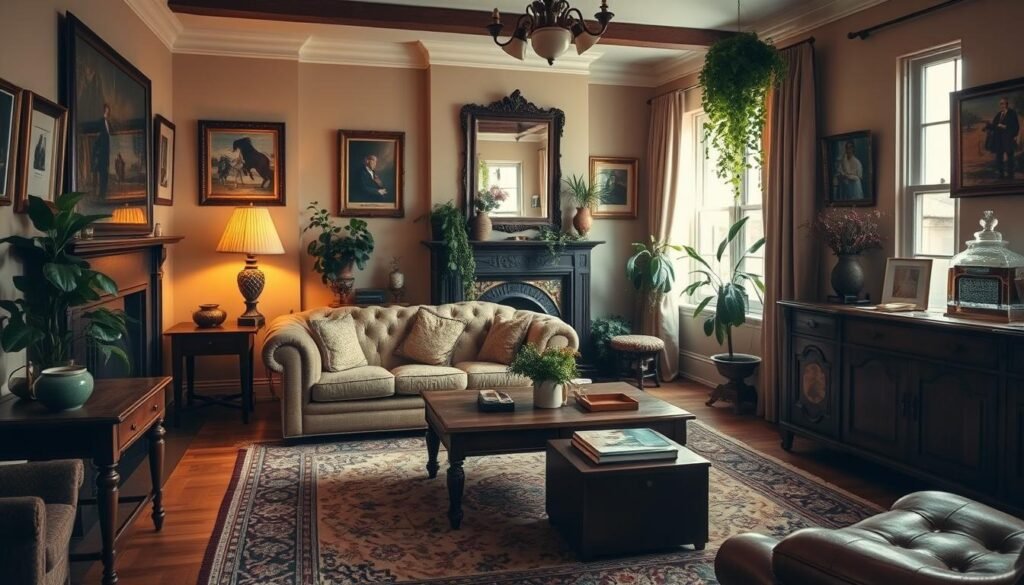
Every space in your house sings a different tune – why not let each chorus feature time-tested treasures? Tailor your approach to suit each area’s rhythm, blending practicality with stories waiting to be told.
Living Room Anchors
Your living room thrives on pieces that spark dialogue. Try these era-spanning combinations:
| Furniture | Era | Pair With |
|---|---|---|
| Leather Chesterfield | 1920s | Acrylic nesting tables |
| Boho rattan chair | 1970s | Metallic floor lamp |
| Art Deco cabinet | 1930s | Geometric throw pillows |
Lighting sets the mood. A milk glass pendant softens movie nights, while brass sconces add drama during gatherings. “Fixtures should dim or dazzle on command,” notes lighting designer Clara Ruiz.
Bedroom Serenity
Transform your bedroom into a retreat with these elements:
- Wrought iron bedframe draped in linen
- Clawfoot bench stacked with quilts
- Porcelain lamps with modern LED bulbs
Mirrors expand small spaces while adding glamour. Try an oval vanity mirror above your dresser – its mercury glass finish catches dawn light beautifully.
Functional Charm Zones
In the kitchen, repurpose old-world tools:
- Enamel colanders as fruit bowls
- Butcher block islands with barstools
- Antique spice racks for tea storage
Your home office gains focus through patina-rich desks and banker’s lamps. Stack leather-bound books beneath monitors for height variation. A 1940s card catalog? Perfect for organizing chargers and sticky notes.
Eco-Friendly and Sustainable Home Decor
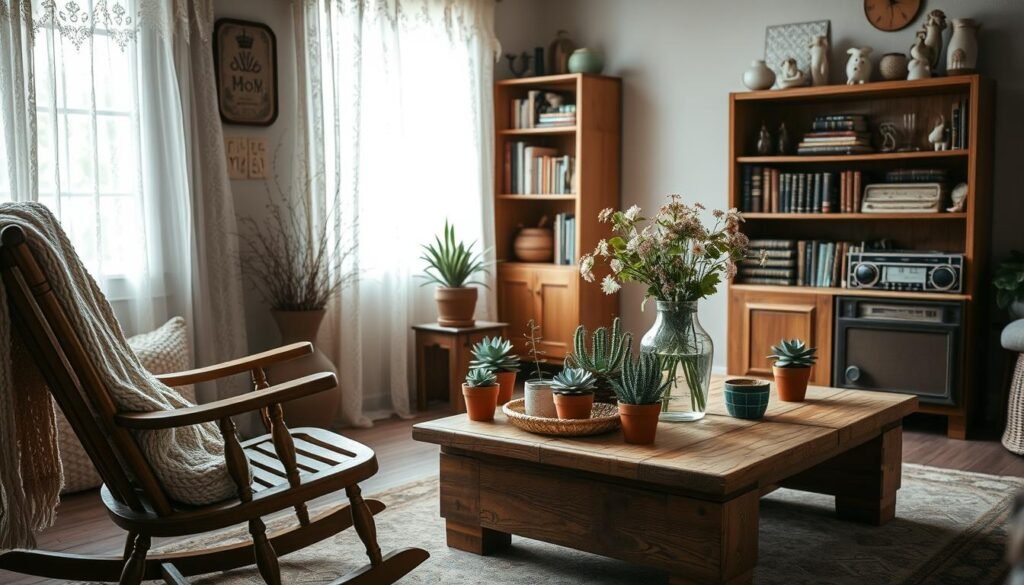
What if your design choices could heal the planet? Every second, 20,000 pounds of furniture hit US landfills. But there’s a way to style your home that reverses this trend – while creating spaces rich with history.
Reducing Carbon Footprints Through Conscious Choices
That 1950s dresser in your local thrift store isn’t just charming – it’s a climate warrior. Studies show pre-loved furnishings create 16x less carbon emissions than new equivalents. You become part of a movement valuing craftsmanship over conveyor belts.
| Factor | Vintage | New |
|---|---|---|
| Production Energy | Already expended | Fresh resources used |
| Transport Miles | Local (avg 15mi) | Global (avg 8,000mi) |
| Chemical Off-Gassing | None | 3-5 years |
“The greenest object is one that already exists,” notes sustainability expert Lila Chen. When you choose vintage, you’re saving trees and reducing factory emissions simultaneously.
Your choices matter beyond aesthetics. That mid-century chair spared from landfill? It represents 300 gallons of water saved from new production. The art deco lamp? It skips 200 pounds of CO2 from overseas shipping.
This approach creates healthier spaces too. Unlike flat-pack furniture emitting VOCs for years, older pieces have aired out naturally. Your home becomes a sanctuary – both visually striking and environmentally sound.
Curating Affordable
Creating a meaningful space doesn’t require a trust fund. Smart curation thrives on patience and strategy – not deep pockets. Your secret weapon? Knowing where to look and when to pounce.
Start with local estate sales’ final hours. Dealers often slash prices by 50% on Sundays. Online auctions surprise too – search “lot sales” for grouped treasures. That chipped enamel pot? Perfect as a planter once cleaned.
Prioritize three key pieces per room. A statement chair here, a sculptural lamp there. Fill gaps with budget-friendly accents like:
• Thrifted picture frames spray-painted gold
• Library discard books stacked as side tables
• Vintage scarves stretched as mini wall tapestries
Repurpose with purpose. That 1970s ladder becomes towel storage. Wobbly stools transform into plant stands. “Flaws often hide potential,” says restoration expert Marco Perez. Follow resellers on Facebook Marketplace – they frequently offload quality items during seasonal moves.
Remember: True character comes from intentional choices, not price tags. Your home becomes a living archive of clever finds – each piece whispering stories only you could weave together.