

Imagine transforming ordinary appetizers into a jaw-dropping centerpiece that feeds 40 guests in under 30 minutes. That’s the magic of artfully arranged food displays – the ultimate hack for hosts who value style and simplicity.
These edible masterpieces combine cured meats, artisanal cheeses, and seasonal fruits into eye-catching layouts. Perfect for baby showers or corporate mixers, they let guests snack while mingling – no formal seating required. You’ll love how they turn basic finger foods into conversation-starting decor.
The secret? Strategic layering creates visual drama while ensuring easy access. Cluster colorful berries near creamy brie, or fan out crusty bread beside olive tapenades. This approach isn’t just pretty – it’s practical. Guests serve themselves, leaving you free to enjoy the party.
Best part? You’ll skip the oven entirely. Focus instead on mixing textures and heights using cake stands or wooden crates. Add fresh herbs for pops of green, and watch your creation become the most photographed element of your event.
An Introduction to Stunning Grazing Tables
Think of a social buffet that doubles as decor, where food becomes the focal point of your event. This edible landscape lets people pick, chat, and savor without rigid schedules – the ultimate upgrade from basic snack trays.
Redefining Shared Dining
Unlike plated meals, a charcuterie setup invites exploration. Guests circle the display like food explorers – slicing cheeses, pairing figs with prosciutto, or discovering new dips. It’s dining theater where everyone influences the scene through their choices.
The Host’s Secret Weapon
These spreads solve three party headaches at once. First: no cooking – arrange everything cold. Second: dietary needs? Gluten-free crackers nestle beside vegan spreads effortlessly. Third: conversation flows naturally when people aren’t glued to seats.
| Feature | Grazing Board | Traditional Apps |
|---|---|---|
| Setup Time | 45 min prep | 2+ hours cooking |
| Guest Interaction | Self-serve mingling | Passed trays |
| Dietary Accommodation | Mix & match options | Limited choices |
Your board becomes both menu and centerpiece. Cluster colorful berries near brie for contrast. Use tiered stands to guide eyes upward. Pro tip: add edible flowers – they’re Instagram bait that tastes as good as it looks.
Essential Components of a Grazing Table Spread
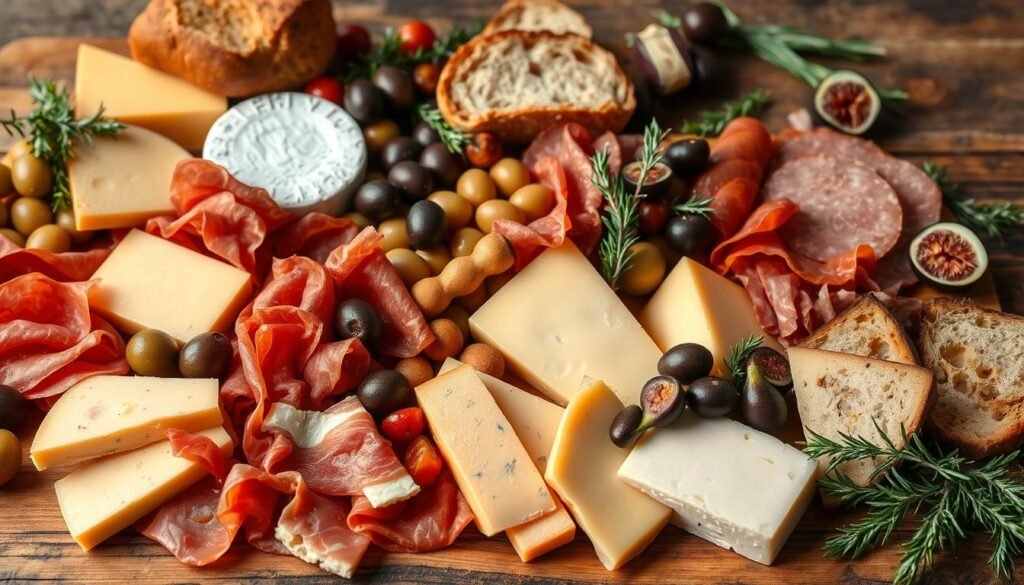
The foundation of every memorable spread lies in three pillars: thoughtful pairings, textural contrasts, and visual balance. You’ll craft an edible mosaic that delights both eyes and palates – no culinary degree required.
Cheeses, Meats, and Accompaniments
Start with two cheese heroes: one firm (like aged cheddar) and one spreadable (think creamy camembert). Pair them with cured meats offering varying intensities – delicate mortadella alongside peppery salami creates intrigue.
Don’t forget the flavor bridges. Small bowls of fig jam or hot honey transform basic combinations. A drizzle of truffle oil over soft cheeses? That’s how you turn snacks into experiences.
Incorporating Fruits, Nuts, and Accoutrements
Choose fruits that won’t wilt under spotlight. Grapes and apple slices outlast berries. For color pops, add dried apricots or pomegranate seeds – they’re the confetti of your edible canvas.
Nuts do double duty: they fill gaps and add crunch. Toasted almonds or spiced pecans work magic. Use ramekins for olives or tapenades – these containers keep messes contained while adding vertical interest.
| Category | Must-Haves | Pro Tips |
|---|---|---|
| Cheeses | Aged gouda, goat cheese | Label varieties for guests |
| Meats | Prosciutto, chorizo | Roll slices for easy grabbing |
| Fruit | Grapes, figs | Skewer halves for neat serving |
| Accents | Marcona almonds, cornichons | Cluster by flavor profiles |
Bread choices matter more than you think. Offer crusty baguette slices and gluten-free crackers – it’s inclusivity made delicious. Remember: your spread isn’t just food. It’s a conversation starter dressed in brie and berries.
Step-by-Step Guide to Mastering Grazing Tables Ideas
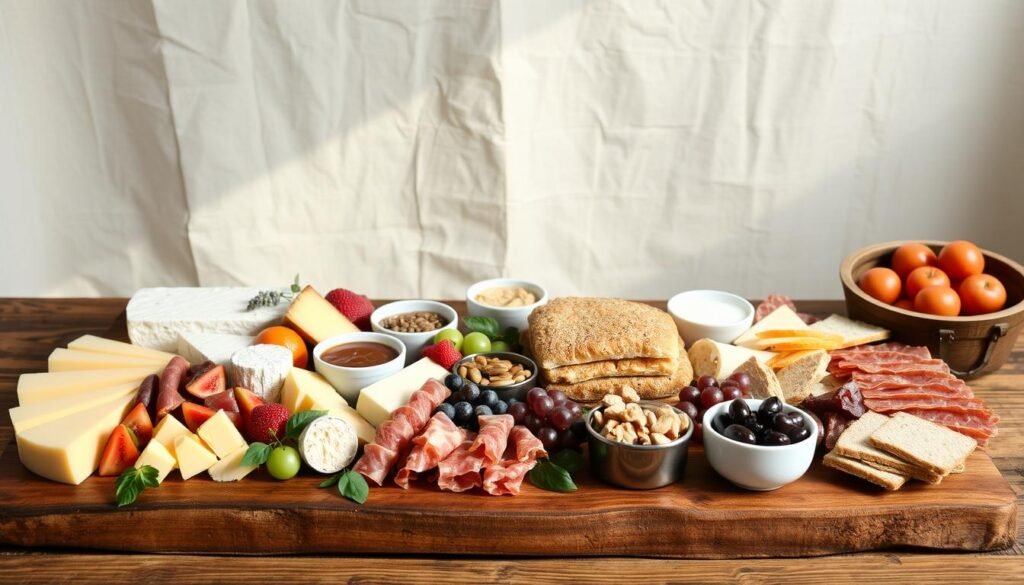
Transform your kitchen counter into an edible landscape that serves 40 in 45 minutes flat. The secret? Smart staging turns chaotic ingredients into a Pinterest-worthy spread. Let’s break down the process like a food stylist would.
Planning Your Layout and Ingredient Ratios
Start by covering your surface with butcher paper – it’s your edible canvas. Anchor the space with showstoppers: whole brie wheels, crusty bread bouquets, and marble slabs for slicing. Pro tip: Position these first to map traffic flow.
Next, elevate (literally) with bowls on cake stands. Hummus dips and berry clusters get prime real estate here. This creates natural pathways for guests to navigate without elbow-jostling.
Now layer the goods: fold prosciutto into rosettes, fan out rainbow carrots, and scatter gluten-free crackers. Leave breathing room between clusters – overcrowding kills the luxe vibe. “Think edible topography,” suggests LA food designer Mara Lane. “Valleys of nuts, hills of grapes.”
| Ingredient | Per Person | 40 Guests |
|---|---|---|
| Cheese | 5 oz | 12.5 lbs |
| Meats | 3 oz | 7.5 lbs |
| Fruit | 3 oz | 7.5 lbs |
| Bread | 1.5 oz | 3.75 lbs |
Finish with fresh rosemary sprigs or edible flowers – nature’s confetti. Assemble cheeses and sturdy items first, saving delicate greens for last. You’ll love how these ratios create abundance without leftovers.
Sourcing High-Quality Ingredients from Costco and Beyond
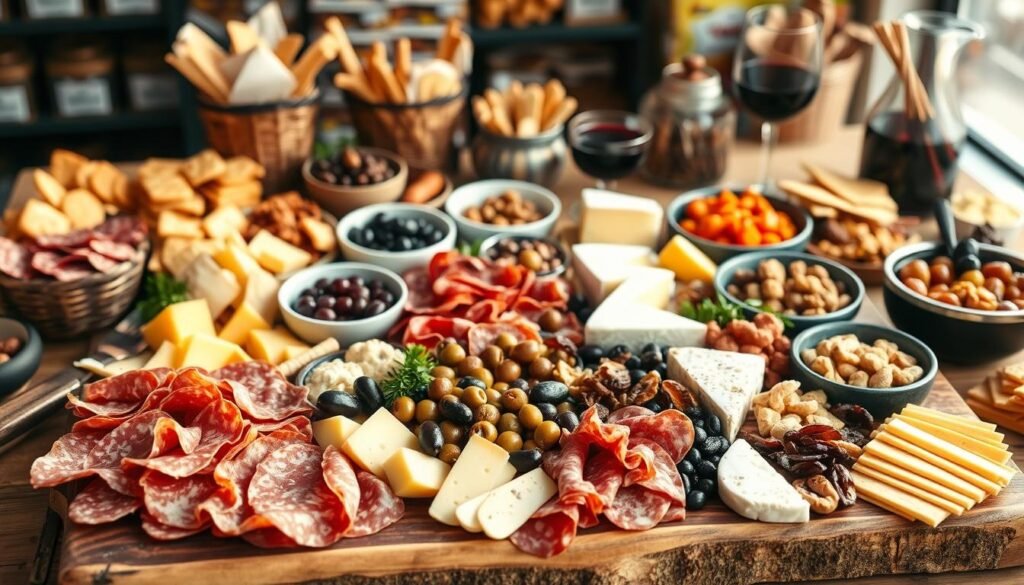
Your next charcuterie masterpiece begins with smart shopping – and warehouse clubs are hiding gourmet treasures. Costco’s cheese aisle alone could rival European markets, offering premium selections at prices that’ll make you rethink specialty stores.
Costco’s Premium Cheese and Meat Selections
The Kirkland Signature line delivers restaurant-quality cheeses at bulk prices. Spanish Manchego ($19.90) and French Brie ($9.99) become affordable centerpieces. For meat lovers, Columbus salami ($13.99) and Prosciutto di Parma ($12.39) offer authentic flavors without the boutique markup.
“You’re getting cheese-shop curation with supermarket convenience,” says Miami caterer Lila Torres. Her pro tip? Stock up on Kerrygold Dubliner ($12.23) – its caramel notes pair beautifully with dried fruits.
Budget Considerations and Bulk Buying Tips
Spend $250 here and you’ll feed 40 guests restaurant-worthy bites. The secret? Strategic variety. Mix pricier items like goat cheese logs ($8.29) with value picks like cubed Gouda ($13.84).
| Item | Price | Serving Capacity |
|---|---|---|
| Manchego Cheese | $19.90 | 15-20 people |
| Prosciutto Pack | $12.39 | 25+ slices |
| Goat Cheese Logs | $8.29 | 12-15 servings |
| Salami 2-Pack | $13.99 | 30+ pieces |
Buy hard cheeses 3 days ahead – they’ll keep. Soft varieties? Grab them day-of. Supplement with local honey or jam from farmers’ markets for personal flair. Leftover meats freeze beautifully for future pizza nights.
Expert Tips on Cutting and Arranging Cheeses
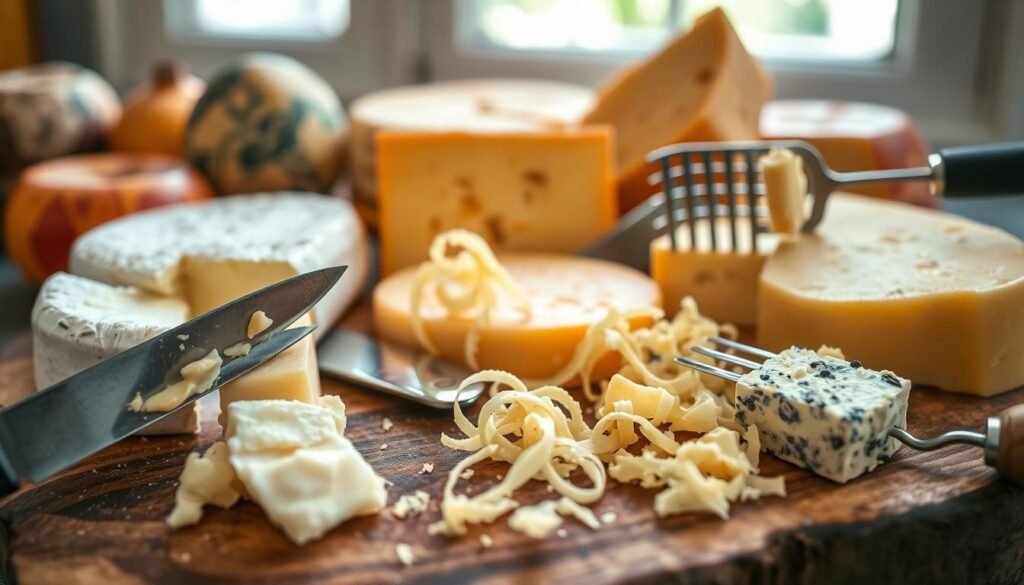
The difference between ordinary cheese platters and showstopping displays often comes down to strategic slicing. You’ll transform blocks into edible art with these pro techniques – no culinary school required.
How to Cut Different Kinds of Cheeses
Brie: Create 16 even wedges like clock hands. Arrange two crescent shapes overlapping slightly – it’s geometry meets gastronomy. Guests get perfect slices without wrestling the wheel.
Manchego: Cut thick triangles that mimic the cheese’s angular rind. Layer them in winding rows – imagine edible dominoes ready to tumble onto plates.
Gouda: Peel the red wax in one smooth motion. Fill it with cubed cheese – suddenly, packaging becomes your most Instagrammable serving dish.
Techniques for a Visually Appealing Display
Crumbly Dubliner? Angle your knife at 45 degrees and twist. You’ll get rustic chunks that say “artisan” rather than “accident”. For Bellavitano, slice downward to showcase both rind and interior – straight lines create sleek sophistication.
Whole goat cheese logs in oval dishes say “help yourself” better than pre-sliced portions. Pair with soft cheese knives – they’re the unsung heroes preventing smushed presentations.
| Cheese Type | Cutting Technique | Best Tool |
|---|---|---|
| Brie | 16 wedge slices | Wire cutter |
| Manchego | Thick triangles | Chef’s knife |
| Gouda | Wax vessel cubes | Paring knife |
| Dubliner | Angled crumbles | Cheese plane |
| Bellavitano | Rind-on slices | Santoku knife |
Remember: pre-cut hard cheeses stay fresh longer. Soft varieties? Let guests slice themselves – it keeps textures perfect. Your cheese knives aren’t just tools; they’re part of the edible theater.
Assembling the Perfect Grazing Table Layout
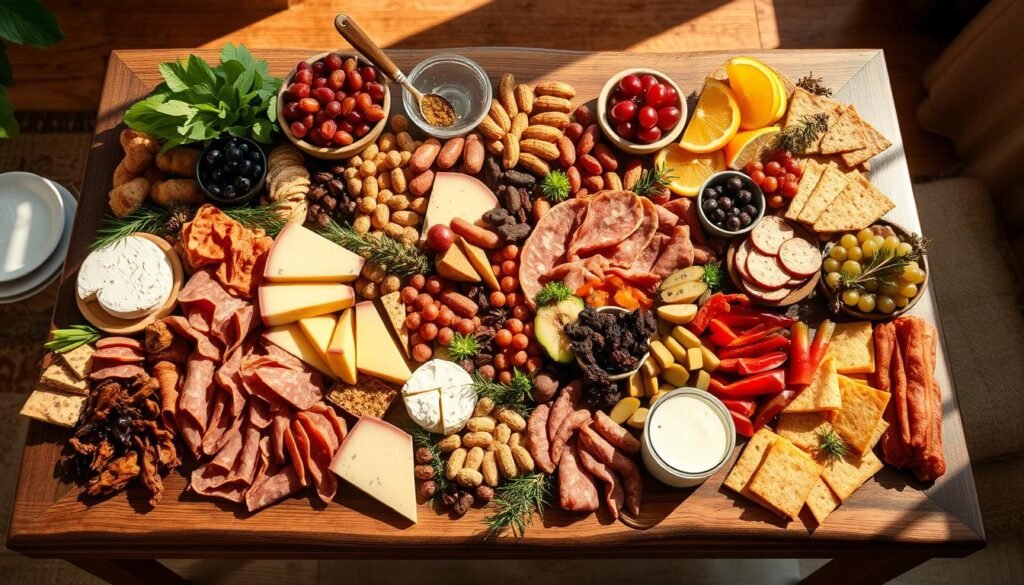
Your blank dining surface becomes an edible masterpiece through smart staging. Let’s craft a layout that feels abundant yet organized – where every olive bowl and bread cluster has purpose. This isn’t just food arrangement; it’s edible interior design.
Prepping Your Table and Setting the Scene
Start with a crisp linen base – it’s your canvas. Drape a velvet runner down the center for instant luxe. Then, unroll parchment paper over it. Why? The wax coating catches drips while letting you slide items into perfect position.
Anchor your space with nine bowls (three each of nuts, olives, honey). Space them evenly like checkers pieces. For a 70-inch surface, this creates rhythm. Larger surfaces? Add extra grapes or bread spirals between clusters.
Layering and Spacing for a Balanced Look
Build height with inverted bowls as pedestals for cheese wheels. Tuck rosemary sprigs under plate rims – they’re nature’s confetti. Leave two-inch gaps between food groups. This negative space makes displays feel curated, not chaotic.
Guide guest movement by placing dips at opposite ends. They’ll orbit the board naturally. Use bread baskets as edible bookends. Last tip: angle cutting boards diagonally – triangles invite interaction better than straight lines.
Adding Accoutrements and Decorative Elements
Elevate your edible masterpiece with strategic finishing touches that marry form and function. Small bowls become your secret weapon here – they corral messy ingredients while adding sculptural interest. Ramekins keep dips contained yet accessible, transforming practical needs into design opportunities.
Utilizing Flowers and Vases for a Fresh Touch
Bud vases work magic without overwhelming your spread. Tuck single stems of edible blooms like pansies or nasturtiums between cheese knives. Pro tip: Match vase heights to nearby food clusters – tall arrangements flank cured meats, petite ones nestle near olives.
Creative Plate and Bowl Arrangements
Mix ceramic ramekins with marble slabs for textural contrast. Swirl hummus into spiral patterns using a spoon’s edge – top with paprika dust or chive confetti. Nestle chocolate-dipped apricots in mini bowls beside olive mounds. This creates rhythm while preventing flavor mingling.
Use tiered stands to lift small bowls of nuts into eye-catching displays. Drizzle honey over goat cheese in ramekins for edible glitter effects. Remember: every decorative choice should serve both beauty and bite-sized convenience.